 Skip to content
Full Thermoformed Pickleball Paddle Manufacturer
Not all paddles labeled as “thermoformed” are truly full thermoformed. We produce true one-piece thermoformed paddles without any adhesive cold pressing.
- ✓100+ dedicated thermoforming molds for faster lead times
- ✓USAPA Pickleball testing support for tournament
- ✓Four-layer face construction on every pickleball paddle
 Franklin
 HEAD
HEAD Selkirk Sport
 K-SWISS
 ENGRGE
 ONIX
ONIX PADDLETEK
 DIADEM
 SKECHERS
Build Your Pickleball Paddle to Meet USAPA Pickleball Standards
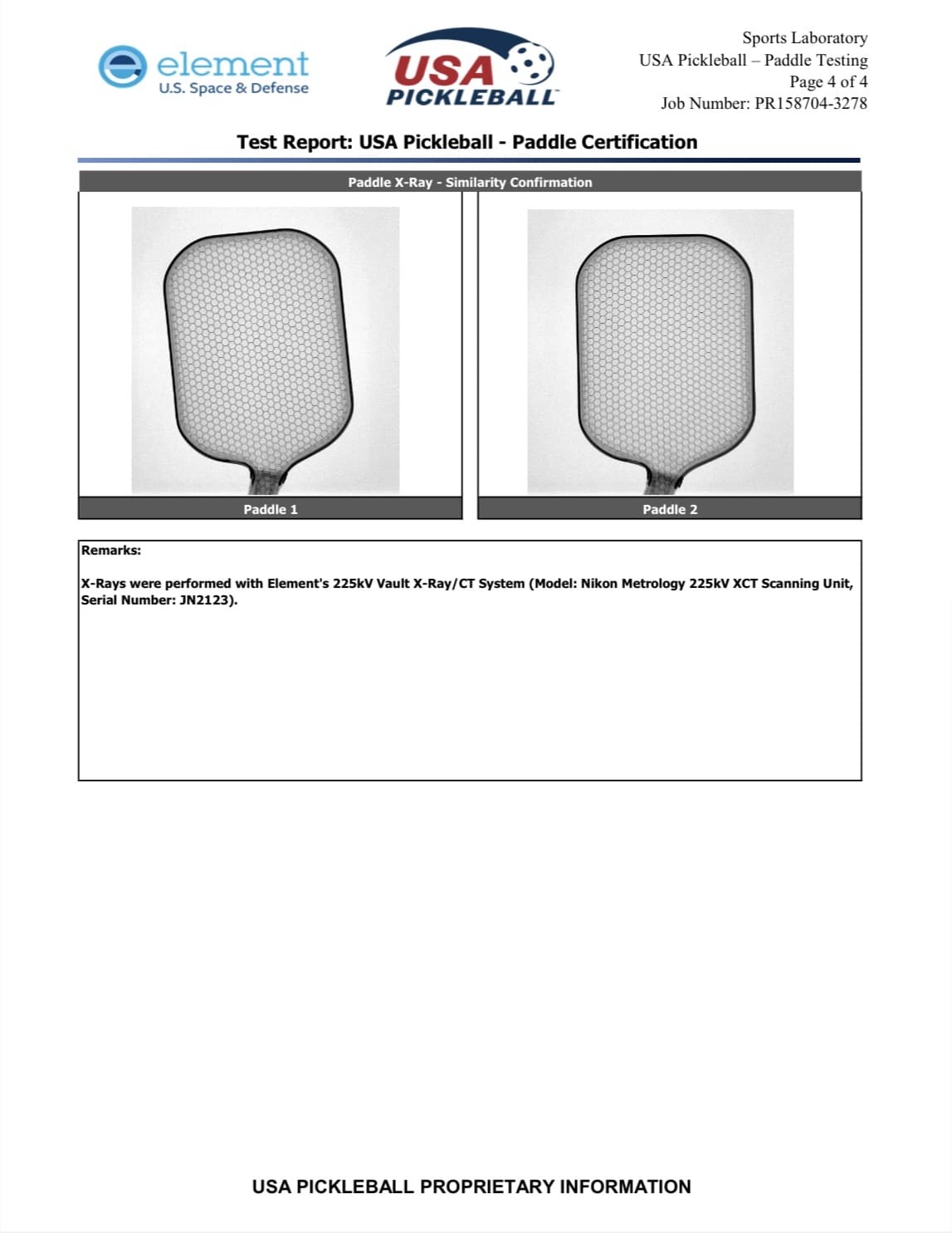
If you need USAPA Pickleball approval, tell us before sampling. We will help you confirm the construction, prepare the test sample, and plan model-specific testing before production.
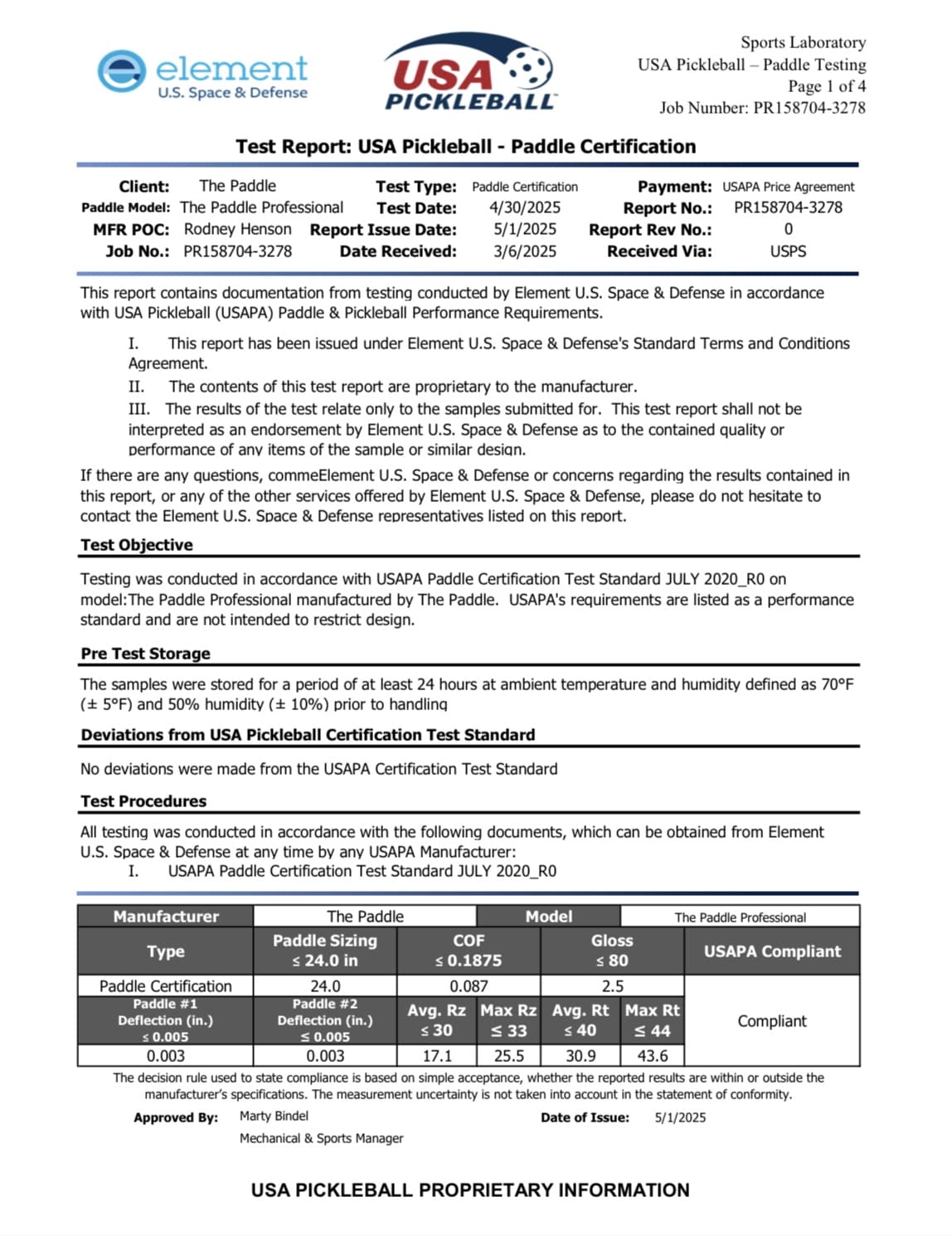
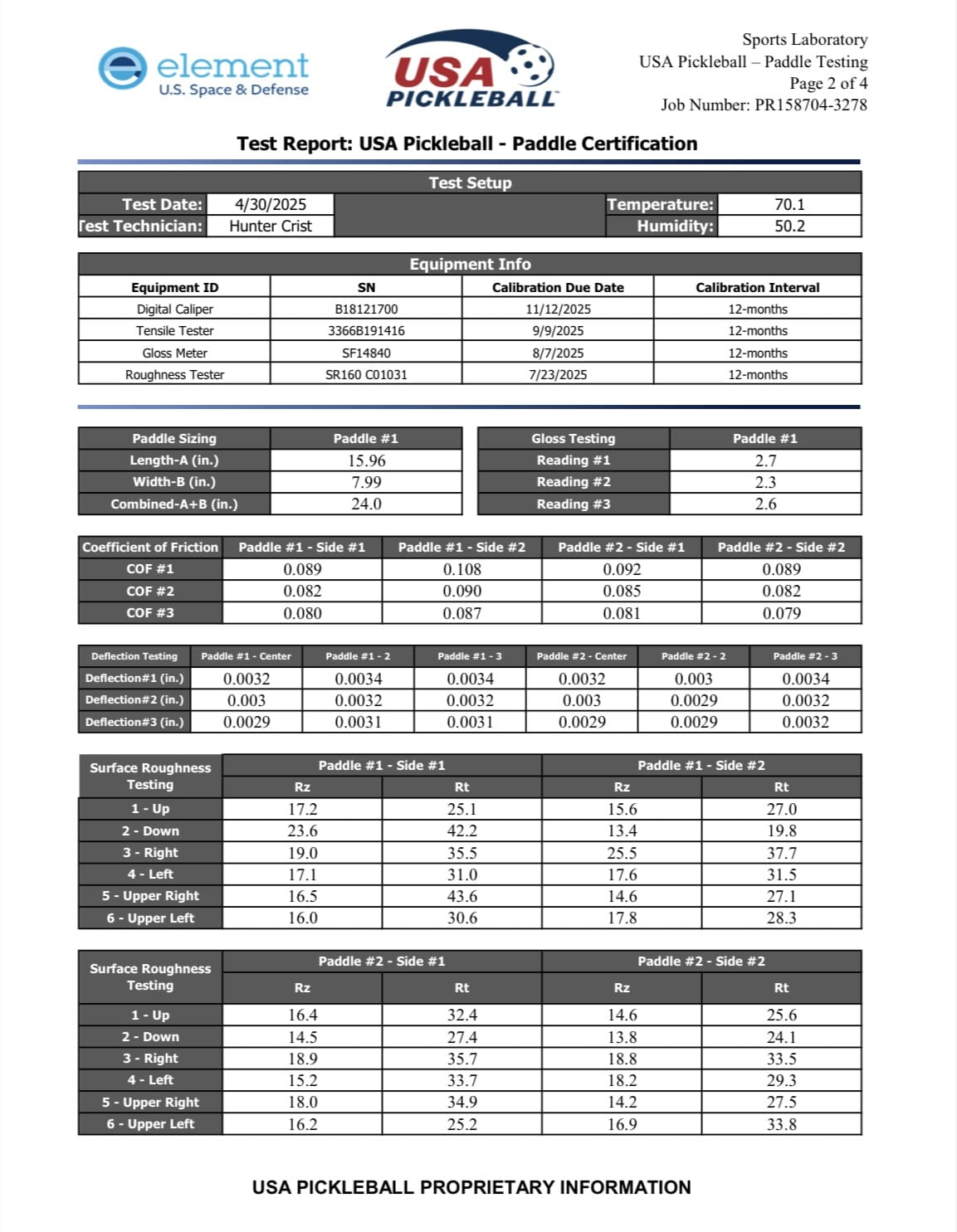
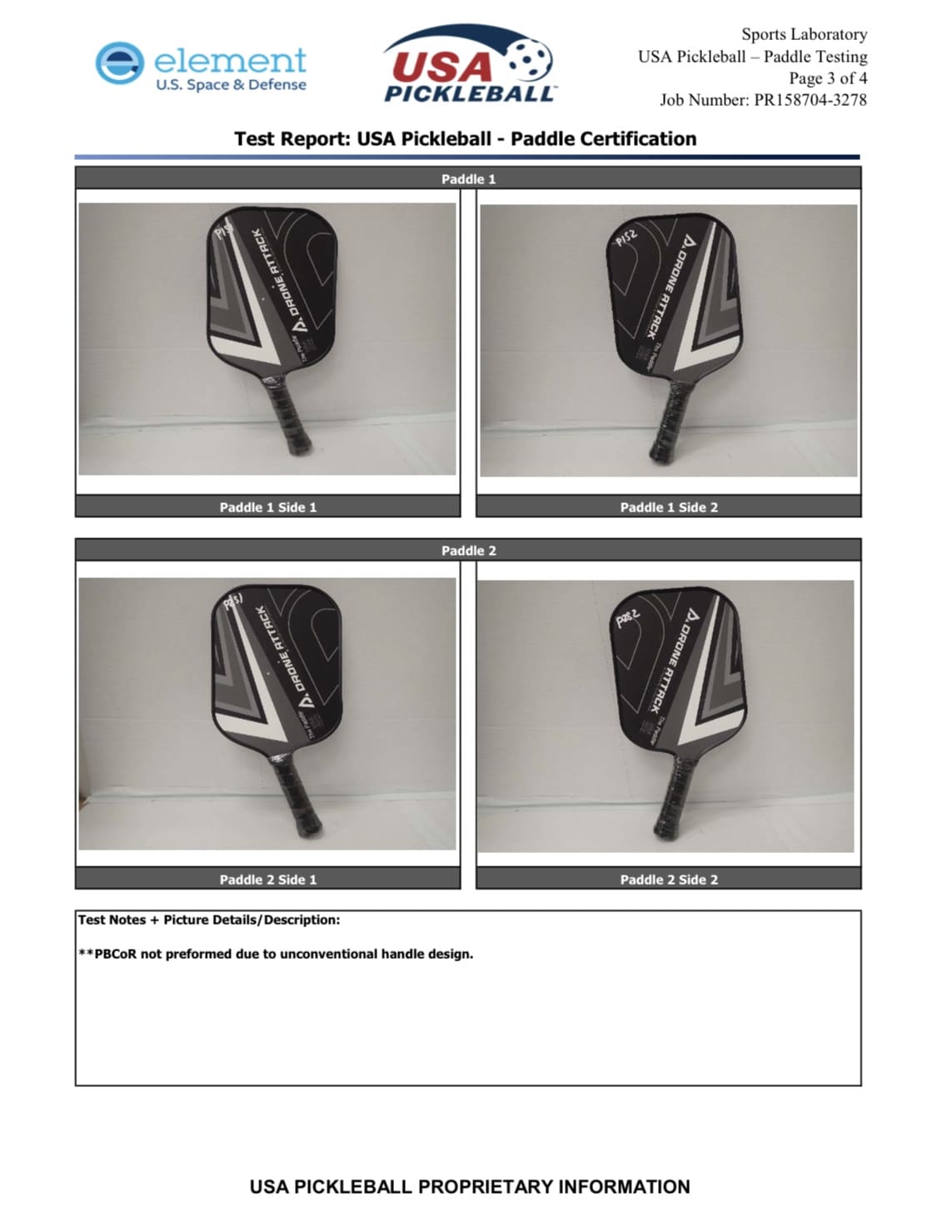
USA Pickleball Paddle Certification Test Report
- Issuing body
- Element U.S. Space & Defense
- Product scope
- The Paddle Professional (Client / Manufacturer: The Paddle)
- Report date
- 2025-05-01
Develop Your Paddle Without Guessing at Cost, Construction or Quality
You do not need a long list of material names. You need a paddle that fits your customers, selling price and business plan.
Avoid Ordering Too Much Stock
Start from 100 pcs. Collect feedback from players, customers or club members, then increase the quantity after the model is accepted.
Check Your Profit Before Sampling
Compare the construction, accessories and packaging with your target selling price before spending more time on development.
Keep Your Bulk Order Close to Your Sample
Use the approved sample and written specification as the reference for materials, weight, surface feel, artwork and packaging.
No Paddle Design Experience? We Can Help
You do not need to know every material or construction detail. Tell us your target market, customers, selling price and ideas. We can help you develop the paddle construction, appearance, logo and packaging to create a custom paddle that fits your market.
Do you already have a reference paddle or target selling price?
Is Your Paddle Pickleball Really Full Thermoformed?
Some paddles are sold as thermoformed because heat is used during the final production stage. But a final heat-pressing stage does not automatically make a paddle full thermoformed. The important difference is how the complete structure is built before heat pressing.
Semi-Thermoformed Construction on the Market
In a semi-thermoformed paddle, the face materials and core are first bonded with adhesive through cold pressing. The edge structure is wrapped around the paddle, and the assembled paddle then goes through an additional heat-pressing stage.
This process still starts with an adhesive-bonded cold-pressed structure. The final heat-pressing stage does not change it into a full one-piece thermoformed paddle.
Our Full Thermoformed One-Piece Construction
We do not manufacture semi-thermoformed paddles. Our process does not use the adhesive cold-press bonding step.
The face materials, core and surrounding structure are prepared for one-piece molding. The complete structure is formed in a dedicated mold, and each paddle is pressed individually at high temperature for more than 60 minutes.
Do you want us to check your current paddle construction?
Every Thermoformed Paddle Uses a Four-Layer Face Structure
Every full thermoformed paddle we make uses four face-material layers: three T700-grade carbon-fiber layers and one Toray carbon-fiber layer.
Many common paddles use only three face-material layers. The fourth layer is part of our standard construction, not an optional upgrade
Choose the Right Core, Surface and Thickness for Your Target Market
MPP, Gen 5 EVA+EPP, TruFoam, Gen 3, Gen 4, T700, Kevlar and titanium wire can be confusing. Start with your target player, selling price and reference paddle, then test the selected construction in a physical sample.
 Factory core directions
Compare the build before you commit
MPP core
Confirm the material, density, thickness, target weight and balance in the physical sample.
EVA+EPP core
Confirm the material density, finished weight, balance, elasticity and rebound against the target product position.
TruFoam core
Confirm foam grade, density, thickness, weight and feel before choosing this direction for a product line.
Gen 4 core
Lock the named core, density, face structure, thickness and target weight in the approved specification.
Gen 3 core
Compare the complete construction, target weight, feel and cost with your benchmark paddle before approval.
- Surface
- Toray T700, titanium wire, Kevlar, 3K 12K , 18K carbon fiber
- Thickness
- 13mm, 14mm or 16mm
- Decision rule
- 417 × 190 mm or 400 × 200 mm
Customize Your Private-Label Pickleball Paddle
Confirm the paddle construction first. Then approve each color, logo, accessory and packaging detail on your paddle so the finished paddle looks like your own product.
Printing

Spray Sanding
A rough, matte coating is applied over the printed artwork. It works well for colorful graphics, large logos and designs that cover most of the pickleball paddle face.

Fabric Texture Finish
The original fabric texture remains visible on the paddle surface. It is ideal for high-end pickleball paddles with simple logos and clean designs, and it's more durable
Handle

Handle Colors and Logo
Choose from our standard handle colors, or customize the color and add your logo. Custom colors and logos are available with MOQ requirements.
Accessory

Edge Guard Colors and Logo
Choose a solid-color or gradient edge guard and add your logo. Custom colors and branding are available with MOQ requirements.

End Cap Customization
You can choose the crystal stickers or silk-screened branding on the end cap.
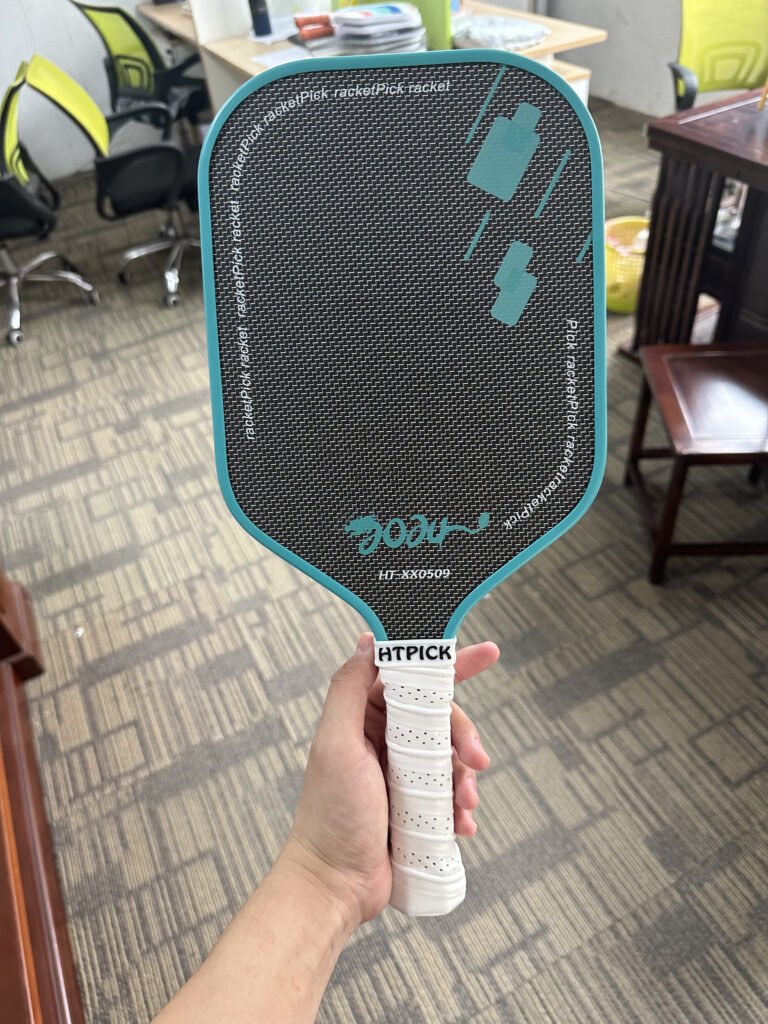
Rubber Band Colors and Logo
You can choose regular or custom colors and add a logo to the rubber band.

Custom Ball Logo
Add a logo to matching pickleball balls for sets, events, or branded programs.
Packaging

Paddle Cover
Add a logo to a paddle cover to match the paddle and sales package.
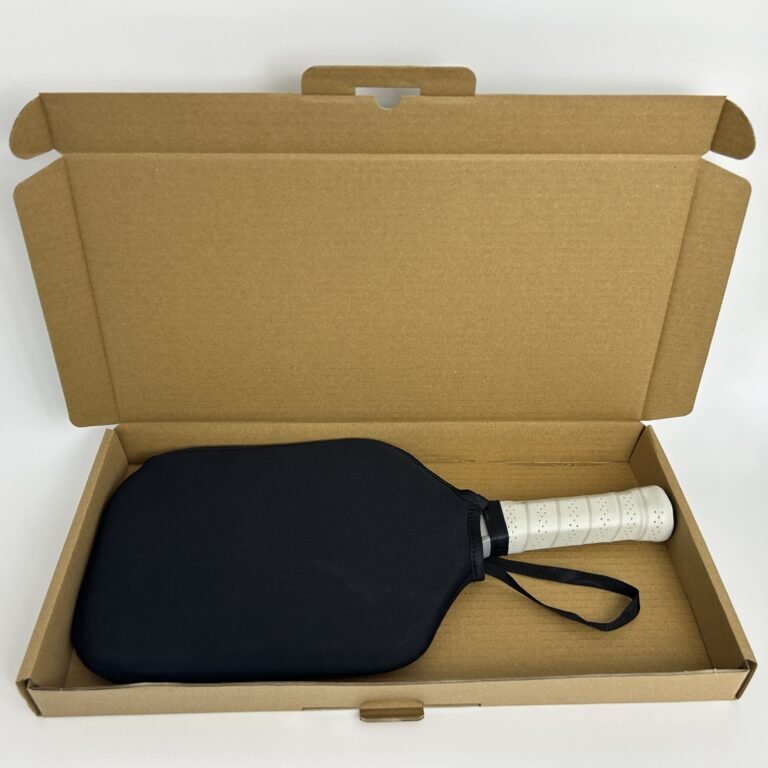
Box Packaging
Choose from different materials and styles, including premium magnetic boxes, lid-and-base boxes and standard paper boxes. Both the inside and outside can be customized with your brand artwork

Bag Option
Choose from different bag styles. Your logo can be added to match your paddle and product line.
How Your Full Thermoformed Pickleball Paddle Is Made
- 01
Prepare the Four-Layer Face Structure
Prepare three T700-grade carbon-fiber layers and one Toray carbon-fiber layer, positioned correctly before molding.
- 02
Prepare and Cut the Core
Prepare the selected core to the paddle shape and confirm that its type and density match the approved specification.
- 03
Prepare the One-Piece Paddle Structure
Place the face materials, core and surrounding structure into a dedicated mold without an adhesive cold-press bonding step.
- 04
Press Each Paddle at High Temperature
Each mold holds one paddle for more than 60 minutes while temperature, pressure and pressing time are controlled.
- 05
Cool and Trim the Paddle
Cool the molded paddle, remove it from the mold, trim the body and prepare it for printing and assembly.
- 06
Print Your Artwork
Print in a humidity-controlled workshop with imported ink, then compare color and artwork with the approved sample.
- 07
Assemble Your Custom Parts
Assemble the grip, edge guard, end cap and rubber band, then complete inspection and packing.
Your Bulk Order Should Not Become a Different Paddle
Your approved sample and written specification become the production and inspection reference. We check the construction, materials, face layers, core, pressing, printing, assembly, finished weight and packing before shipment.

Core and face material preparation
Core components and face materials are identified, cut and grouped by the confirmed model before layup.

Pressed blanks, cooling and trimming
Thermoformed paddle bodies are cooled, trimmed and organized by batch before surface finishing and assembly.

Assembly and in-process inspection
Workers check handle fit, edge-guard fit, surface appearance and the approved color combination during assembly.

Final batch inspection and packing
Finished paddles are checked for appearance, target weight range, print, grip, edge details and packing quantity.
See What Buyers Say About Their Paddle Orders
The screenshots below show real customer conversations about paddle samples, performance, testing and repeat orders. Open any image to read the original conversation at full size.
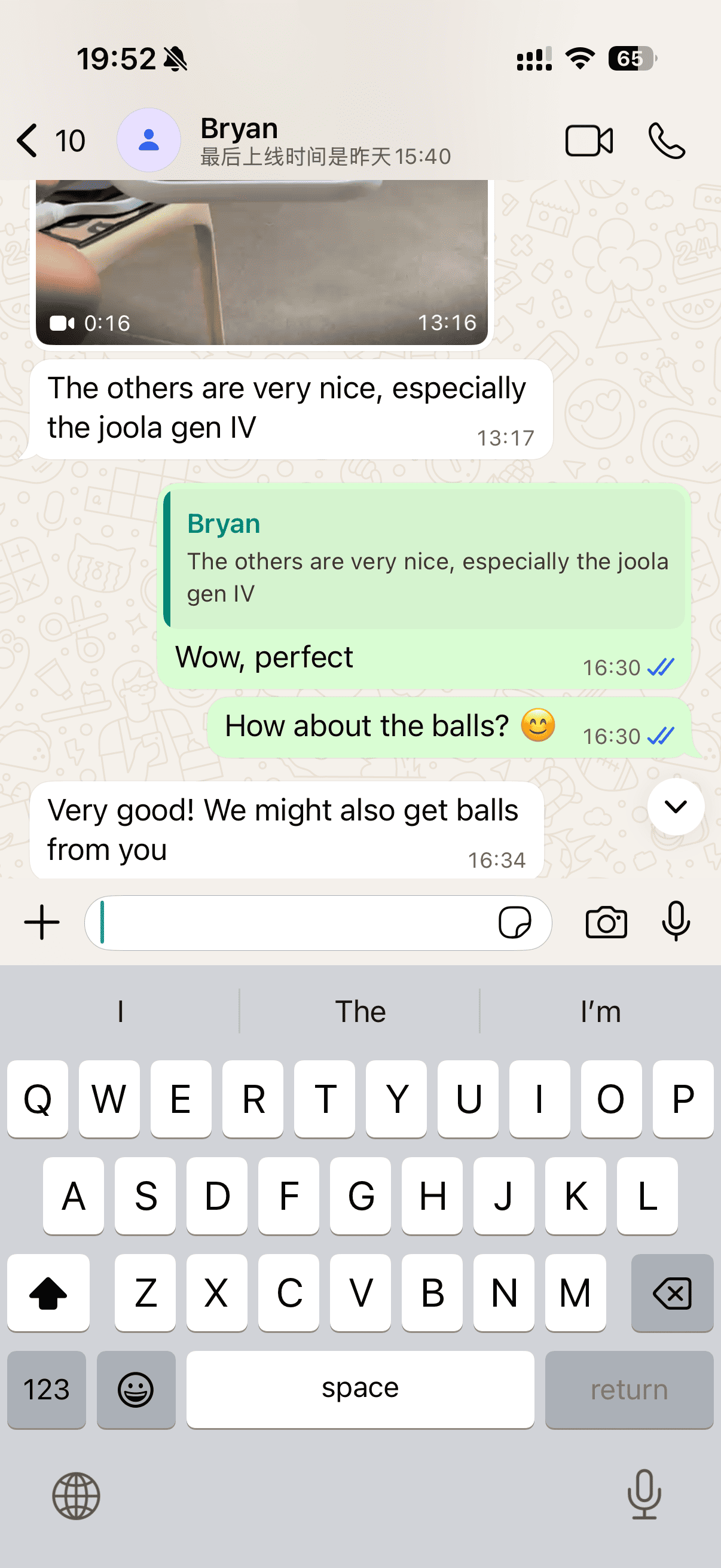
The others are very nice, especially the Joola Gen IV.
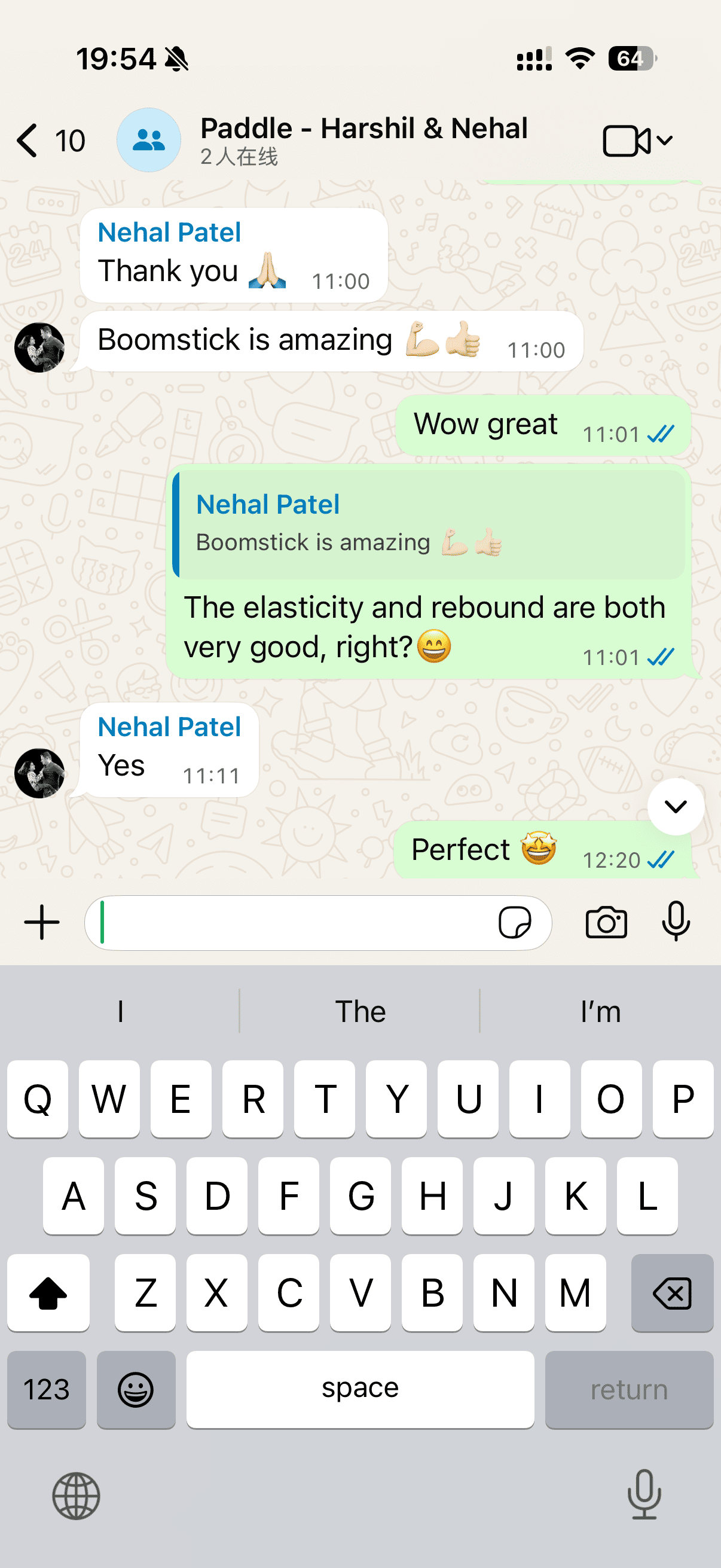
Boomstick is amazing.
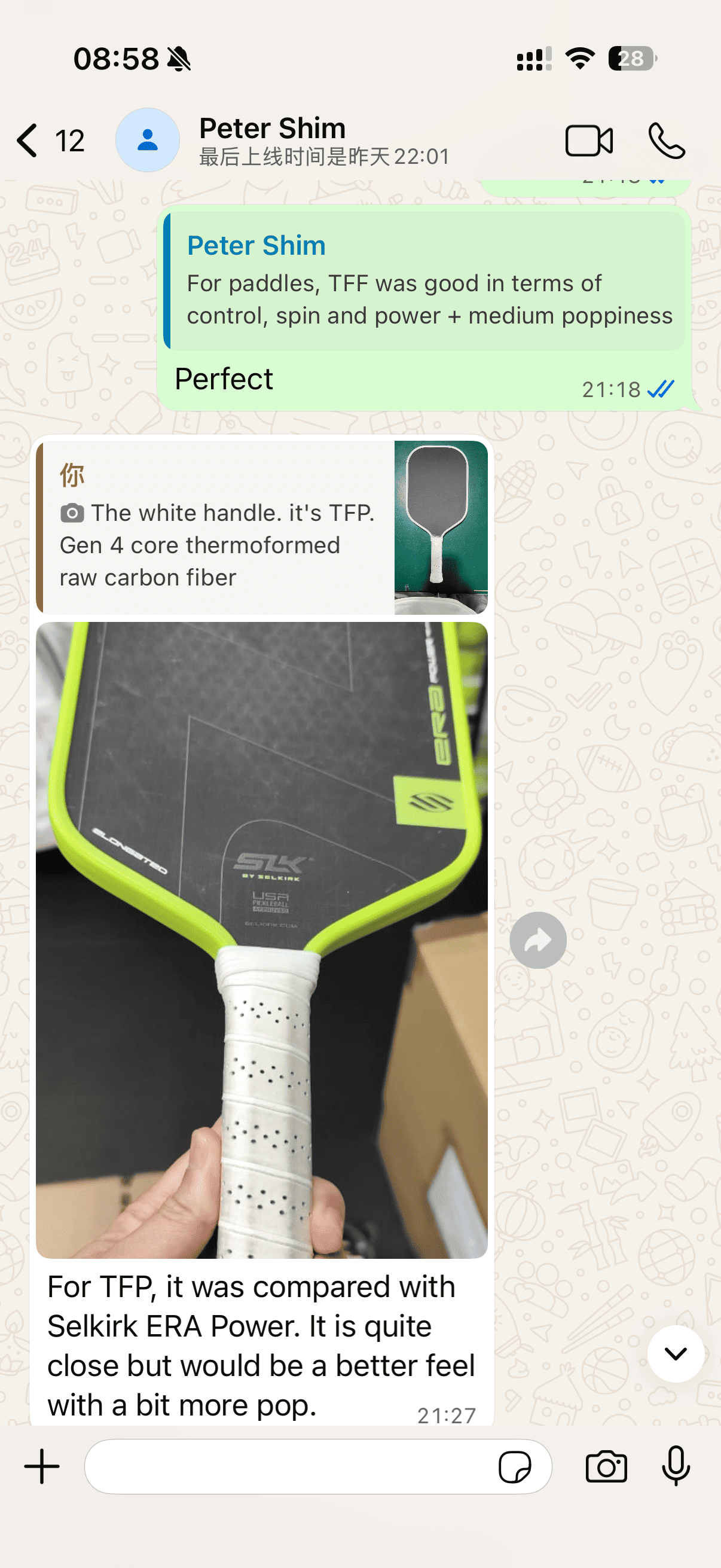
For paddles, TFF was good in terms of control, spin and power + medium poppiness. For TFP, it was compared with Selkirk ERA Power. It is quite soft with a bit more pop.
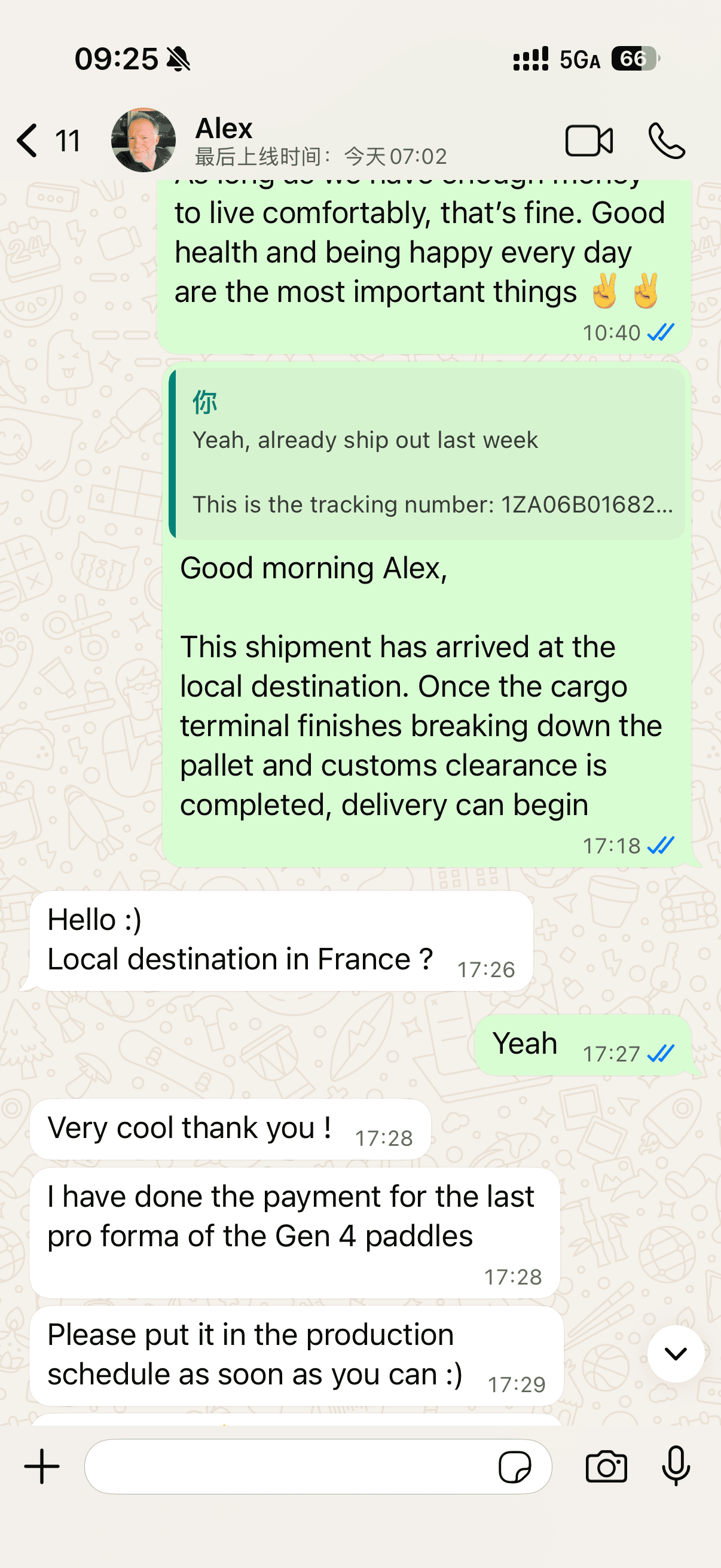
I have done the payment for the last pro forma of the Gen 4 paddles. Please put it in the production schedule as soon as you can.
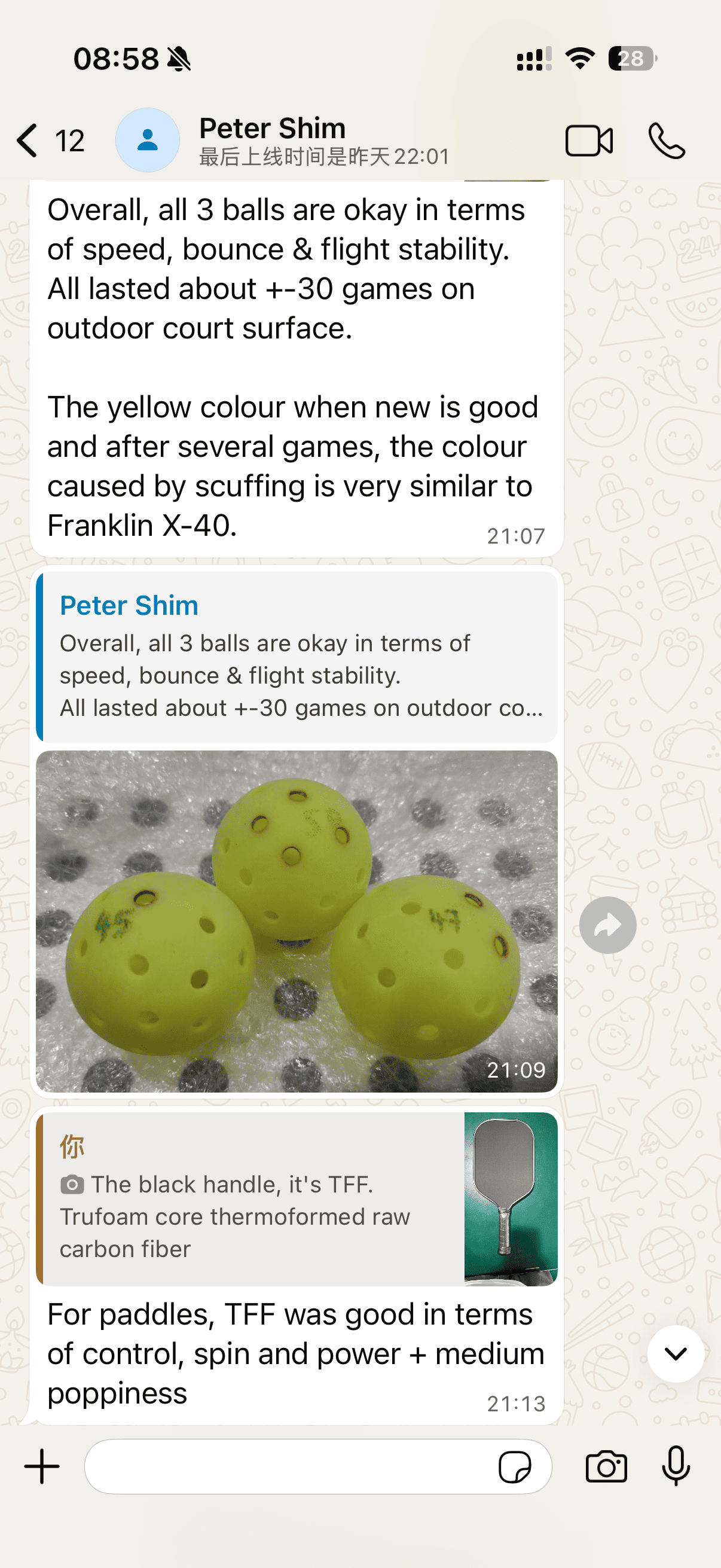
Overall, all 3 balls are okay in terms of speed, bounce & flight stability. All lasted about +-30 games on outdoor court surface.
FAQ
What is the difference between semi-thermoformed and full thermoformed?
A semi-thermoformed paddle starts with adhesive cold pressing of the face and core, followed by edge wrapping and an additional heat-pressing stage. A full thermoformed paddle has no adhesive cold-press bonding step; the face materials, core and surrounding structure are prepared for one-piece molding. We do not manufacture semi-thermoformed paddles.
Does heat pressing always mean a paddle is full thermoformed?
No. A semi-thermoformed paddle also goes through a final heat-pressing stage. The important difference is how the complete structure is built before heat pressing.
How many face-material layers do you use?
Every full thermoformed paddle we make uses four face-material layers: three T700-grade carbon-fiber layers and one Toray carbon-fiber layer.
What is your MOQ?
100pcs
Can you make a custom sample first?
Yes. The sample can use the proposed core, surface material, thickness, texture and branding. Typical sample time is 2–7 days.
Can you develop a paddle from my reference model?
Yes. Tell us what you like and what you want to change. We can develop toward your target weight and balance, then you approve the physical sample before production.
Will my bulk order follow my approved sample?
Yes. The approved sample and written specification are used as the production reference. Confirm construction, materials, weight range, surface, artwork and packaging before production.
How long does production take?
Typical production time is 8–12 days
Can you support USAPA Pickleball testing?
Yes. Tell us before sampling so that construction, sample preparation and testing can be planned. Your final model must be submitted and tested separately.
Full Thermoformed Pickleball Paddle Development Guides
Read these guides to compare paddle cores, surfaces, thicknesses, testing requirements and supplier questions.

Gen 5 Core (EVA + EPP) Thermoformed Pickleball Paddle Manufacturer: Boomstick OEM Guide
Read article
Best Pickleball Paddle Surfaces for Spin: Raw Carbon VS Kevlar, Texture Options
Read article
How Pickleball Paddle Cores Change Feel, Power and Durability?
Read articleHow to Choose Pickleball Paddle Thickness (10/13/16mm)? OEM Guide for Brands
Read article
How Pro Clubs Should Place a Pickleball Paddle Pilot Order? Gen 4/Gen 5 Test Checklist
Read article
