跳到内容
跳到内容 
When you decide to launch a pickleball paddle line, choosing a factory is not the first decision you should make. The very first question is: in which country should you manufacture your paddles?
The country you choose China, USA or India will shape your unit cost, landed cost, margins, technology options, lead times, and the types of supply chain risks you must manage.
This guide compares pickleball paddle manufacturing in China, USA and India from a practical OEM point of view, so brands can make realistic decisions instead of just following marketing slogans.
Why Your Manufacturing Country Is The First Big Decision
Most brands start by searching for a “pickleball paddle manufacturer” or “pickleball paddle factory” and then compare names, certifications and price quotes.
But the country-level decision sits one level above that. It directly affects:
-
Unit cost and total landed cost
-
Technology ceiling (thermoformed paddles, foam cores, Gen 4 / Gen 5, PMI, etc.)
-
Lead time, replenishment speed and model-refresh flexibility
-
How much customization you can realistically do with cores, sets, accessories and packaging
-
The cost and risk structure you will live with for the next 3–5 years
Before you compare individual factories, you should first decide which country makes sense for your current stage, budget and brand roadmap.
China Vs USA Vs India At A Glance
From an OEM buyer’s point of view, you can roughly see the three main options like this:
-
China: scalable OEM base for thermoformed and advanced core paddles, with broad customization and competitive pricing from entry to high-end.
-
USA: best for very small batches, fast local projects and “Made in USA” branding, but with much higher unit cost and limited capacity for large OEM.
-
India: emerging low-cost option mainly for basic paddles, still developing in thermoformed and foam core technology, with more uncertainty in consistency.
A quick overview comparison looks like this:
| Factor | China | USA | India |
|---|---|---|---|
| Typical Unit Cost | Competitive across entry to high-end | Highest | Lowest on very basic models |
| Technology Level | Strong: thermoformed, EPP, EVA+EPP, PMI | Mixed, often limited for OEM | Mostly basic PP/composite, advanced cores limited |
| MOQ Flexibility | Medium to good (depends on factory) | Good for very small batches | Often small-to-medium, case by case |
| Lead Time & Scalability | Strong for containers and repeat orders | Good for prototypes, weaker for large wholesale | Improving, but systems still developing |
| Best Use Case | Serious OEM lines, thermoformed + foam cores | Niche “Made in USA” image runs, local specials | Ultra-basic, price-driven entry paddles |
In the following sections, we go deeper into what each country really offers—and what it does not.
Manufacturing In China: For Scalable OEM Brands
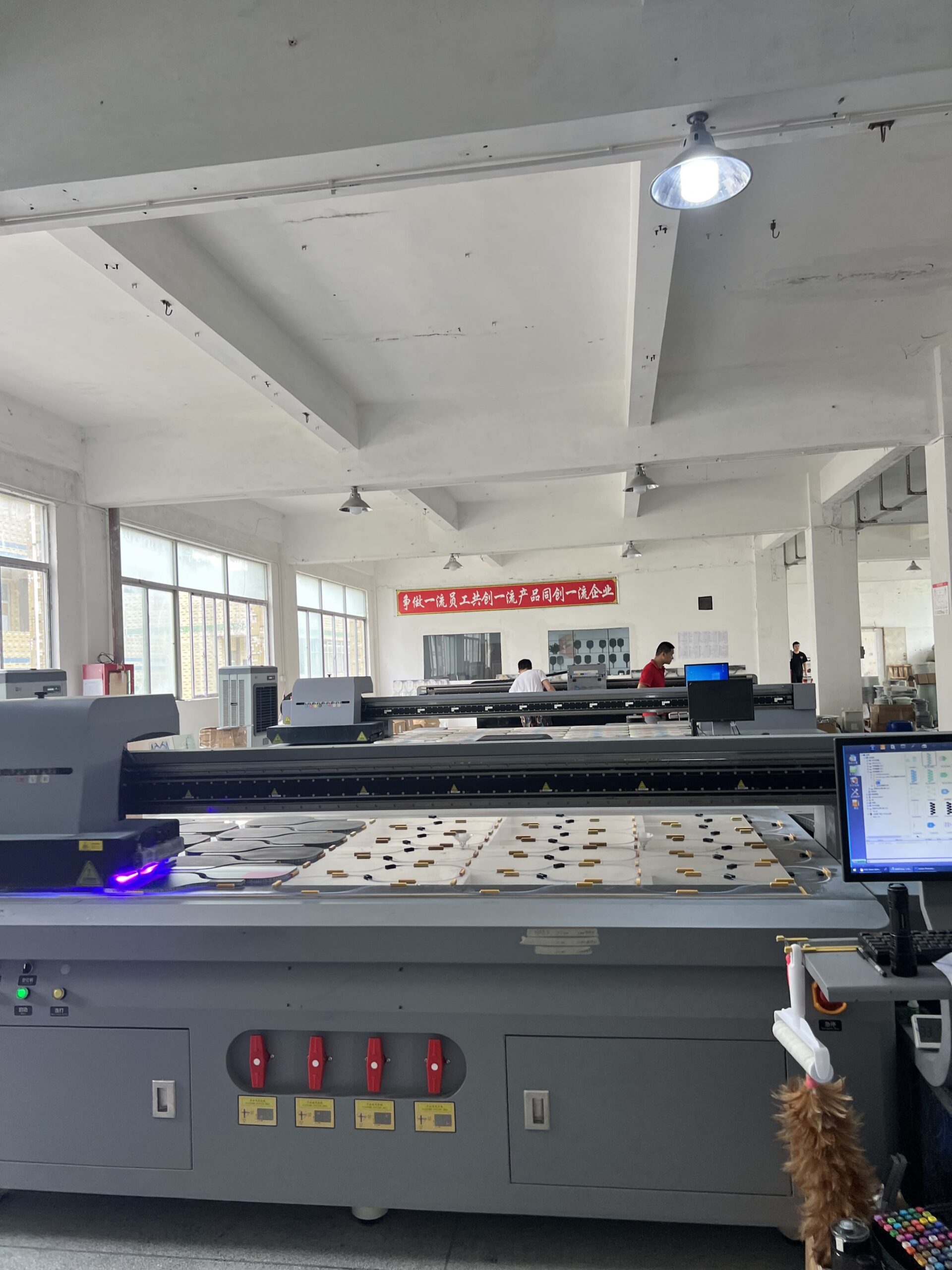
In today’s pickleball market, most of the world’s serious OEM capacity for thermoformed and advanced core paddles is concentrated in China.
This is where brands can combine volume production with access to PP honeycomb, EPP, EVA + EPP and even PMI core projects under a single supply-chain ecosystem.
Key Strengths Of Manufacturing In China
-
Broad technology coverage
Chinese paddle factories can support classic cold-press PP honeycomb paddles, thermoformed PP shells, Gen 4 PP+EVA structures, high-density EPP cores, EVA + EPP Gen 5 style hybrids and selected PMI projects in the same ecosystem.
-
Mature material and accessory supply chain
Carbon fabrics, fiberglass, grips, edge guards, bags, boxes and set accessories are all available at industrial scale, which makes it easier to build a full product line instead of just a few SKUs.
-
High capacity and container-shipping experience
Many factories are used to handling full containers, repeated orders and multiple models at the same time, which is critical once your brand starts to grow.
-
OEM culture built around brands
Chinese factories are used to working with brands, wholesalers, Amazon sellers, clubs and event organizers, and many processes are designed from the beginning with OEM flexibility in mind.
Hidden Risks To Watch For In China
Of course, choosing China does not automatically guarantee a good result. You still need to manage some common risks:
-
Not every “factory” is a true manufacturer
Some websites are actually trading companies that forward your order to someone else, which can make quality and communication harder to control.
-
Mislabelled structures and materials
Some suppliers may call a cold-press paddle “thermoformed”, or mix cheaper materials into what is marketed as an advanced foam or raw-carbon structure.
-
Lowest-quote trap
If you only chase the lowest Chinese quote, you may pay later in the form of higher defect rates, more returns and slower after-sales response.
Once you know you want to manufacture in China, the key is to choose the right type of OEM partner:
-
A factory that clearly explains which core structures they truly specialize in (thermoformed PP, EPP, EVA + EPP, PMI, etc.)
-
A factory that is honest about what they do not recommend, instead of promising every structure at any price
-
A factory that is willing to talk about testing, golden samples and consistency, not only unit price
For brands that want thermoformed paddles, foam cores and a scalable product line, China is usually the most realistic and balanced choice for cost, technology and long-term capacity, as long as you select your OEM partner carefully.
Manufacturing In USA: For Small Batches And “Made In USA” Story
For some brands, especially those focused on the US domestic market, manufacturing locally in the USA is attractive because of the “Made in USA” label and shorter physical distance.
1 Strengths Of Manufacturing In USA
-
Very small-batch flexibility
Local factories can be a good fit for tiny custom runs, promotional paddles and limited-edition collaborations.
-
Same time zone and language
Communication and decision cycles can be faster when everyone is in the same time zone and speaks the same language.
-
Strong origin story
For buyers who value domestic production, “Made in USA” can be a powerful part of the brand story and pricing strategy.
2 Practical Limits Of US Manufacturing
-
Significantly higher unit cost
Compared with China or India, production cost per paddle is usually much higher, especially when you move into thermoformed and advanced foam core paddles.
-
Many facilities focus on own brands
A lot of US facilities prioritize their own brands rather than flexible OEM for multiple external brands, which limits options for new overseas brands.
-
Limited capacity for large OEM wholesale
Supporting large, continuous wholesale volumes at a competitive price is more difficult when manufacturing only in the USA.
3. When Does US Manufacturing Make Sense?
US manufacturing can still be a rational choice in some scenarios:
-
You only need a very small quantity, and international freight, duties and QC travel would consume too much budget.
-
Your entire brand story and pricing are built around “Made in USA”, and your customer base is willing to pay for that.
-
You already have a main OEM base elsewhere and just want a small US-made line as an image product or PR tool.
For most new brands, USA works better as a secondary, niche tool for special projects rather than as the main OEM base.
Manufacturing In India: Low-Cost Entry, Still Developing
India is an emerging production base for various sports goods, and some factories are starting to make pickleball paddles as well.
For OEM buyers, the main perceived advantage is the potential for low cost on simple constructions.
1. Potential Strengths Of Manufacturing In India
-
Lower labor cost on basic paddles
Labor cost can be lower than in many other countries, which may translate into attractive ex-factory prices for very simple paddles.
-
Existing composite experience in other sports
Some factories already have experience with composite materials from other sports categories, which can transfer partially to pickleball paddles.
2. Current Limitations For Pickleball Paddles
-
Focus on basic cores
Most current projects are still focused on simple PP honeycomb or basic composite cores rather than advanced thermoformed or foam core designs.
-
Limited know-how in advanced cores
Experience with Gen 4 / Gen 5 cores, EPP, EVA + EPP and PMI projects is still relatively limited.
-
Systems still developing
Export logistics, quality consistency and long-term mass production systems are still being built, which may require more direct oversight and involvement from your side.
3. “True Cost” Versus Ex-Factory Price
Very low ex-factory prices can be attractive at first glance, but may be offset by:
-
Higher defect and return rates that hurt your margin and reputation
-
Extra time spent on supervision, communication and problem solving across distance and time zones
-
The need to reorder or rework products that do not meet your market’s expectations
India can be explored cautiously for ultra-basic, price-driven paddles, but it is rarely the best foundation for a high-performance thermoformed and foam core product line.
How Smart Brands Mix Manufacturing Locations
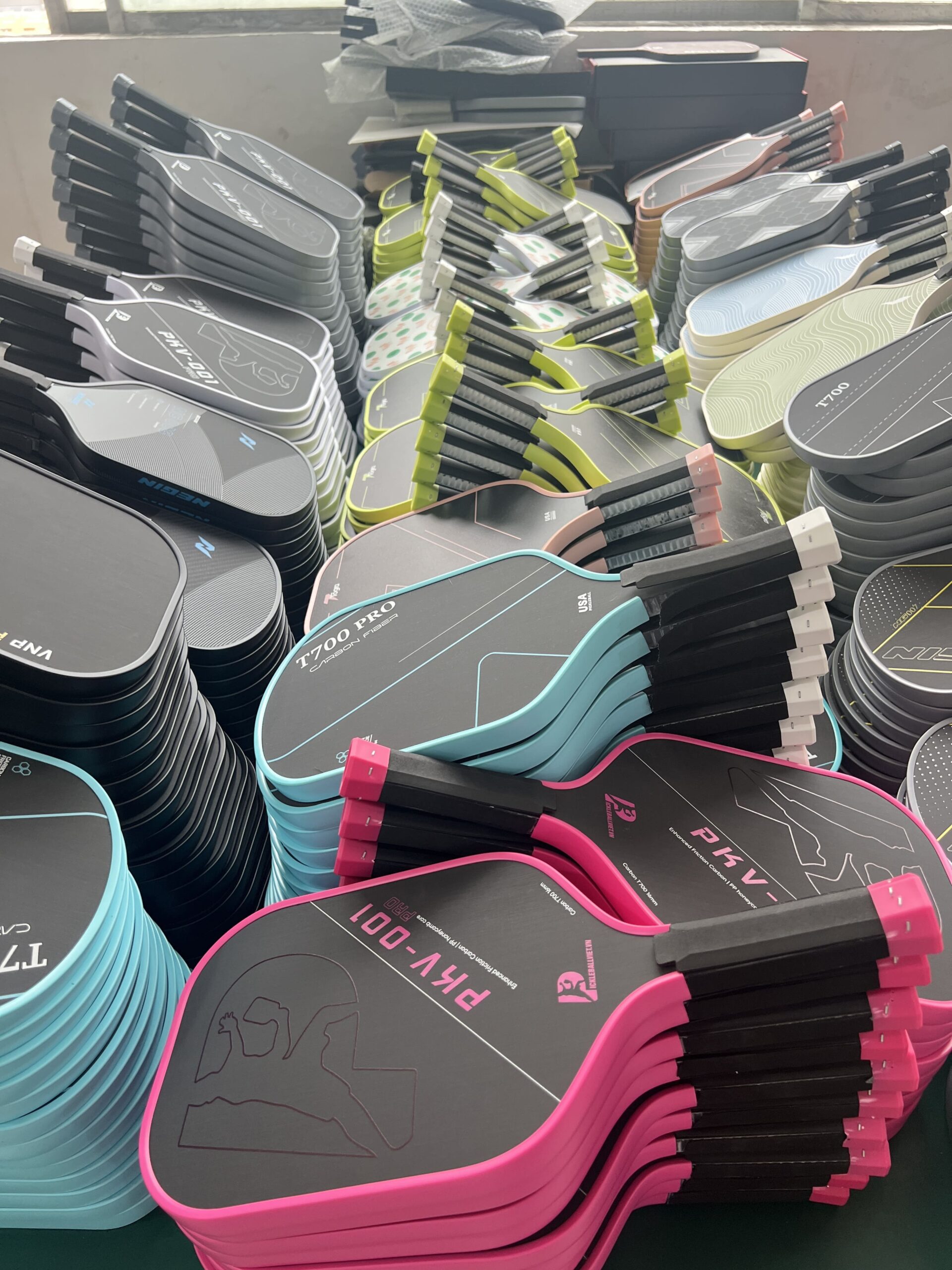
Many mature sports brands do not rely on a single country for everything. Instead, they assign different roles to different locations in their supply chain.
Some mixed strategies that work well in practice include:
-
Use China as the main OEM base for thermoformed and foam core paddles and for the full product line, while using USA only for very small “Made in USA” image runs or collaborations.
-
Use China for medium and high-end paddles and bundled sets, while testing a few ultra-low-price entry paddles from India for highly price-sensitive markets.
-
Keep design and early prototypes close to the home market, but move repeated mass production and complex core structures (EPP, EVA + EPP, PMI) to a specialized Chinese OEM factory.
For new brands, it is usually more efficient to pick one main OEM base first, most commonly China, like iAcepsort, build a stable product line there, and only then experiment with secondary locations if there is a clear strategic reason.
Hidden Costs And Risk Beyond The Ex-Factory Price
Many buyers compare countries or factories mainly by looking at ex-factory price per paddle. But the real cost of a sourcing decision includes much more than just the FOB number.
Some key hidden cost factors include:
-
Defect and return rates, and the cost of replacing or refunding bad paddles
-
Extra time spent on back-and-forth communication, QC, rework and firefighting when problems occur
-
Freight, insurance, duties and customs clearance costs to your destination market
-
Brand damage when quality problems reach customers, and the marketing cost to repair trust
-
Lost opportunity when late deliveries make you miss a season or important sales window
A country or factory that looks slightly more expensive on paper can easily turn out cheaper in reality if it gives you:
-
Lower defect rates and more consistent quality
-
Clearer communication, fewer surprises and predictable lead times
-
Better technical support when something goes wrong, so problems are fixed quickly and professionally
Choosing between China, USA and India is not just a comparison of nominal unit prices. It is a choice about which cost and risk structure you are willing to manage over the next 3–5 years.
Decision Guide: Which Country Fits Your Brand?
Instead of asking “Which country is best?”, it is more useful to ask “Which country fits my current stage, budget, product roadmap and risk tolerance?”.
A simple decision logic looks like this:
-
If your brand goal is to build a scalable product line with thermoformed and advanced core paddles over the next 3–5 years, then China should be your main OEM base.
-
If you only need a very small batch built around a strong “Made in USA” story and your retail price allows much higher cost, then a local US factory can be used for niche projects.
-
If you only want very basic paddles at the lowest possible cost and you do not plan to build advanced thermoformed or foam core lines, then India can be explored carefully for selected SKUs.
For many serious pickleball brands, the most robust setup looks like this:
-
Keep design, branding and marketing close to the home market
-
Base main OEM production—especially thermoformed, EPP, EVA + EPP and PMI projects—with a specialized factory in China
-
Add small local runs or collaborations in USA or other regions later when there is a clear strategic purpose
People also Ask: Common Concerns About China vs USA vs India
Is “Made in USA” always higher quality than paddles made in China?
Not necessarily.
Quality depends more on the specific factory, materials and QC standards than on the country itself. There are excellent paddles made in the USA and excellent paddles made in China, and there are also low-end factories in every country.
For advanced thermoformed and foam core paddles, a large part of the world’s practical know-how and volume is currently implemented in specialized Chinese factories.
If I choose China, will my factory copy my design or sell my mold to others?
There is always some IP risk in any manufacturing country, including China, USA and India.
The key is how you manage it:
-
Work with a factory that clearly focuses on long-term OEM relationships, not one-off trading
-
Use clear written agreements about mold ownership and logo usage
-
Avoid sharing your full future roadmap with suppliers who do not show technical depth or business stability
Factories that truly depend on long-term OEM business understand that abusing molds or copying customer designs will damage their own reputation and future orders.
Are paddles made in India always cheaper in the end?
Not always.
Ex-factory prices can be lower for basic structures, but once you include the cost of defects, returns, extra supervision and potential reorders, the real cost advantage can become smaller or completely disappear.
Are import duties and freight from China so high that local production becomes cheaper?
Freight and duties do add cost and must be calculated carefully.
However, because manufacturing cost in China is usually more efficient for thermoformed and advanced core paddles, the total landed cost is still competitive for most brands even after including freight and duties.
The break-even point depends on your order volume, target retail price and sales strategy. For many serious OEM projects, China remains the most balanced option after a full landed-cost calculation.
Can I start small with a Chinese OEM factory, or do I always need a very large MOQ?
It depends on the factory.
Some factories only accept very large orders, while others are willing to start with reasonable MOQs for brands that clearly plan to grow.
The key is to be transparent about your current volume and future roadmap, and to choose a factory that values long-term cooperation more than chasing one large, one-time order.
Why Many Serious Brands Base Their Main Production In China – And How iAcesport Fits
Over time, many serious pickleball paddle brands arrive at a similar conclusion.
They can prototype or run tiny image projects in their home country or other regions, but for long-term thermoformed and advanced core manufacturing, China offers the most realistic combination of cost, technology, capacity and customization.
Inside China, however, not all factories are equal. Some focus mainly on basic cold-press paddles, some operate more like trading companies, and a smaller group is truly specialized in thermoformed and foam core OEM manufacturing.
iAcesport positions itself in this specialized group
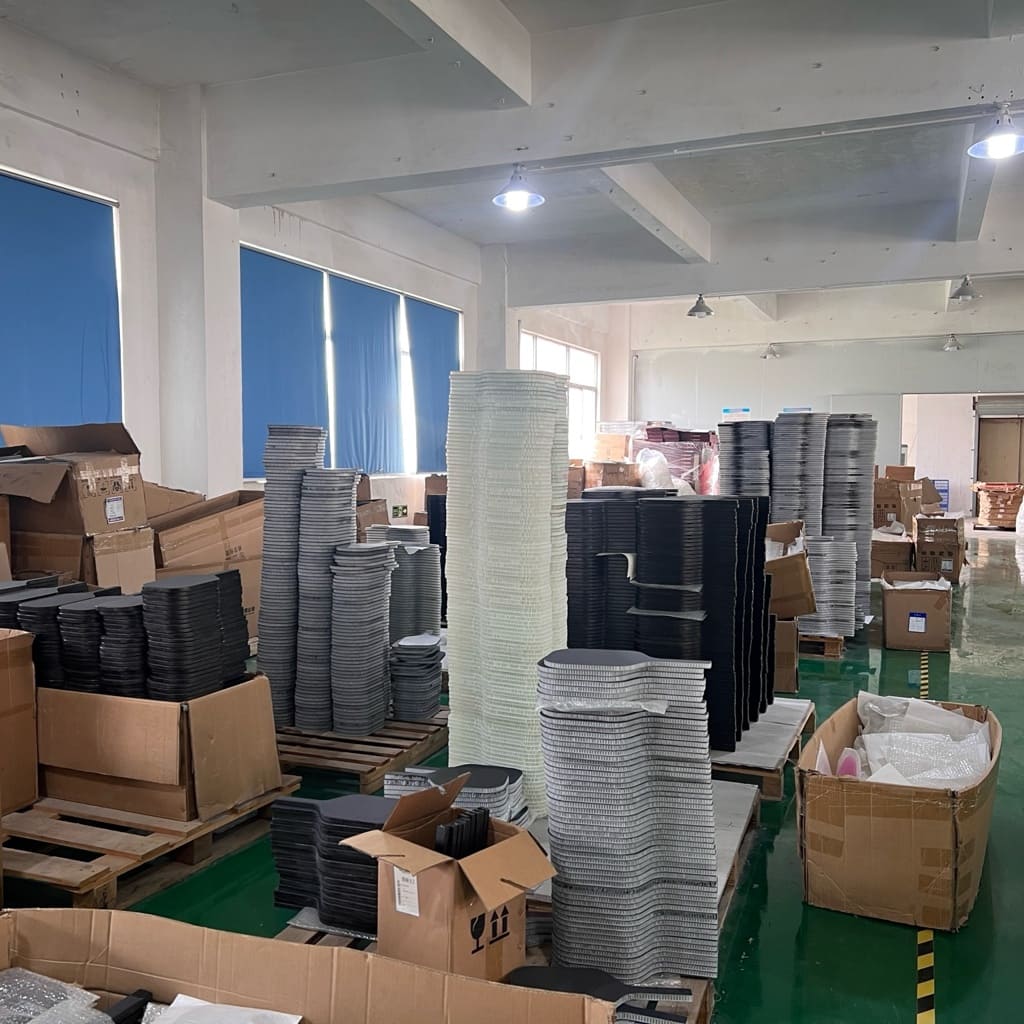
Instead of chasing every possible product, we focus on doing a narrower range of technologies very well, so brands can build stable long-term lines on top of them.
At iAcesport, our capabilities include:
-
A dedicated paddle factory with monthly output that can exceed 150,000 paddles
-
Experience across the full structure range: from classic cold-press PP honeycomb to thermoformed PP, Gen 4 PP+EVA, high-density EPP cores, EVA + EPP hybrid cores and selected PMI projects
-
Internal performance checks for elasticity, rebound and swing weight, so your pickleball paddle keep a consistent on-court feel over time
-
A long-term export track record with brands, wholesalers, Amazon sellers and event organizers in the USA, Europe, Canada, Australia and multiple Asian markets
Our principle is simple: we are more cautious about quality than about order volume. If a project forces us to cut corners and risks damaging your brand reputation, we would rather say no than ship something we cannot stand behind.
If you are currently deciding between pickleball paddle manufacturing in China, USA or India and want an honest technical discussion about what is realistic for your target price, player level and product roadmap, you are welcome to talk with iAcesport.
Together, we can design a production strategy where the right models are made in the right place, and where your main thermoformed and foam core paddles are built on a stable manufacturing foundation in China.