跳到内容
跳到内容 
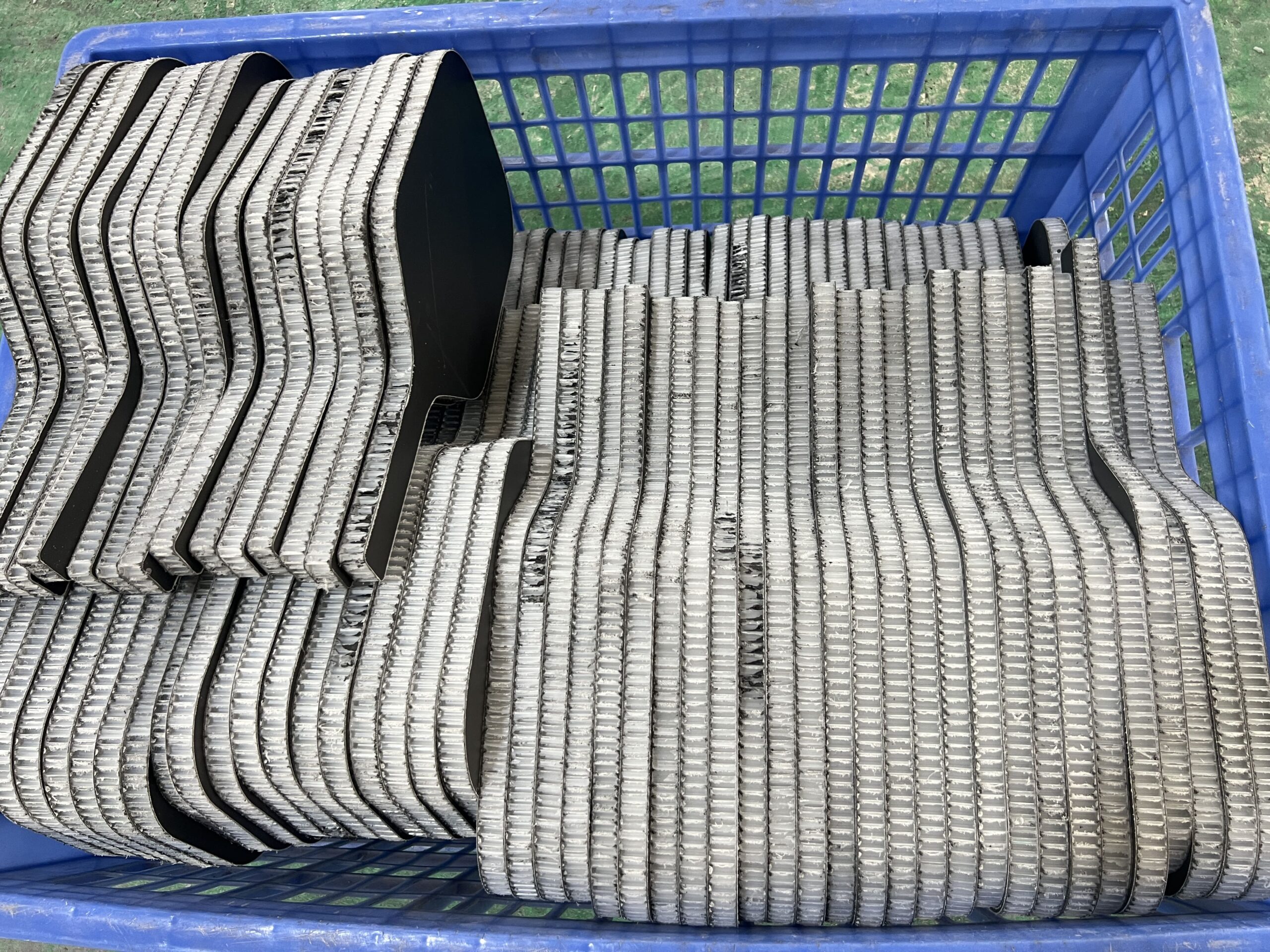
When buyers ask me to quote a pickleball paddle, the real question is rarely “Can you make it?”
The real question is: can the factory make 3,000 or 10,000 paddles that feel the same, and can they prove it with batch records?
In OEM manufacturing, QC is not a promise. It is a system you can audit through evidence: incoming inspection, in-process control, final inspection, and shipment release.
I’m writing this from the factory side. I’ve seen too many new brands lose money not because they didn’t work hard, but because one or two unstable batches destroyed their review score and forced refunds.
If you sell online, especially on Amazon, small inconsistencies become expensive fast.
This guide is meant to be practical: you can copy the QC table, paste it into your sourcing checklist, and use it to screen suppliers.
Who this guide is for
This is for brands, retailers, distributors, and Amazon sellers who source paddles from China and want fewer returns and fewer “surprises” after mass production.
It’s also for schools, clubs, and tournament organizers that need stable feel across a batch, not just a nice-looking sample.
If your goal is to build a long-term brand, QC matters more than saving one or two dollars on the first order
The biggest buyer mistake I see
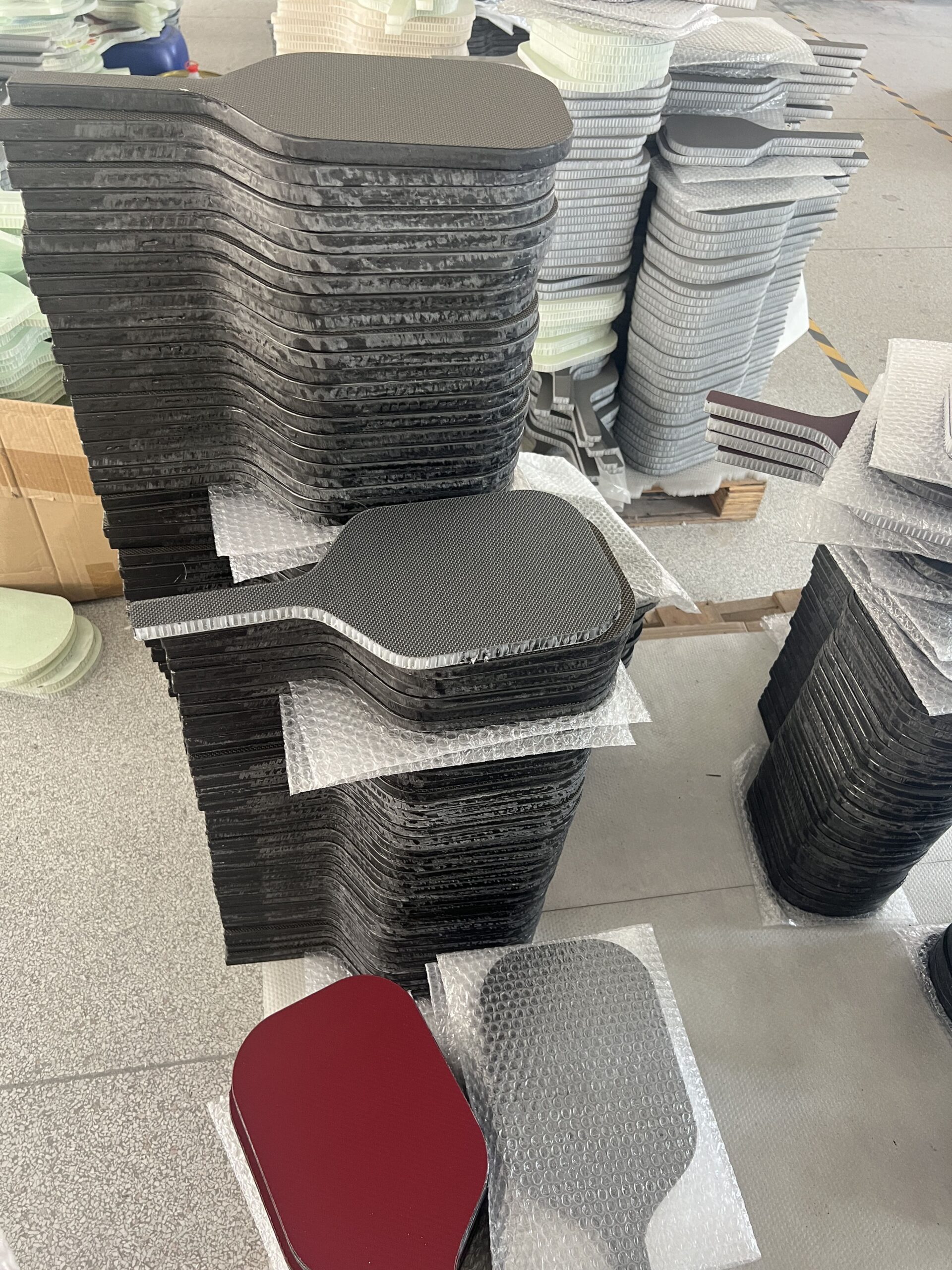
Many overseas buyers treat “thermoformed” and “cold-press” as marketing words.
But in OEM manufacturing, that choice directly affects your target player level, your retail price band, and your return rate.
A reliable China factory should clearly explain what they can do in cold-press PP honeycomb, and what they can do in thermoformed structures
They should also match each structure to the right customer segment and price band, and be honest about what they do not recommend.
If someone sells “thermoformed” at a suspiciously low price, be careful,thermoformed and cold-press cost structures are very different.
I also see another silent trap: some suppliers use carbon-look paint or “carbon powder” marketing to imply carbon fiber. That often becomes a return-rate bomb later.
What “real QC” looks like inside a paddle factory
In a real factory, QC is not only the final inspector checking appearance. QC starts before production.
A practical QC system has four layers that leave records behind:
-
Incoming material inspection (IQC)
-
In-process inspection (IPQC)
-
Final inspection (FQC)
-
Outgoing / pre-shipment inspection and release (OQC)
If a supplier can only show “final inspection photos,” that is not a system. It is damage control.
The part buyers skip most: Incoming material inspection (IQC)
Many returns are not caused by assembly mistakes,they start from unstable materials and inconsistent batches.
At the material stage, buyers should pay attention to these categories because they affect feel and bonding stability later:
-
Face materials (carbon fiber / Kevlar): supplier consistency, weave style, and how the material behaves in production.
-
PP honeycomb: flatness, cell structure stability, and how “ready” it is for bonding.
-
Foam cores (EPP / EVA+EPP / PMI): density logic, rebound feel stability, and compression behavior.
-
Adhesives / bonding films: batch control and stability.
If a supplier cannot explain what they check at IQC, they also can’t explain why delamination happens when you complain later.
12 QC tests that matter most in real OEM and wholesale orders
Below is a practical QC table designed for OEM buyers, Amazon sellers, and wholesalers
QC Testing Comparison Table
| QC Item | What It Prevents | How It’s Verified (Factory-Proof) | Frequency | What Buyers Should Ask For |
|---|---|---|---|---|
| Weight consistency | Same model feels different | 100% weighing + batch log | 100% | Batch weight report screenshots |
| Thickness mapping | Dead spots, inconsistent rebound | Multi-point thickness gauge | Per batch / per shift | Thickness point photos |
| Swing weight control | Heavy/light complaints | Swing weight measurement tool | Per batch | Target swing weight range |
| Balance point check | Awkward handling | Balance jig measurement | Sampling | Balance range definition |
| Face bonding check | Delamination risk | Bond sampling + edge visual check | Sampling | Bond check method + evidence |
| Edge / foam bonding | Rattles, edge separation | Tap test + compression check | Sampling | Random pick tap test results |
| Rebound screening | “Dead” paddles | A/B bounce comparison vs golden sample | Sampling | Comparison notes/photos |
| Surface durability | Spin loss, fast wear | Abrasion rub + texture inspection | Sampling | Before/after texture photos |
| Handle twist resistance | Loose handle, safety issues | Torque / twist resistance test | Sampling | Test notes + pass criteria |
| Cosmetic alignment | Brand image damage | Light-box final inspection | 100% | Final QC checklist photos |
| Packaging drop test | Shipping damage | Box/carton drop simulation | Packaging change | Drop test video + packing spec |
| Pre-shipment sampling | Batch surprises | AQL-style random inspection | Every shipment | AQL level + inspection report |
The 3 failure modes that create the most returns (and which test catches them)
In my experience, most buyer pain is concentrated in three areas.
The first is inconsistency: weight spread, swing weight drift, and “same model different feel.”
The checks that catch this are weight logs, swing weight control, and thickness mapping.
The second is bonding failure, which later turns into delamination claims or edge separation complaints.
The checks that catch this are bonding sampling, edge/foam bonding checks, and stable process parameters.
The third is shipping and packaging damage, which becomes refunds and bad ratings, especially in e-commerce.
The checks that catch this are packaging specs and drop tests whenever packaging changes.
If a factory can’t explain which test stops which failure mode, that’s usually because they don’t run a real QC system
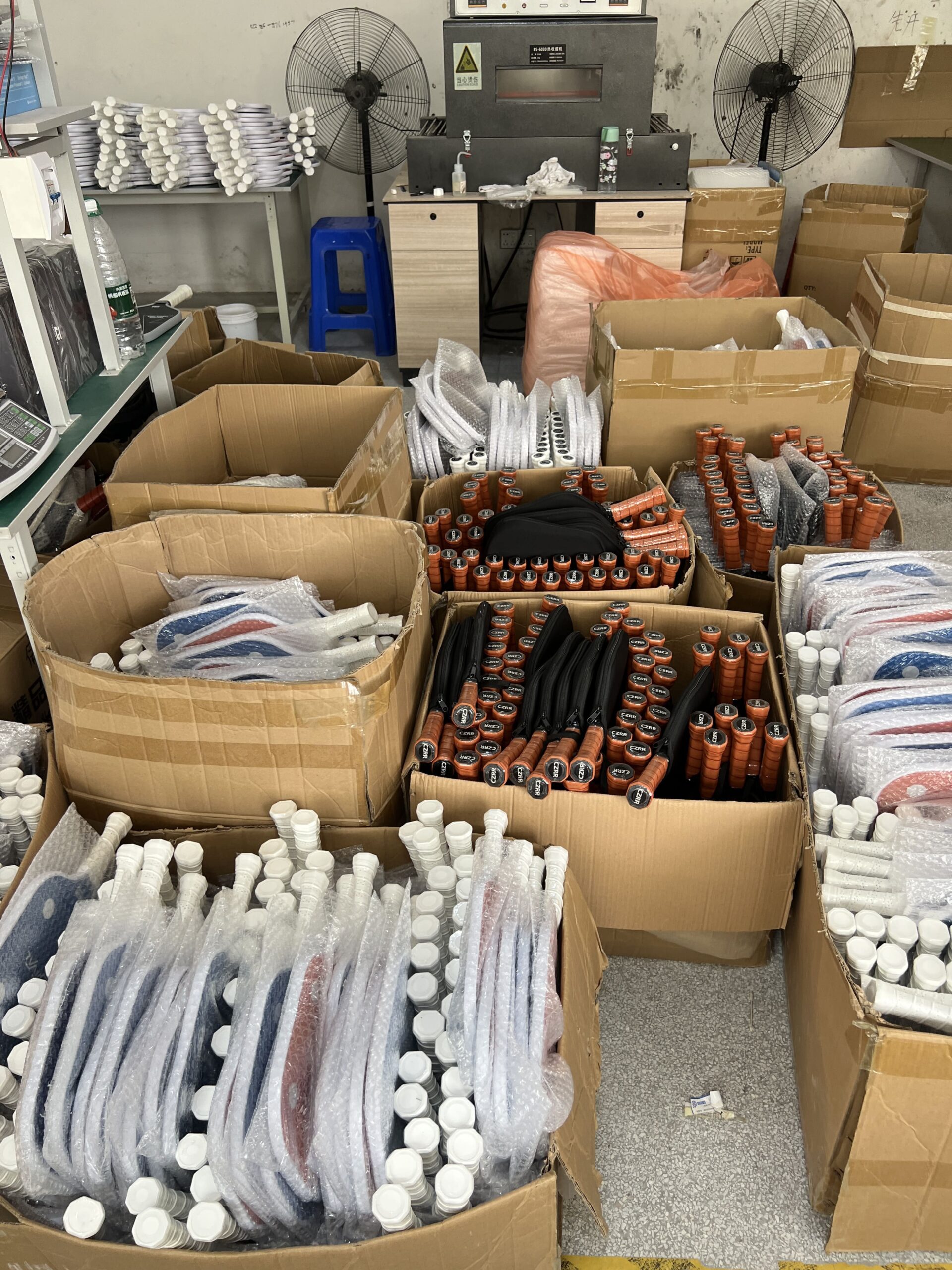
Real case: a buyer ordered from another factory, got complaints, then fixed the listing after switching to a controlled system
A US Amazon seller came to us after a painful lesson: they ordered a “thermoformed” batch from another supplier because the quote looked attractive and the sample felt fine.
After the shipment arrived and went live, complaints started showing up in a very typical pattern.
Some buyers said the paddle felt inconsistent even within the same model.
Some described certain paddles as “dead” or “no pop,” especially compared with what they expected from the listing.
A smaller portion reported edge rattle or weird sounds, even though the paddles looked normal in photos.
For an Amazon seller, that mix is dangerous: returns rise, review scores fluctuate, ad performance gets unstable, and suddenly the product feels hard to scale.
When the buyer contacted us, the first thing we did was not promise a better price. We asked for evidence so we could locate the real failure point.
We asked for photos and videos of returned units, a few physical samples if possible, their original spec sheet, and the supplier’s batch QC records (if any).
What we found was not one big defect, but multiple small gaps that stacked into big after-sales pain.
The supplier had no clear swing weight control, so paddles with similar listed weight could still feel very different in hand.
Thickness checks were not done as multi-point mapping, so the batch had more feel variation and occasional dead zones.
For the edge issue, the root cause was bonding control. Visually the edge looked acceptable, but tap-sound checks would have revealed weak bonding areas before shipping.
We proposed a fix plan that was simple but strict, because the goal was not make one good batch. The goal was make every restock feel the same.
We rebuilt the product standard around measurable items: weight range, swing weight range, thickness measurement points, bonding pass rules, and packaging requirements.
We locked a golden sample and required A/B comparison for rebound and dead-spot screening during production, so operators had a clear reference instead of guessing.
After the buyer switched to a controlled production system, the next restock became much more stable. Complaints dropped, reviews became more consistent, and sales started climbing again because ad performance stopped getting hit by rating swings.
The lesson they told us later was very honest: a cheap batch is not cheap if it creates returns and damages the listing.
If you’re overseas, here’s a better control plan you can actually run
If you’re overseas, you don’t need to watch the factory. What you need is a control system that forces consistency through documents, checkpoints, and shipment gates.
Here is the best structure I recommend buyers use, because it’s realistic, repeatable, and doesn’t rely on live calls.
Build a Quality Agreement that sits above the PO
A PO tells the factory what to produce. A Quality Agreement tells the factory what is considered pass, and what happens if it fails.
In the Quality Agreement, lock these items in writing:
-
Weight range per model, and how it will be recorded.
-
Swing weight range, and how many units per batch are measured.
-
Thickness measurement points, not just “thickness = 16mm.”
-
Bonding pass rule, including a required tap-sound check for edge/foam.
-
Cosmetic acceptance rules (print alignment, edge cleanliness).
-
Packaging pass rule for e-commerce, including a drop test requirement when packaging changes.
This document prevents the most common argument later: “We didn’t know you cared about that.”
Lock a golden sample like a contract object
Many buyers approve a sample, but they don’t lock how the sample is used during mass production.
I recommend locking it in two steps:
-
The factory keeps one sealed golden sample for line-side comparison.
-
The buyer keeps one sealed golden sample for dispute resolution.
Also require one sentence: any mass batch must be compared to the golden sample for feel screening, not only appearance.
Use shipment gates: first-batch validation, then scale
For new brands, the first mass order should be treated as a validation batch, not a profit batch.
Set your rule like this:
-
First batch: tighter ranges, higher sampling, full evidence pack required.
-
Second batch: scale only after consistency is proven.
This avoids the most expensive mistake: scaling a process that is not stable yet.
Use third-party inspection only when it’s high-leverage
You don’t need third-party inspection every time. Use it when it has the highest ROI.
-
First mass production.
-
New structure you haven’t sold before (thermoformed foam-edge, EPP, EVA+EPP, PMI).
-
Large replenishment for Amazon
This turns inspection into a shipment gate, not just a report
A simple rule I suggest when choosing long-term partners
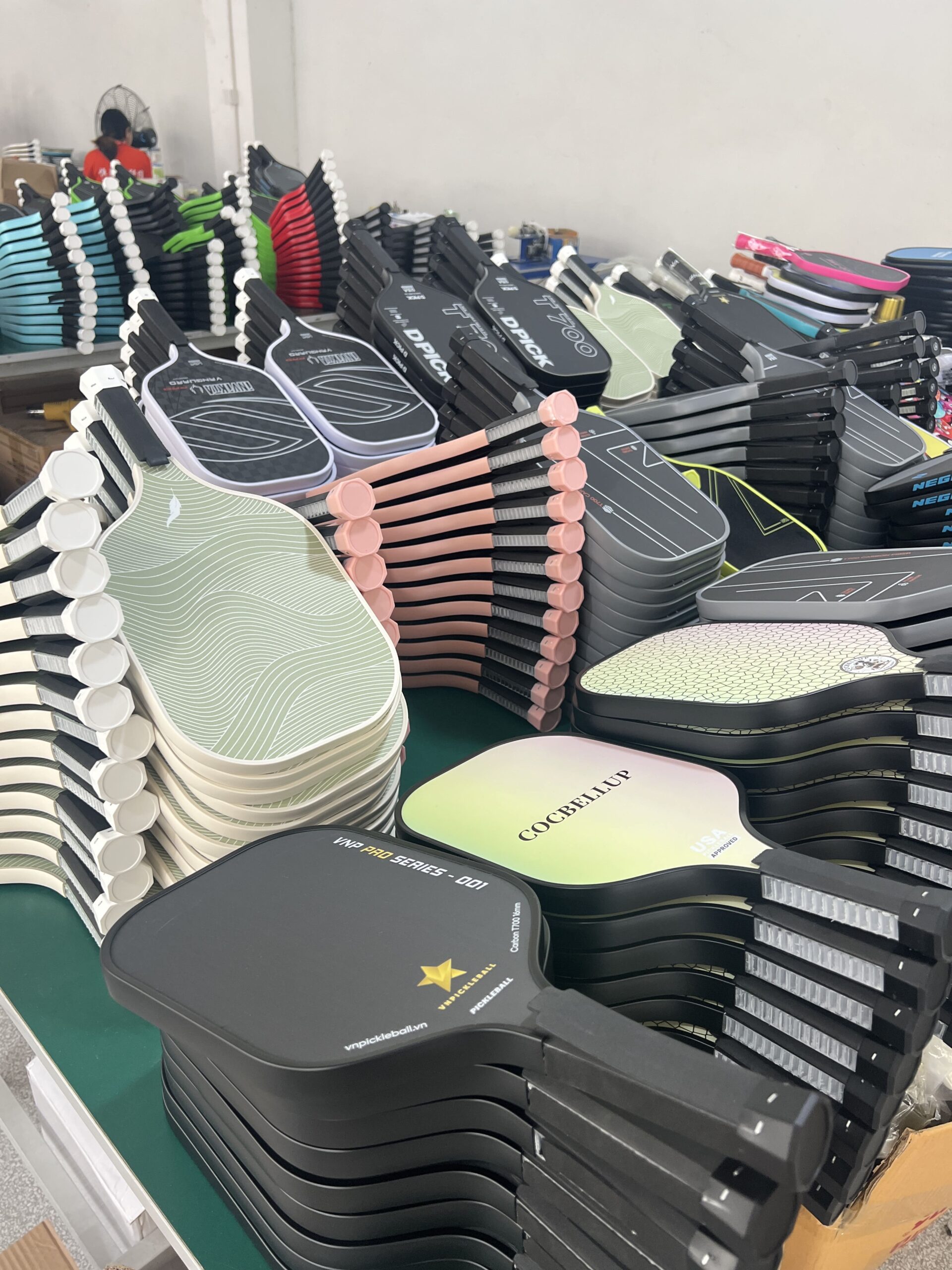
Choosing the right pickleball paddle factory is not about who gives the lowest price. It’s about who can help your brand survive the next 3–5 years.
In a competitive market, a factory that protects you from mistakes is worth far more than small savings.
If a factory can explain the QC system clearly and provide evidence packs and batch records, you likely found a real partner.
If they hesitate, give vague answers, or refuse to provide records, walk away early.
People Also Ask: OEM QC and China pickleball paddle factories
Q1: What causes delamination in thermoformed paddles?
Delamination usually comes from bonding control issues, material mismatch, or unstable forming pressure/temperature. A good factory treats bonding as a controlled process, not luck.
Q2: How do I make sure samples match mass production?
Lock the BOM and process parameters, require batch records on the first mass order, and use a golden sample A/B comparison method during production.
Q3: What QC matters most for Amazon sellers?
Consistency (weight/swing weight), dead-spot screening, cosmetic inspection, and packaging drop tests.
Q4: If a batch has issues, how should after-sales be handled?
Buyers fear responsibility shifting. A trustworthy factory confirms issues with evidence, proposes solutions fast, and takes responsibility when it’s on them.
Q5: What is the fastest red flag when screening a supplier?
They can’t provide batch records or a QC evidence pack, and they avoid locking QC items in the PO.
Q6: Is 100% inspection enough?
It helps, but process control matters more. If the process is unstable, you only find problems—you don’t prevent them.
Q7: Do I need third-party inspection for every shipment?
Not always. Use it for the first mass order, new structures, and high-risk replenishments.
A practical note from iAcesport
At iAcesport, we encourage buyers to ask tough questions. A trustworthy factory should not avoid any topic.
We run five dedicated production lines with 150,000+ monthly capacity and focus on cold-press PP honeycomb, thermoformed constructions (foam-edge and full-foam options), and high-density EVA + EPP hybrid cores in the 8x–10x expansion range, supported by in-house elasticity, rebound, and swing-weight testing.
Our principle is simple: we would rather refuse an order than ship a low-quality batch that can damage a brand. Building a brand is hard, but damaging it can happen in one or two wrong shipments.
If you want, you can send us your target retail price band, player level, and your preferred core structure, and we’ll suggest a QC control plan that matches your market positioning before you scale volume.