跳到内容
跳到内容 
Why Core Structure Matters More Than Most New Brands Realize
For many new pickleball brands, the first questions are usually about surface material and graphics: “Should we use raw carbon or Kevlar? Can we print this design?”
But in real play, the core and foam structure decide most of what players feel: power, control, vibration, sweet spot size, sound and even durability. The surface is important, but it is the core that gives the paddle its skeleton and heart.
If your brand wants to be taken seriously by intermediate and advanced players, you need to understand the differences between PP honeycomb, thermoformed PP honeycomb, Gen 4 PP + EVA cores, EPP foam cores, EVA + EPP Gen 5 style hybrid cores and PMI foam cores.
This guide explains what each core is, what it feels like, its pros and cons, and how to choose the right core roadmap for your OEM projects in China.
The Main Foam Core Families We Will Compare
In this guide, we focus on the core structures that matter most for modern pickleball paddles:
-
PP honeycomb (cold press PP honeycomb core)
-
Thermoformed PP honeycomb (one piece shell with PP core and EVA edge foam)
-
Gen 4 PP + EVA core (PP honeycomb core plus EVA foam around the edge and lower side walls)
-
EPP foam core (full or major EPP foam constructions)
-
EVA + EPP hybrid core (often called Gen 5 in marketing)
-
PMI foam core (high performance white structural foam)
We will not go deep into Nomex or wood cores here, because your brand direction and our manufacturing strengths are more aligned with these six core families.
In addition, Nomex cores are significantly more expensive without offering clear advantages for most modern pickleball projects, so they are no longer mainstream. Wood cores have been largely phased out of serious performance paddles.
What is PP Honeycomb Core?
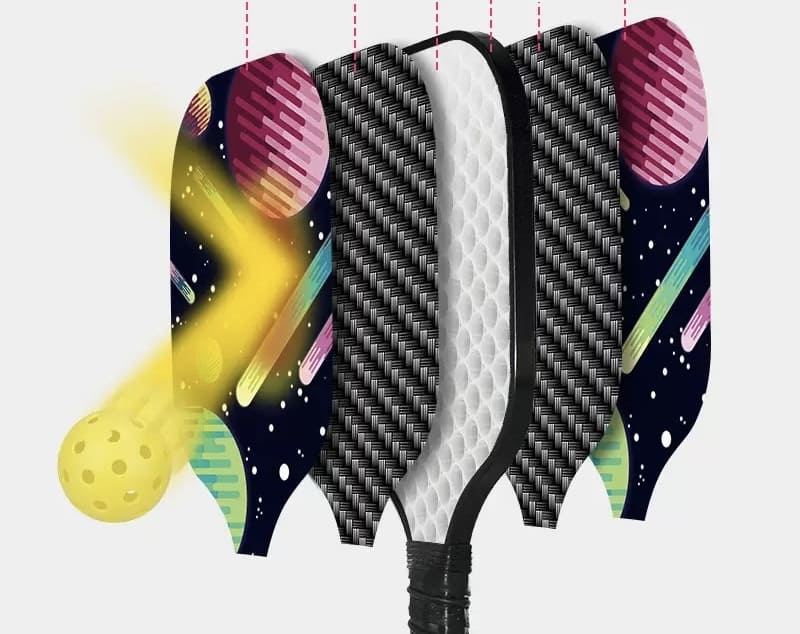
PP honeycomb is the classic lightweight polypropylene honeycomb core. It is widely used in cold press paddles and also appears inside some thermoformed paddles, paired with fiberglass or carbon faces.
Typical feel:
-
Soft to medium feel with good control.
-
Relatively large sweet spot when designed well.
-
Comfortable on joints, suitable for long playing sessions.
Pros:
-
Very versatile and suitable for most players from beginners to advanced.
-
Stable performance when core quality and bonding are well controlled.
-
Best “value for money” base core for most brand lineups.
Cons:
-
Limited in ultimate power compared with high end foam based Gen 4, Gen 5 and PMI structures.
-
Some players now view plain PP honeycomb as “not exciting enough” if it is not combined with additional technologies.
PP honeycomb is still the safest and most widely applicable starting point for most brands, especially when you are entering the pickleball market for the first time.
What is Thermoformed PP Honeycomb Core?
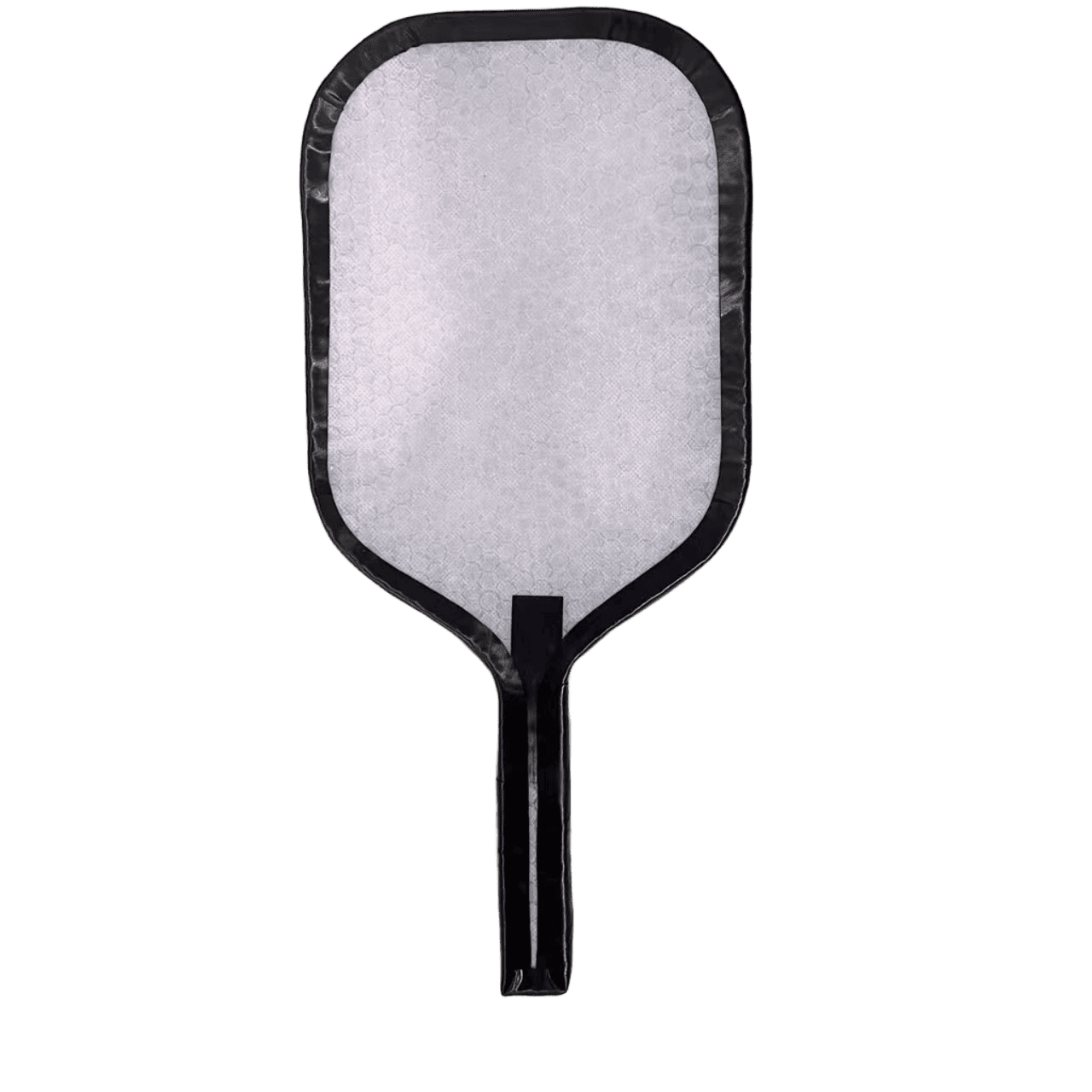
Thermoformed PP honeycomb uses PP honeycomb as the main core, but the paddle is formed under high temperature and pressure in a one piece, shell like structure, with the faces wrapped around the edge.
In a proper thermoformed construction, EVA foam is added continuously around the edge to support the perimeter and improve stability, while the main core area remains PP honeycomb.
Typical feel:
-
Crisper impact and more “pop” compared with most cold press paddles.
-
Stronger perimeter support and a more defined sweet spot when designed well.
-
Can feel more powerful without becoming uncontrollable when tuned properly.
Pros:
-
Bridges the gap between traditional PP honeycomb and more advanced Gen 3 / Gen 4 designs.
-
Gives brands a clear “technology upgrade” story without jumping straight into full foam hybrid cores.
Cons:
-
Requires tighter process control than cold press; poor thermoforming can create inconsistent feel and durability issues.
-
If stiffness and face tension are pushed too far, the paddle can become too harsh for some players.
Thermoformed PP honeycomb is often the best “next step” for brands that already have a solid cold press line and want more performance and a stronger story.
What Is Gen 4 Core?
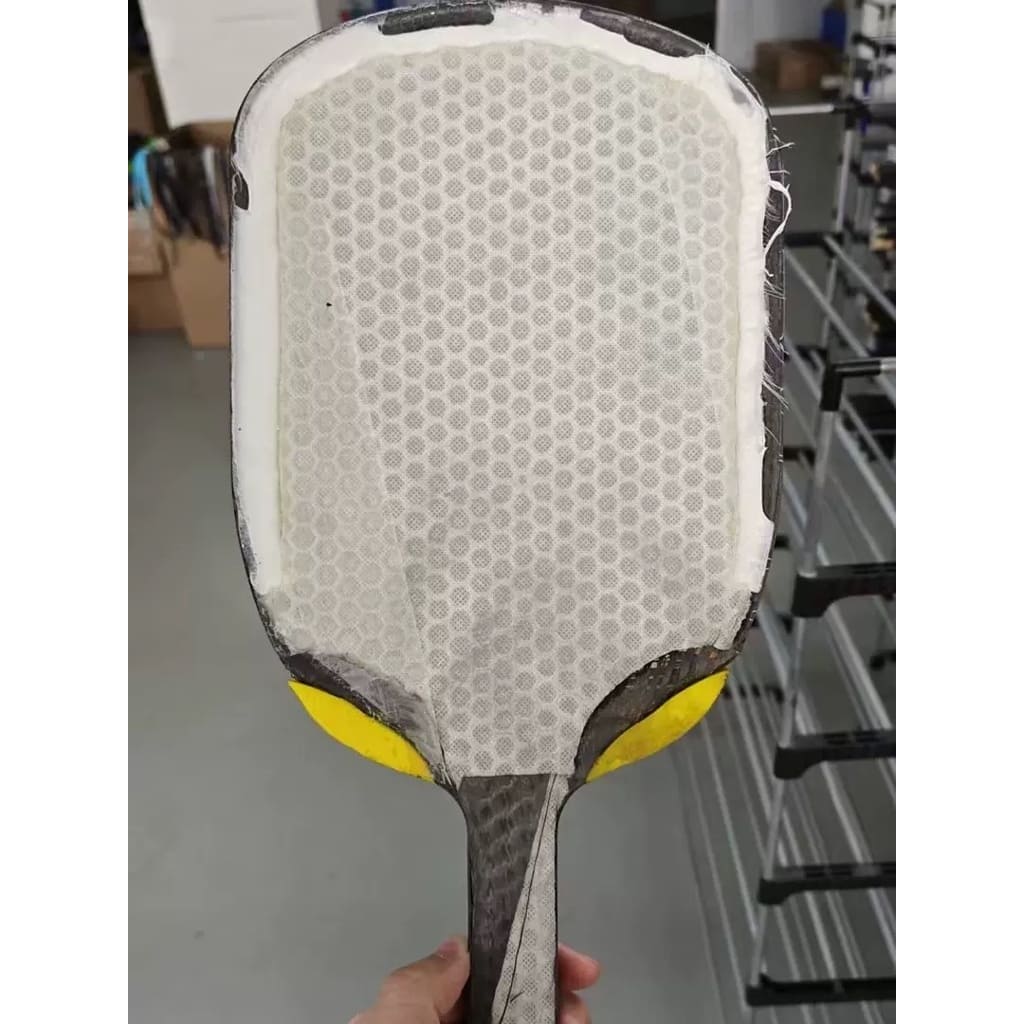
When brands talk about a “Gen 4 core” similar to some well known paddles on the market, they often mean a structure that still uses PP honeycomb as the main core, but adds more EVA foam not only around the edge, but also along the lower side walls near the throat.
In other words, Gen 4 PP + EVA cores are a further evolution of thermoformed PP paddles, where EVA participates more deeply in the perimeter and lower side structure for damping and stability.
Typical feel:
-
Still has the crisp PP “pop”, but with slightly more damped feel at the lower areas of the paddle.
-
More stable and comfortable on off center hits near the throat and lower sides.
Pros:
-
Gives brands a concrete “Gen 4” style story without completely changing to full foam or EVA + EPP.
-
Helps reduce harsh vibration in specific zones while keeping the familiar PP honeycomb response in the main hitting area.
Cons:
-
Design and bonding are more complex than simple thermoformed PP, so process control and QC are even more important.
-
If EVA density or placement is poorly chosen, the feel can become uneven between different parts of the paddle.
Gen 4 PP + EVA cores are suitable for brands that already understand basic thermoformed PP paddles and want a next level performance and damping story without yet moving into full foam or EVA + EPP hybrids.
What Is EPP Foam Core?
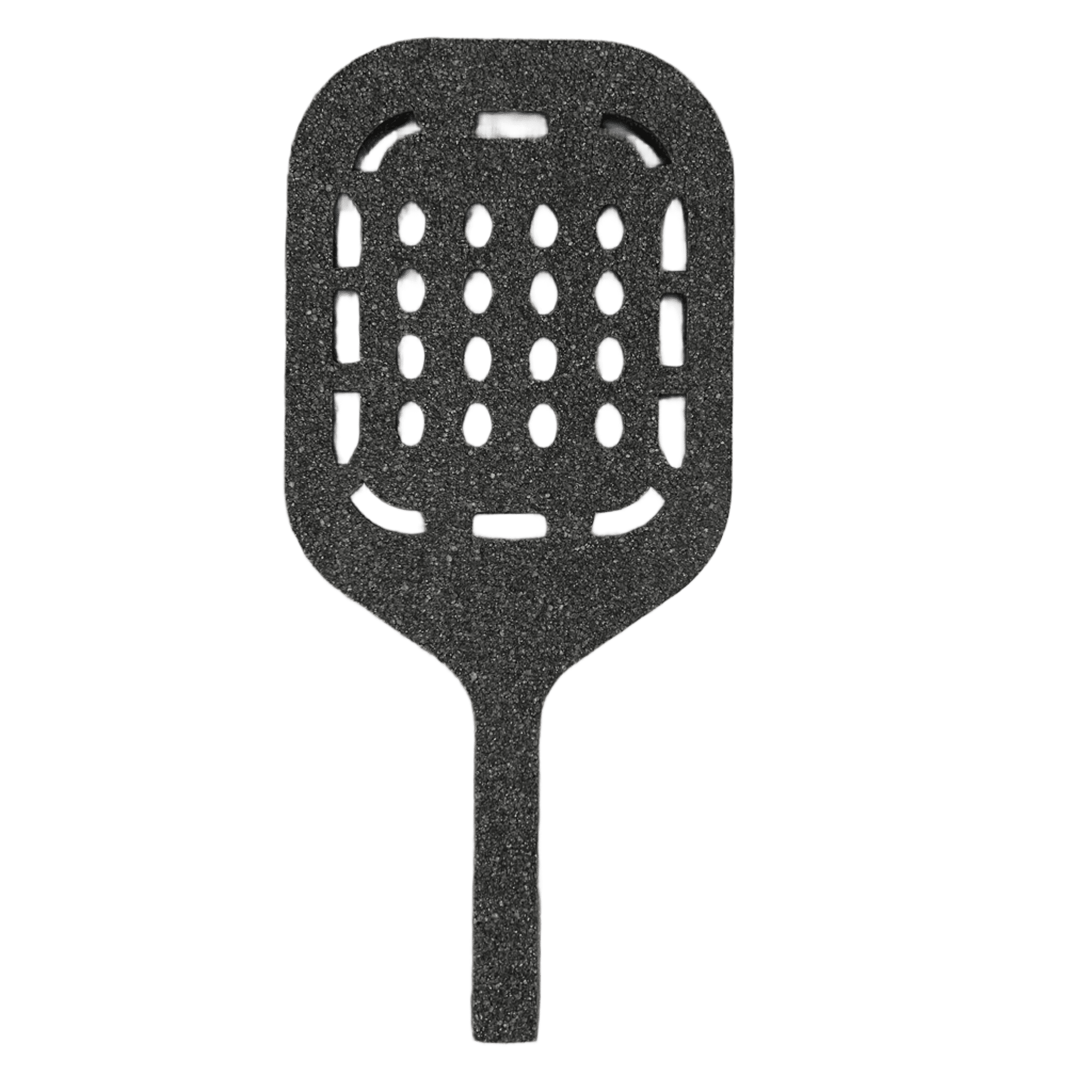
EPP (Expanded Polypropylene) foam cores can be used in paddles where foam takes up most or all of the core volume, instead of a traditional honeycomb.
Typical feel:
-
Impact sound is more muted and deeper; less “crack” and more “thump”.
-
At lower densities, the feel can be very soft and plush; at higher densities, it becomes more solid and supportive.
-
Often gives very good comfort and, when high quality high density foam is used, also strong elasticity and rebound compared with standard honeycomb.
Pros:
-
Can create very distinctive feel and sound that sets your brand apart from typical honeycomb paddles.
-
Good vibration absorption and, with the right density and construction, excellent elasticity and rebound.
Cons:
-
Low density, very high expansion EPP can feel too mushy and lack support, especially for stronger or advanced players.
-
If not carefully designed, full foam paddles can feel “different” but not necessarily “better” in terms of control and predictability.
EPP foam cores are powerful tools when tuned with proper density, but they are not a magic solution on their own.
What Is Gen 5 EVA + EPP Core?
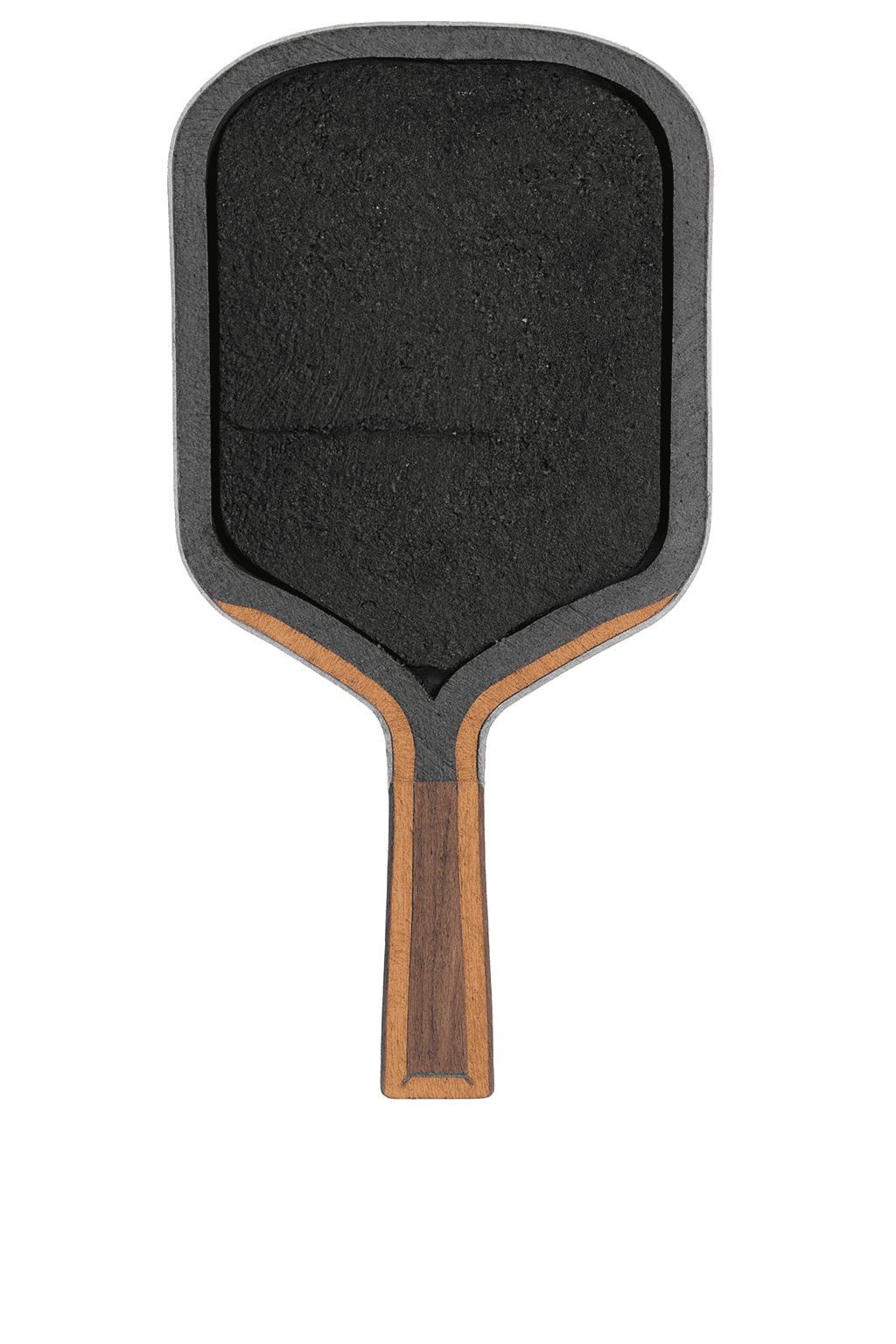
EVA + EPP hybrid cores combine two different foams in one structure, typically using EVA for more elastic energy storage and EPP for support and stability.
Typical feel:
-
More “alive” and responsive feel than simple EPP when tuned correctly.
-
Balance between power and dwell time, especially when paired with raw carbon surfaces.
-
Sound can sit between the deep EPP “thump” and the crisp PP “pop”, depending on the specific design
Pros:
-
Very flexible tuning space for creating unique flagship level paddles.
-
When high density foam is used (for example expansion ratios around 8x–10x), it can deliver both strong power and long term stability.
Cons:
-
Design is more complex; wrong density or layout can create paddles that feel unstable or change too much over time.
-
Cost is higher than basic PP honeycomb and simple EPP, so it should be used where your brand can tell a clear story and justify the higher retail price.
For brands that want to build a truly high end line, EVA + EPP hybrid cores (with proper density and design) are often the most promising Gen 5 style platform.
What Is PMI Foam Core?
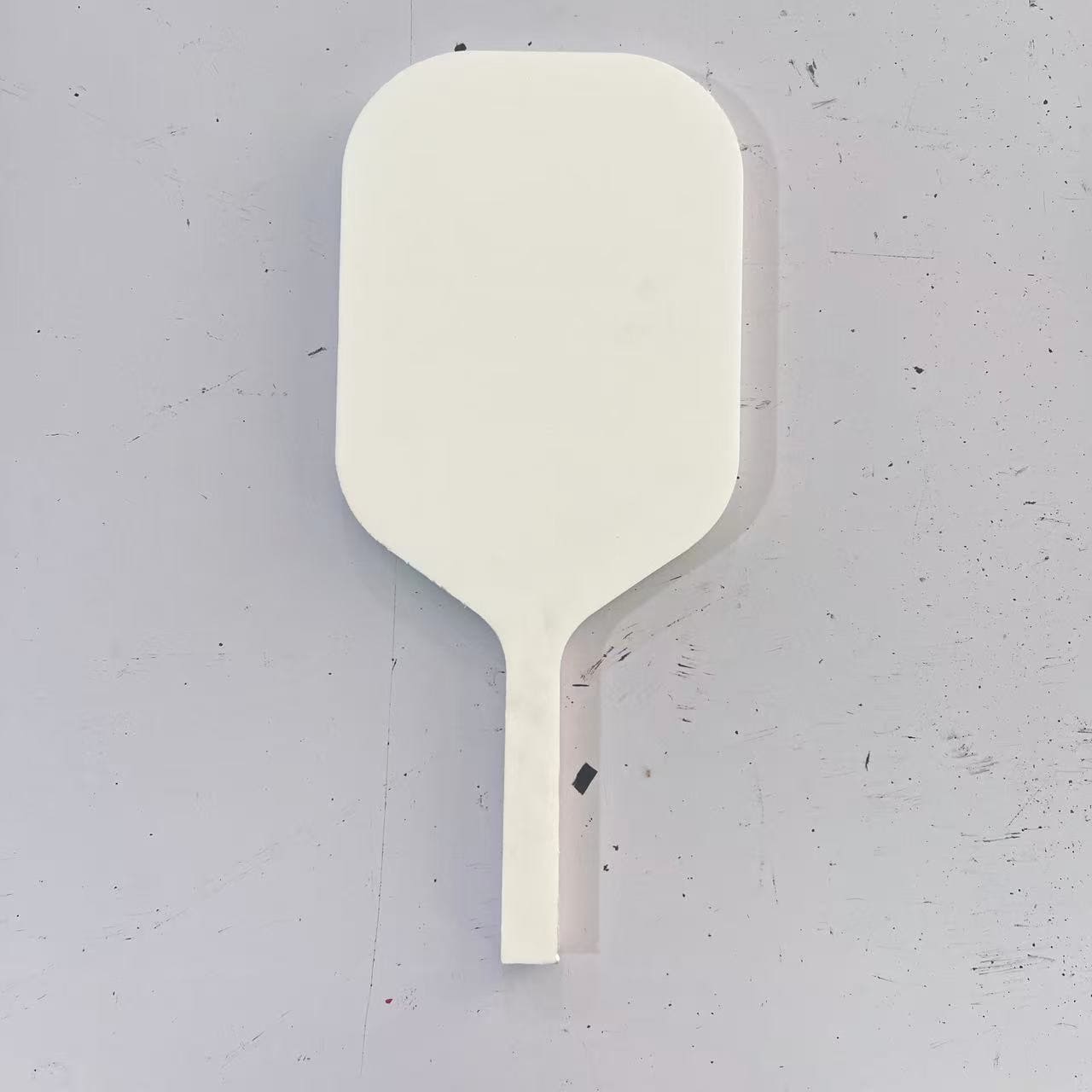
PMI foam is a high performance structural foam, often white in color, widely used in aerospace, high end composites and some premium sports equipment. Compared with common EPP foams, PMI offers higher stiffness and better heat resistance at a much lower weight.
In pickleball paddles, PMI foam can be used as a full foam core or combined with other materials to create very stiff and responsive constructions. It is not a mass market core material, but rather a niche option for very high end or experimental designs.
Typical feel:
-
Very solid, “connected” feel across the whole face.
-
High stiffness with quick rebound when designed well.
-
Impact sound usually sits between EPP’s deep “thump” and a very sharp “crack”, often perceived as firm and precise.
Pros:
-
Excellent stiffness to weight ratio for high performance paddles.
-
Good thermal stability and structural integrity for demanding environments.
-
Can create a very “premium” feel when combined with high quality carbon faces.
Cons:
-
Material cost is significantly higher than PP honeycomb and EPP.
-
Processing and machining requirements are stricter, increasing manufacturing cost and scrap risk.
-
Overbuilt PMI designs can feel too stiff and unforgiving for many players.
Because of the high material and process cost, PMI foam cores make the most sense for limited flagship models or special projects where your brand really wants to tell a “top tier engineering” story, not for main volume products.
Comparison of the 6 Core Families
To help you see the differences more clearly, here is a comparison table of the six main core families:
| Core Type | Typical Feel | Power Potential | Control & Forgiveness | Vibration | Sound | Price Level | Best For | Main OEM Risk |
|---|---|---|---|---|---|---|---|---|
| PP honeycomb (cold press) | Soft–medium, classic and familiar | Medium | High forgiveness, easy control | Low–medium | Clear “pop”, not extremely sharp | Low–medium | Beginners to advanced, main volume models | Core quality and bonding consistency between batches |
| Thermoformed PP honeycomb | Crisper, more “pop”, more solid perimeter | Medium–high | Still forgiving if well designed | Medium | Sharper, more energetic “pop” | Medium–high | Brands upgrading from cold press, performance lines | Requires tight thermoforming process and QC |
| Gen 4 PP + EVA core | Crisp PP feel with more damping at lower areas | Medium–high | Stable and comfortable near throat and lower sides | Lower at perimeter | Clear “pop” with less harshness at lower zones | Medium–high to high | Brands wanting a “real Gen 4” story without going full foam | EVA density and placement can cause uneven feel if misdesigned |
| EPP foam core (full foam) | Muted, deeper, very comfortable | Medium | Good comfort, can be stable at higher densities | Generally low | Deeper “thump”, clearly less “crack” | Medium–high | Brands wanting unique feel and sound, comfort focused lines | Too soft and weak if density is too low |
| EVA + EPP hybrid core (Gen 5 style) | Alive, responsive, tunable between power and dwell | High | Can balance power and control when well tuned | Low–medium | Between EPP “thump” and PP “pop”, firm sound | High | Flagship models, high performance lines, brand image projects | Wrong density or layout leads to instability over time |
| PMI foam core (high performance foam) | Very solid, connected feel; stiff and fast rebound when well designed | Medium–high | Precise but less forgiving for many players | Low–medium | Firm, precise impact sound between “thump” and sharp “crack” | High to very high | Limited flagship models and special “engineering story” projects | High material and processing cost; can be too stiff and unforgiving for many |
How Sound and Feel Help You Tell Cores Apart
Many brand owners are not engineers, but you can still learn to distinguish core types using simple tests, especially sound and feel.
-
PP honeycomb (cold press or basic) usually has a clearer “pop” when you tap or bounce a ball, but not extremely sharp. The feel is familiar and predictable.
-
Thermoformed PP honeycomb often has a tighter, slightly higher pitched “pop” and a more solid response at the edges due to the one piece shell and EVA edge foam.
-
Gen 4 PP + EVA cores still maintain the PP “pop”, but you will notice more damping and stability when hitting near the throat and lower sides.
-
EPP full foam has a more muted and deeper impact sound, closer to a “thump” than a “crack”, and the feel can be softer, especially at lower densities.
-
EVA + EPP hybrid cores sit in between; with proper density, they feel explosive but not hollow, and the sound is firm without being too harsh.
-
PMI foam cores typically sound firm and precise, with a sharper, faster rebound feel that clearly separates them from very soft foams, but they can feel unforgiving when mishit.
Recommended Core Roadmaps for Different Brand Stages
Not every brand needs to jump directly from basic PP honeycomb to the most aggressive EVA + EPP Gen 5 or PMI builds. A staged roadmap is usually safer and more profitable.
For new brands entering pickleball:
-
Use PP honeycomb cold press as your main volume line for beginners and recreational players.
-
Add one or two thermoformed PP honeycomb models as performance upgrades.
For growing brands with stable sales:
-
Keep a strong thermoformed PP honeycomb line as your hero products.
-
Introduce a Gen 4 PP + EVA model and an EPP foam or EVA + EPP hybrid flagship in smaller quantities to test top end demand.
For established brands aiming at high end markets:
-
Maintain PP honeycomb and thermoformed PP lines for volume and accessibility.
-
Develop a clearly positioned EVA + EPP Gen 5 style line using high density foam as the technical top of your pyramid, and consider one limited PMI flagship if your market can support a true “engineering showcase” model.
Where iAcesport Stands: High Density EPP, EVA + EPP Gen 5 And Advanced Foam Projects
At iAcesport, we manufacture all six core types described in this guide, but our strongest advantages are in high density EPP and EVA + EPP hybrid cores, especially for brands that want stable Gen 4, Gen 5 and advanced foam based paddles.
In our foam based projects, we focus on lower expansion ratios (higher density), such as 8x–10x ranges, instead of using extremely high expansion foams just to reduce cost.
Lower expansion ratios mean:
-
Higher foam density and stronger load bearing.
-
Better control over power and rebound, not just an over-bouncy first impression.
-
More stable behavior over time in demanding Gen 4, Gen 5 and hybrid constructions.
We prefer to tell brands honestly which combinations we recommend and which we do not, even if some aggressive options look exciting on paper.
Our goal is not to sell the most extreme spec for one season, but to help you build a core lineue, PP honeycomb, thermoformed PP, Gen 4 PP + EVA, EPP, EVA + EPP Gen 5 and PMI, that your players will trust for years.
If you are planning your next OEM project and want to compare PP honeycomb, thermoformed PP, Gen 4 PP + EVA, EPP, EVA + EPP and PMI options in detail, you are always welcome to discuss your target players, price ranges and brand story with iAcesport.