跳到内容
跳到内容 
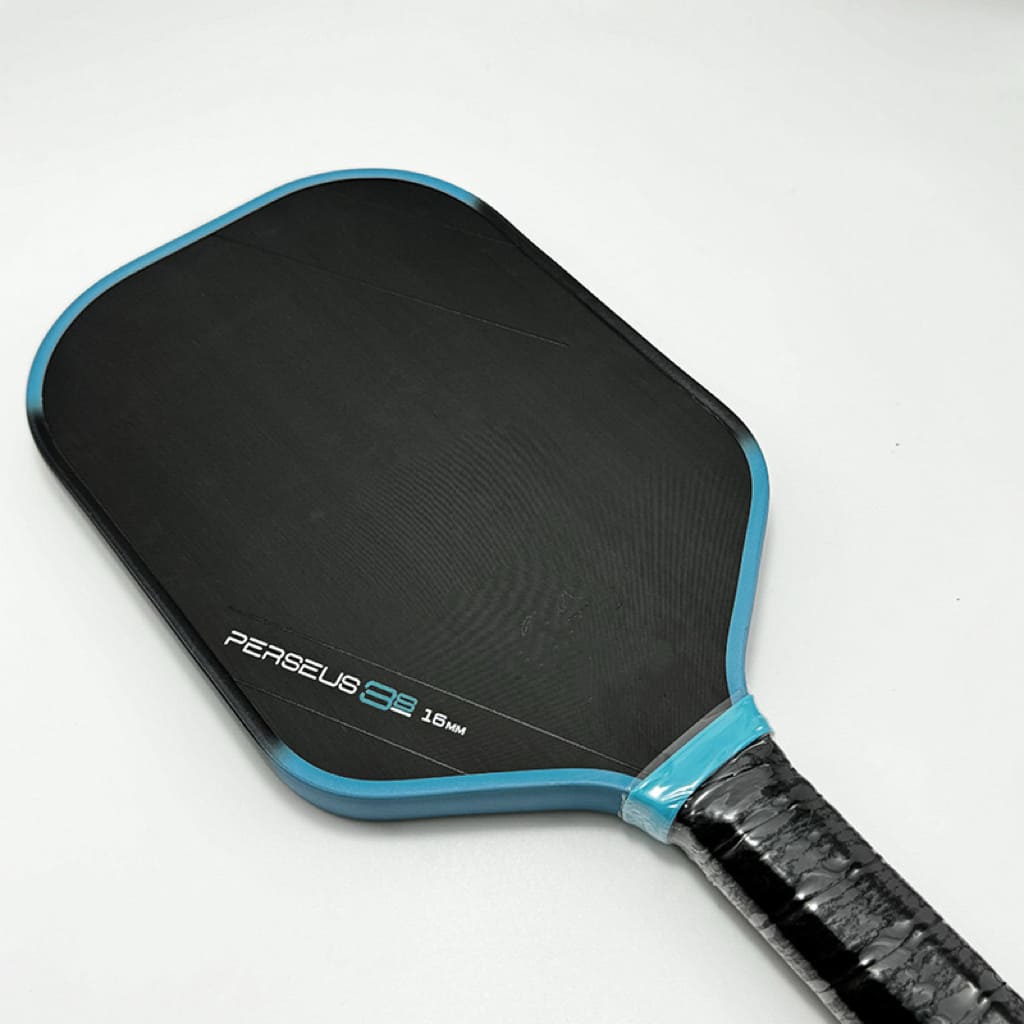
If you are a brand owner, wholesaler or Amazon seller, what you really need to understand is not only the quotation, but also how a pickleball paddle is made inside a Chinese factory from core to carton
Why Factory Process Matters When Choosing a Pickleball Paddle Manufacturer
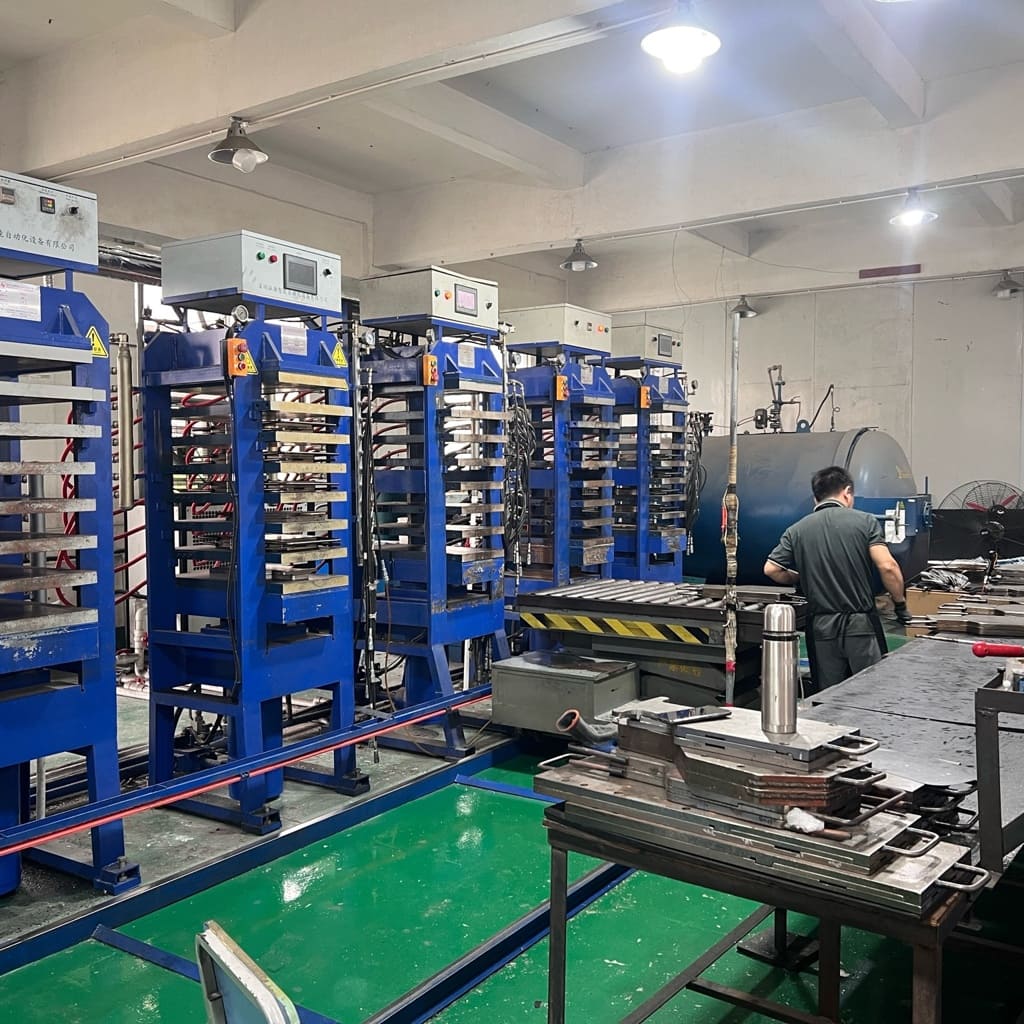
For many overseas buyers, “factory” looks like a simple label on a website. In reality, the internal production process is what decides your product quality, return rate and long-term brand reputation.
Two suppliers can both call themselves a “pickleball paddle factory in China”, but one may only do basic PP honeycomb cold-press paddles, while the other has real thermoformed lines with foam-core R&D and strict QC.
Many overseas buyers treat the word “factory” as a guarantee. In fact, the real difference is whether there is a repeatable process and serious quality control behind that word.
Understanding the production line helps you see whether a supplier is a thermoformed specialist, a cold-press volume factory, or a “we do a bit of everything” supplier.
If you do not understand their production process, it is easy to:
-
Buy a cold-press paddle that is marketed as a “thermoformed paddle”
-
Accept “raw carbon” that is actually just carbon-style paint or ink
-
Receive batches where the weight, feel and durability are not consistent
To really judge a pickleball paddle manufacturer in China, you need to see how they handle cores, faces, foam, pressing and testing from start to finish.
Step-by-Step: How a Pickleball Paddle Is Made in a Chinese Factory
In this section, we walk through a typical OEM production process inside a pickleball paddle factory in China, from raw materials to final packing.
Different factories will have different details, but the main steps are similar if they are serious manufacturers.
Raw Materials Preparation: Cores, Faces, Edge Guards and Handles
The production of any pickleball paddle starts with raw materials. A real pickleball paddle factory in China should at least be able to show you:
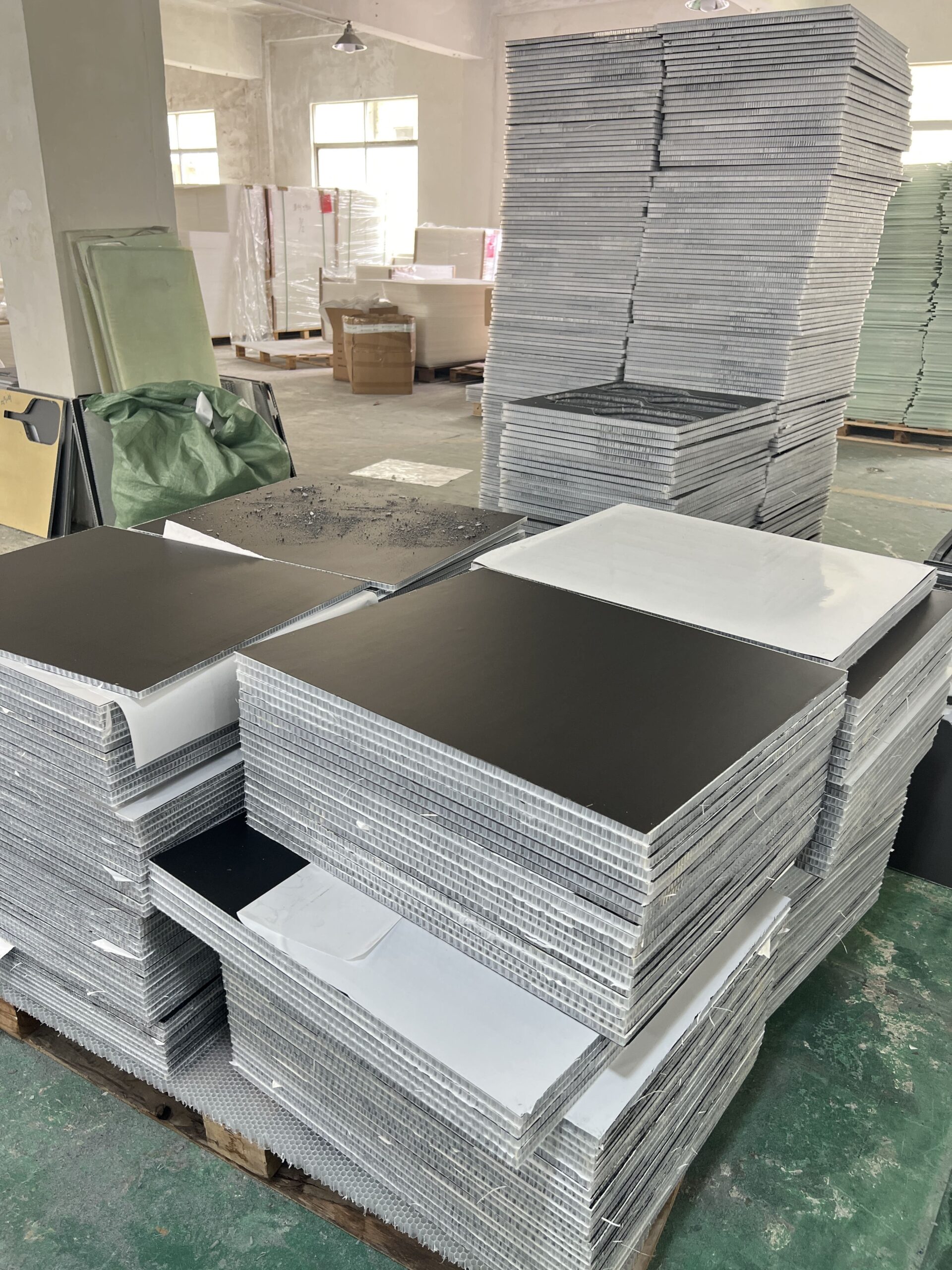
- Core materials: PP honeycomb sheets, EVA + EPP hybrid foam blocks, EPP foam blocks
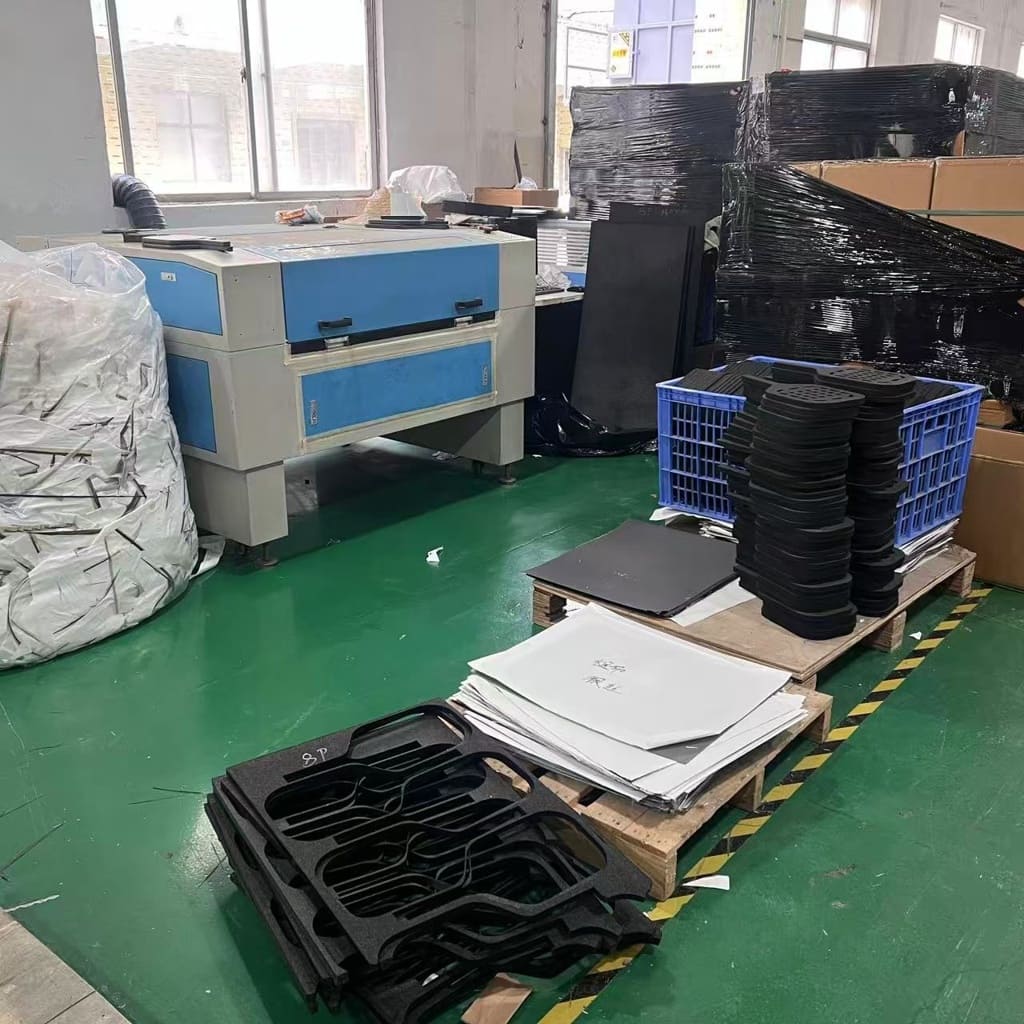
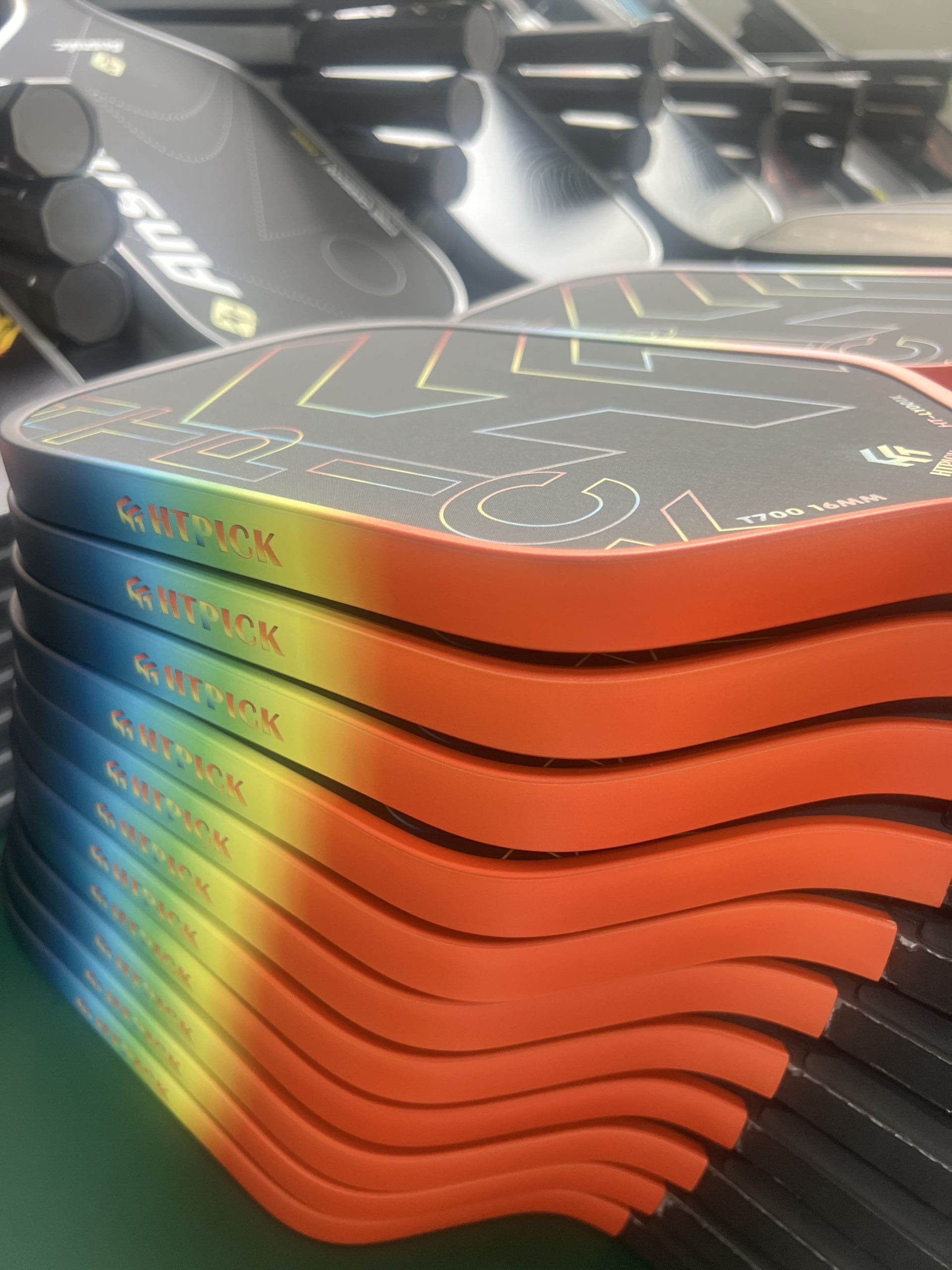
- Face materials: Fiberglass fabrics, carbon fiber fabrics (such as T700 raw carbon), sometimes hybrid fabrics
-
Edge guards: Plastic edge frames in different colors and heights
-
Handles: Handle molds, foam handles, wood or composite handles, plus grip tapes
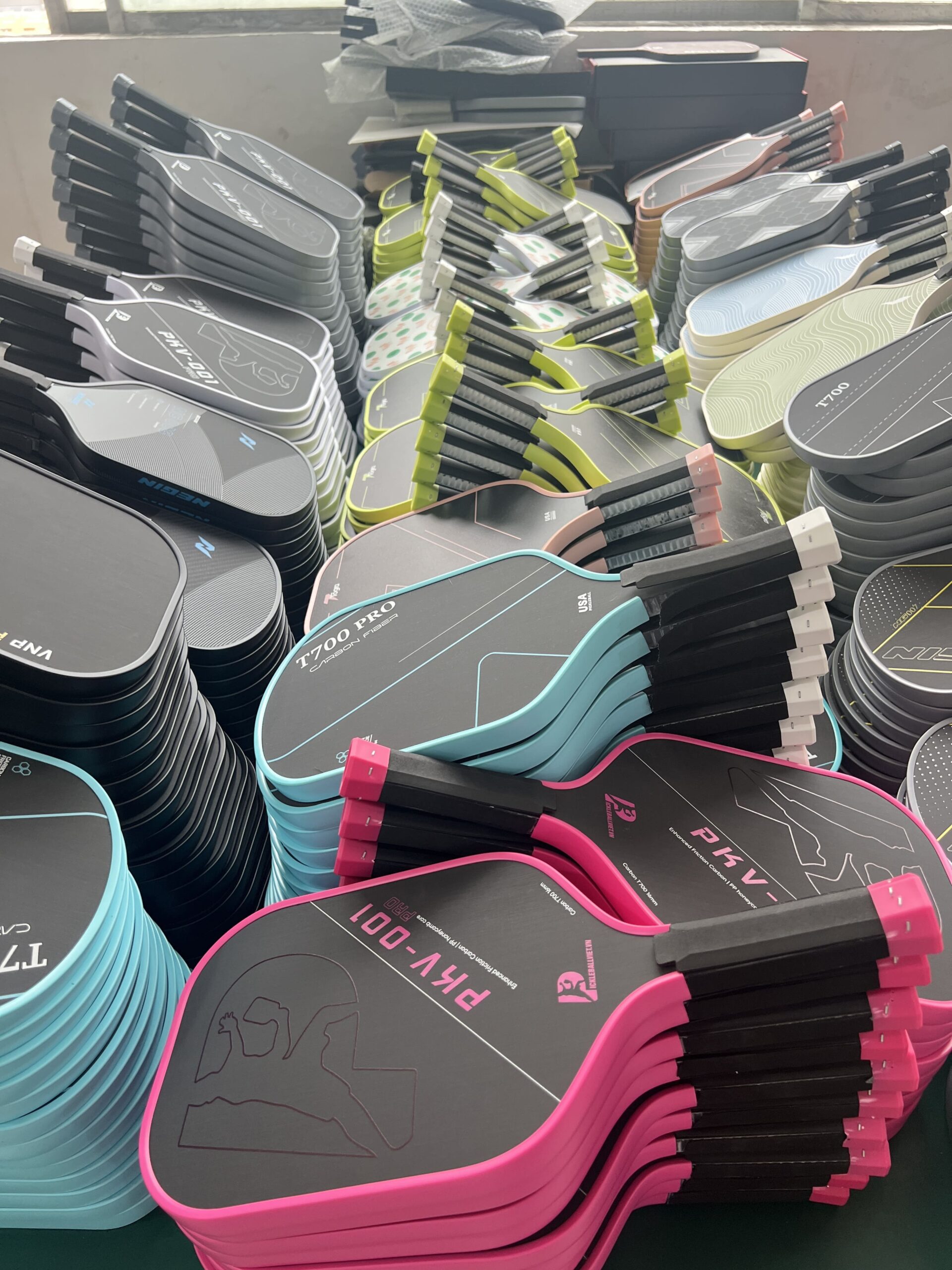
At this stage, the factory cuts PP honeycomb cores to the right size and shape, prepares foam cores if needed, and pre-cuts the face fabrics for different paddle shapes (standard, elongated, hybrid, edgeless).
Cold-Press Production: PP Honeycomb Paddles for Entry and Mid-Range
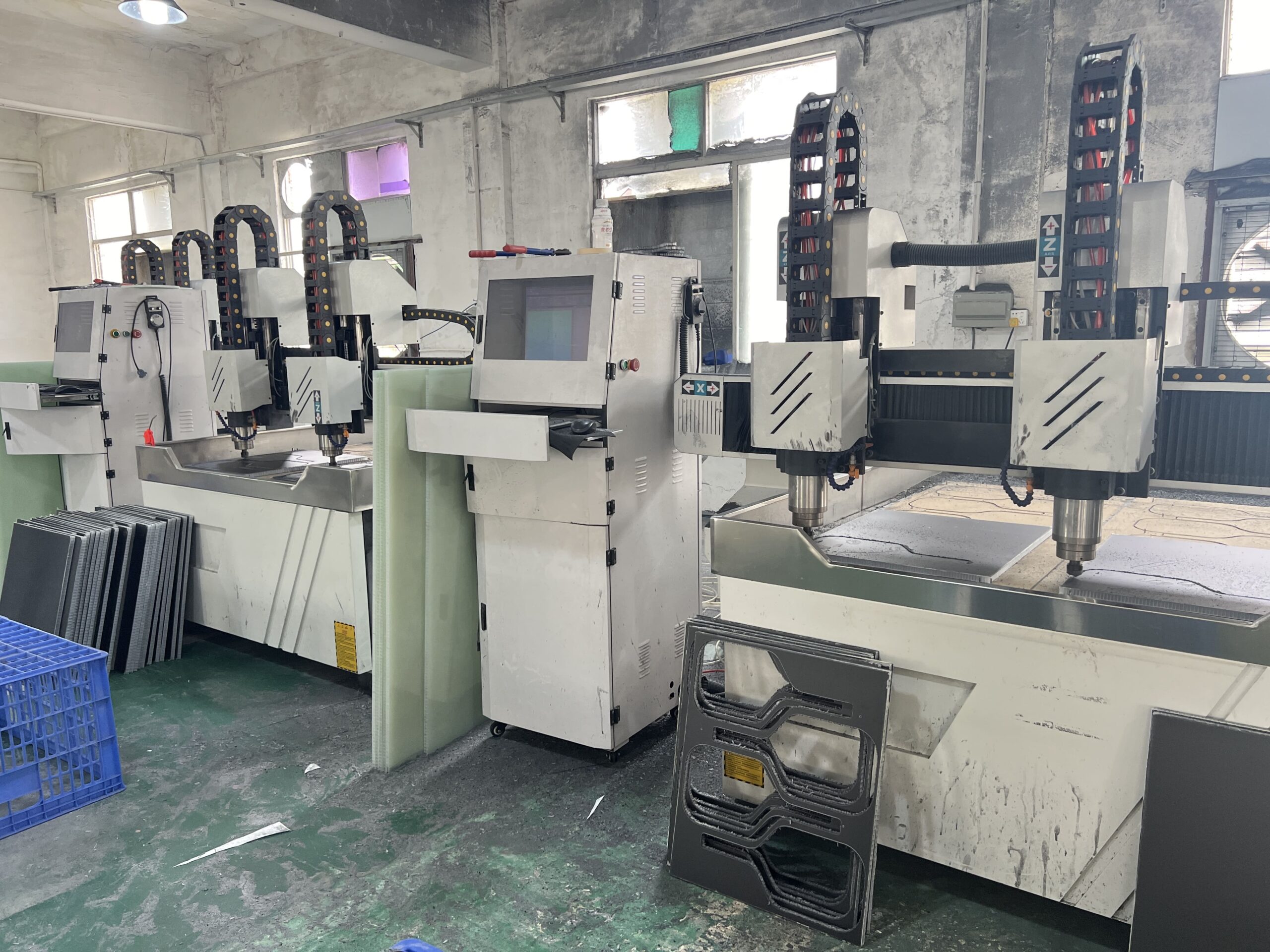
Cold-press PP honeycomb paddles are still a big part of OEM orders in China, especially for entry-level paddles, school paddles, club paddles and value bundles.
A typical cold-press process in a pickleball paddle factory looks like this:
-
The PP honeycomb core is cut into the exact paddle shape.
-
The factory prepares the face layup: fiberglass or carbon fiber layers with adhesive.
-
The face layers and PP honeycomb core are stacked together in a mold.
-
The stack is pressed at room or moderate temperature under controlled pressure for a certain time.
-
After demolding, edges are trimmed and the paddle blank is sent to the next process (edge guard, paint, printing).
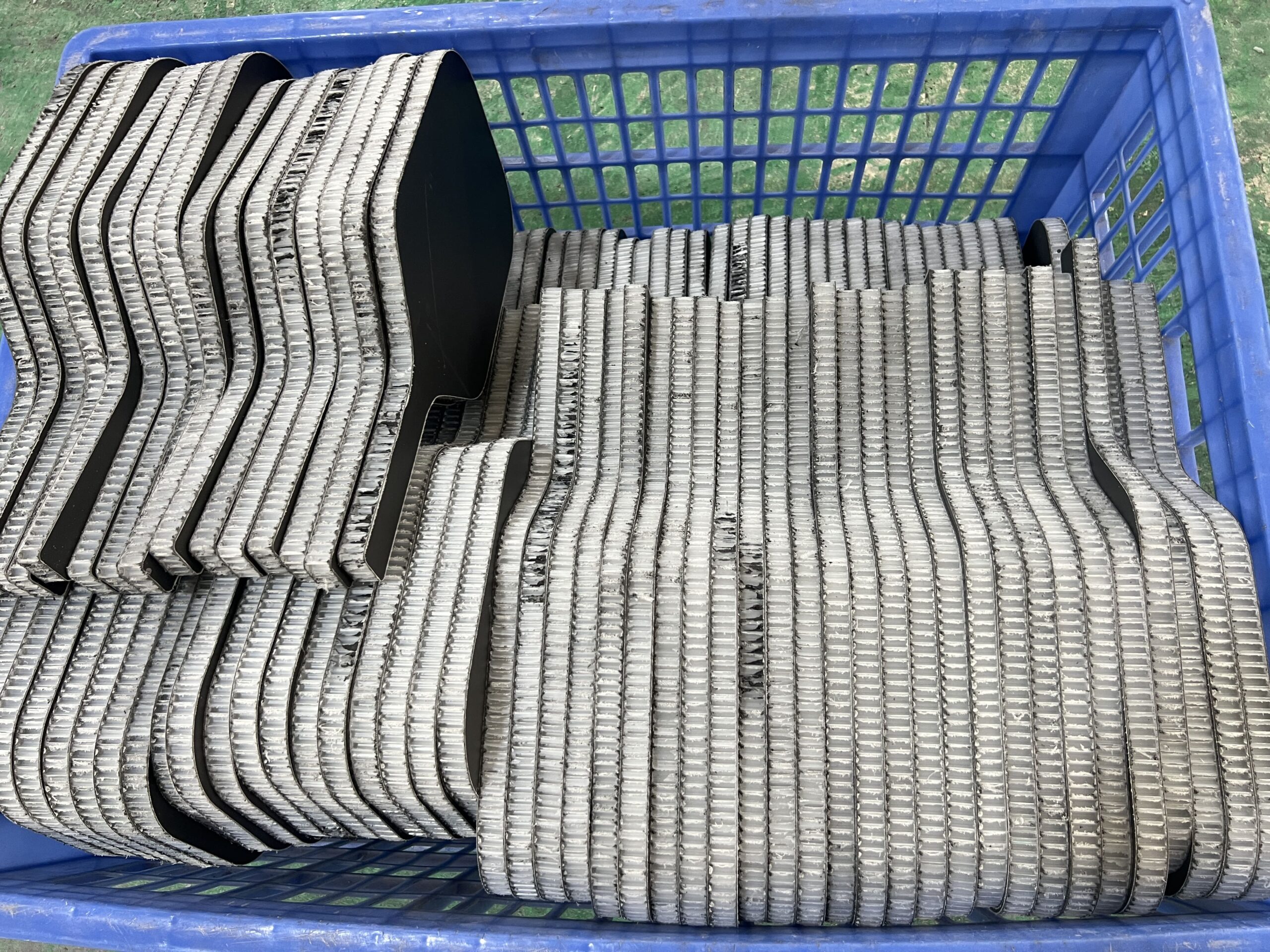
Cold-press paddles are cost-effective, stable for large-volume orders and ideal as entry-level or training paddles when made correctly.
Thermoformed Production: One-Piece Paddles with Foam and Higher Performance
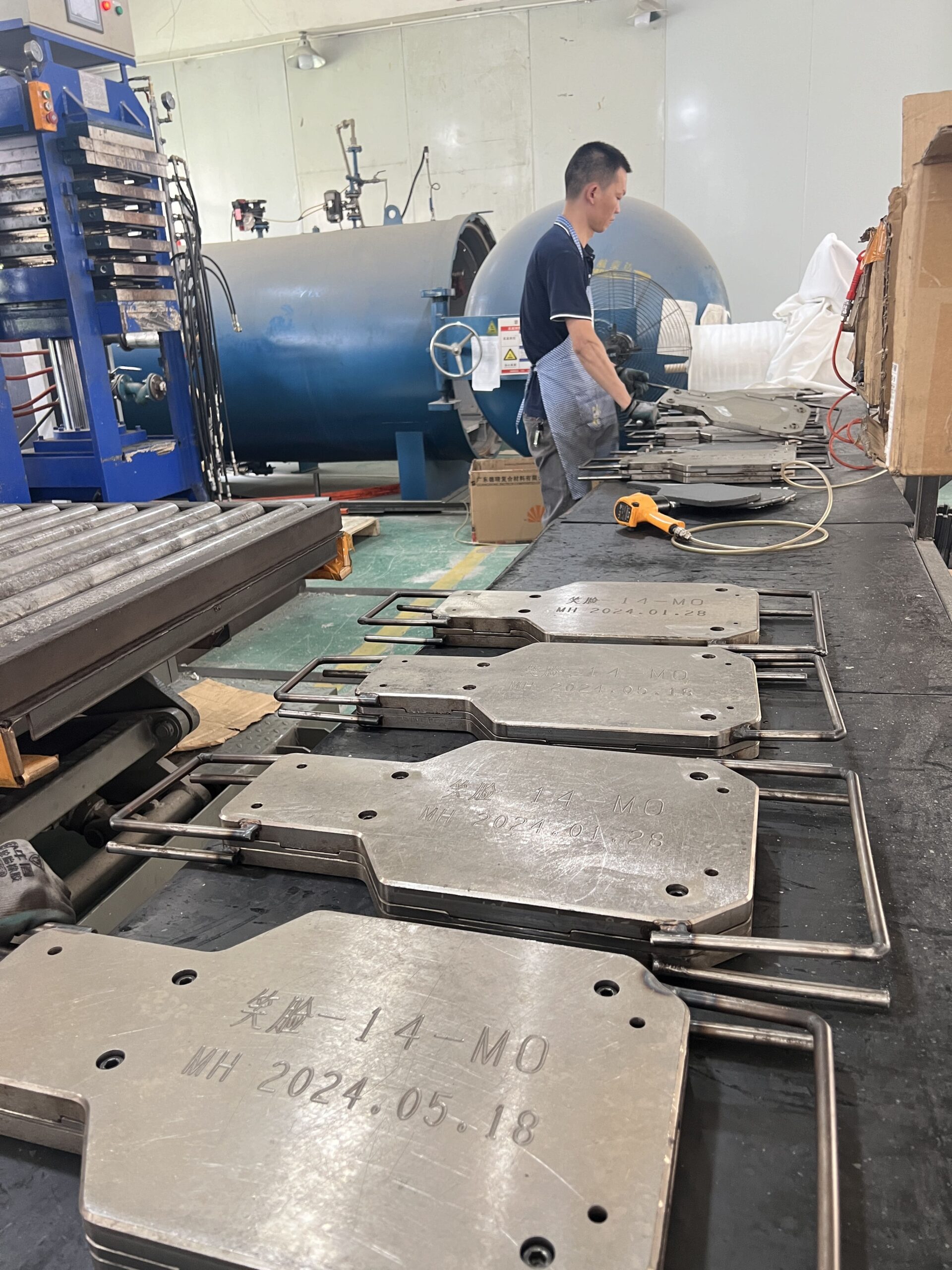
In 2026, thermoformed pickleball paddles with foam around the edge or full-foam cores are the key category for intermediate and advanced players.
A serious thermoformed pickleball paddle manufacturer will usually follow steps like these:
Prepare the core structure
The factory decides whether to use PP honeycomb with foam edge, or full EVA + EPP foam core, depending on the paddle design and price position.
Pre-form the shell and layup
Carbon or fiberglass fabrics (often T700 raw carbon for performance models) are laid up in molds that define the shape and thickness of the paddle.
Insert core and foam
The PP honeycomb core or foam blocks are placed inside the shell. For foam-edge designs, foam is placed around the perimeter. For full-foam designs, EVA + EPP foam fills the interior.
Thermoforming press
The assembled paddle is pressed at a controlled high temperature and pressure in a thermoforming machine. This step bonds the face and core, shapes the edge, and sets the overall stiffness.
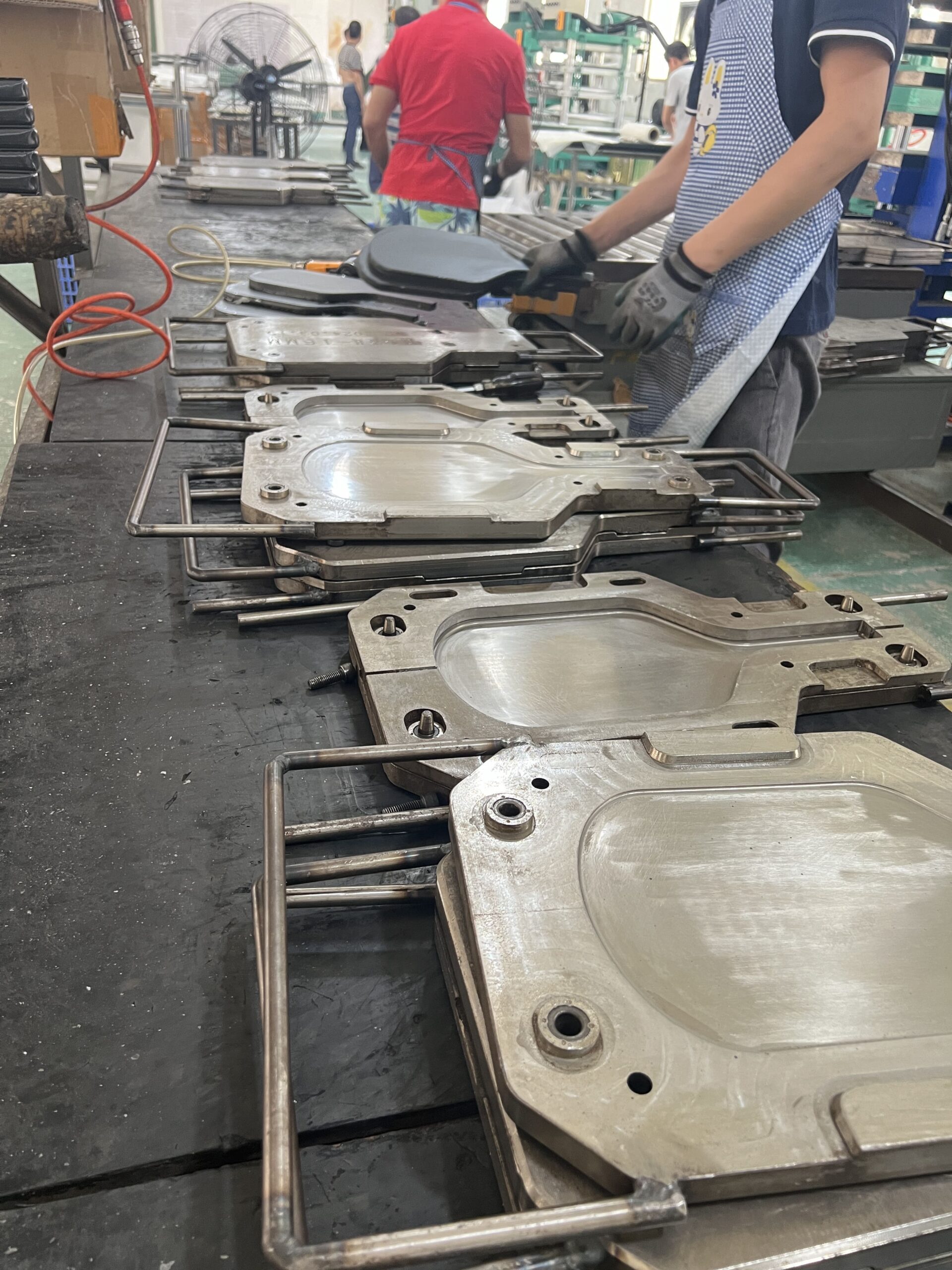
Cooling and trimming
After thermoforming, the paddle is cooled, excess material is trimmed, and the edges are cleaned.
Compared to cold-press paddles, thermoformed paddles are more complex to produce, more sensitive to core and foam quality, and require better process control.
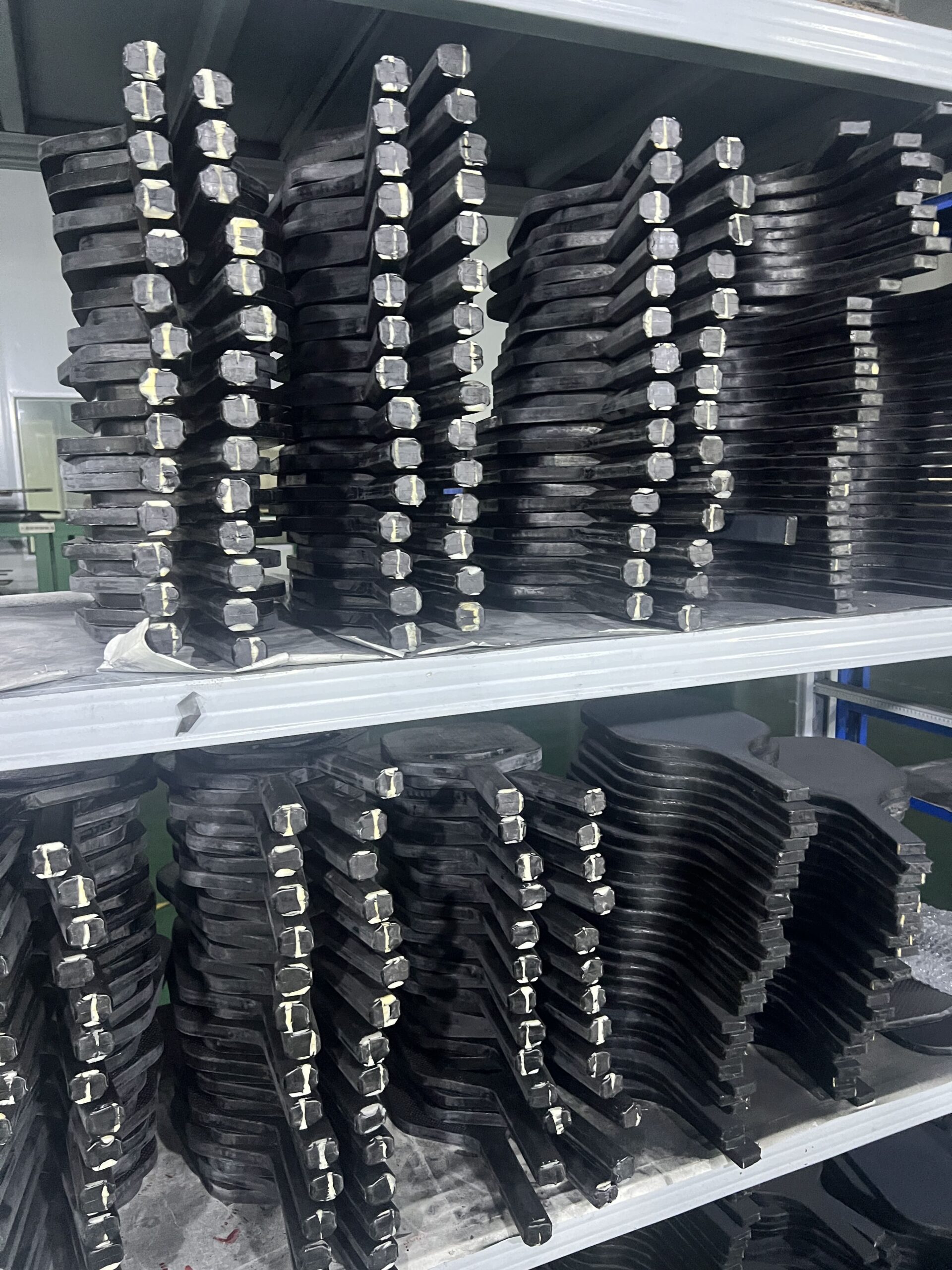
This is why working with a real thermoformed paddle manufacturer, instead of a supplier who simply “adds some foam to a cold-press paddle”, is critical for long-term quality and brand health.
Foam Core Preparation: EVA + EPP Density and Expansion Ratio
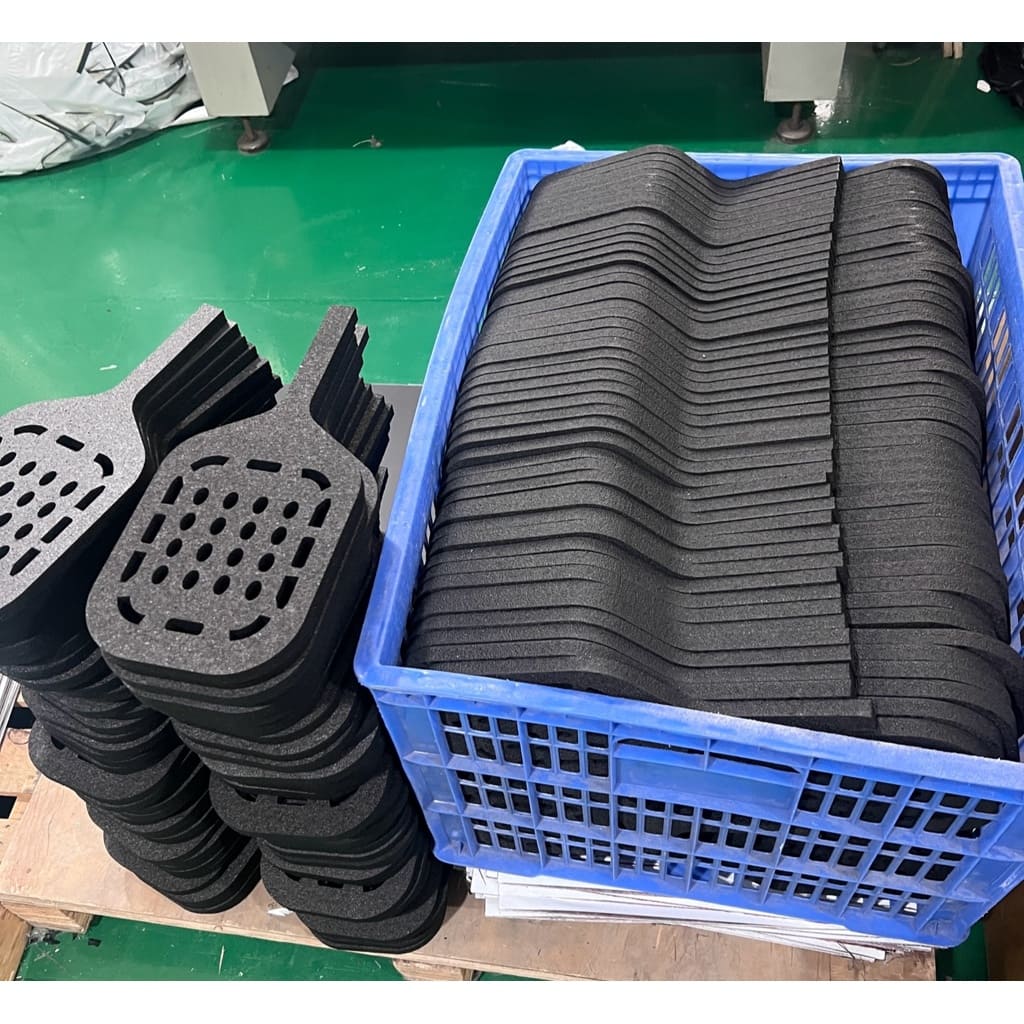
For foam-core paddles, the choice of foam density and expansion ratio determines how powerful, elasticity, stable and durable the paddle will feel.
High-density EVA + EPP foam with lower expansion ratios (for example around 8x–10x) generally offers:
-
High elasticity
-
High rebound
-
Better support under heavy hits
-
Longer usable life before the paddle feels “dead”
Very soft foams with high expansion ratios (such as 15x–17x) can reduce material cost, but often lead to mushy feel, faster core fatigue and more inconsistent performance.
A serious OEM pickleball paddle factory should at least be able to talk about:
-
What type of foam core they use (EVA, EPP or hybrid)
-
What general density or expansion range they aim for in performance models
-
How they keep foam consistency from batch to batch
If a supplier cannot answer any of these questions and only says “we use good foam, no problem”, you should be careful.
Surface Finishing and Printing: Raw Carbon, Paint and Texture
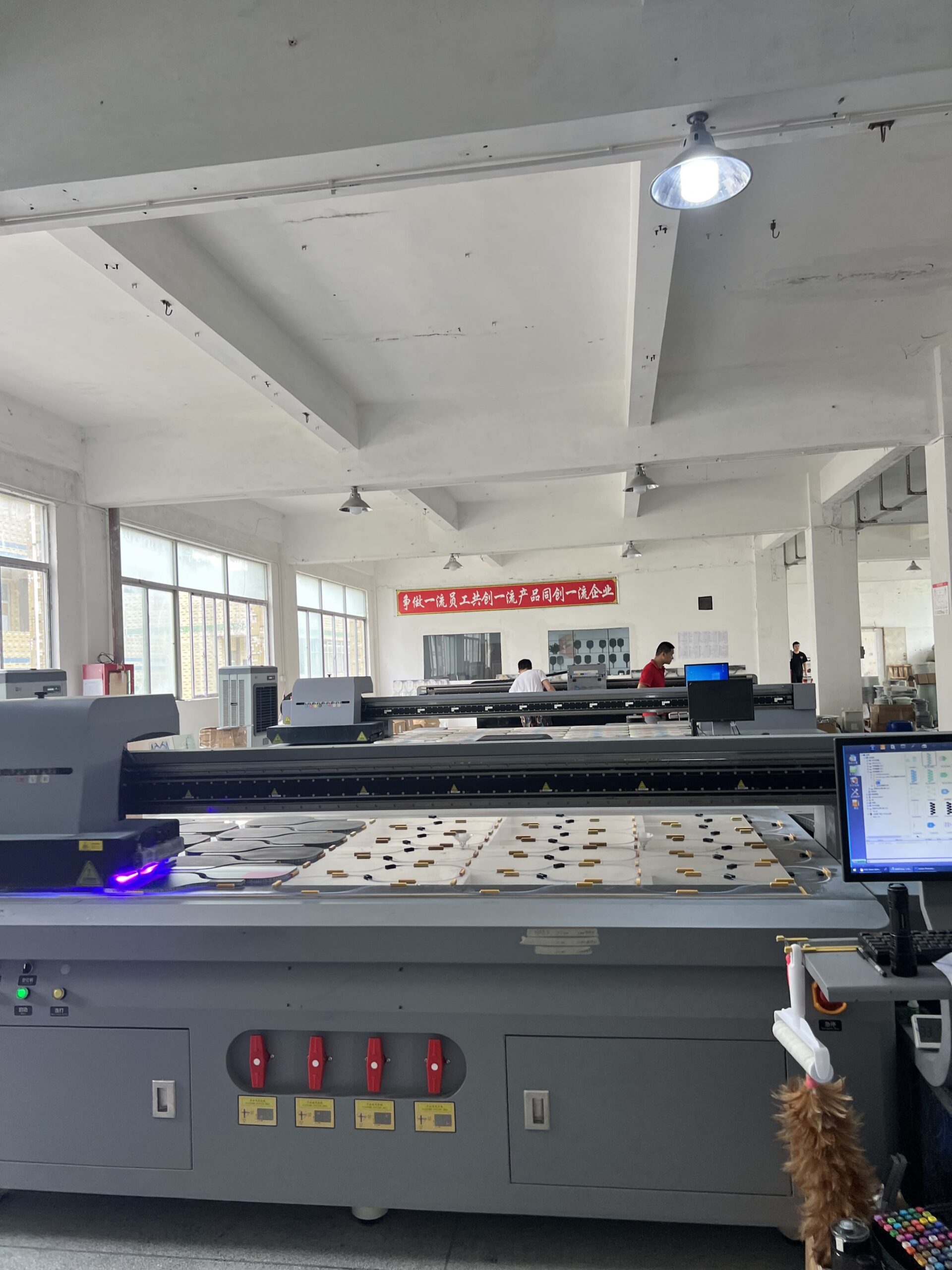
After core and structure are set, the factory handles the paddle surface. This includes:
-
Raw carbon surfaces with clear T700 fabric texture
-
Painted surfaces with logos and artwork
-
Texture treatments such as sand-blast, cloth-texture or other friction-enhancing methods
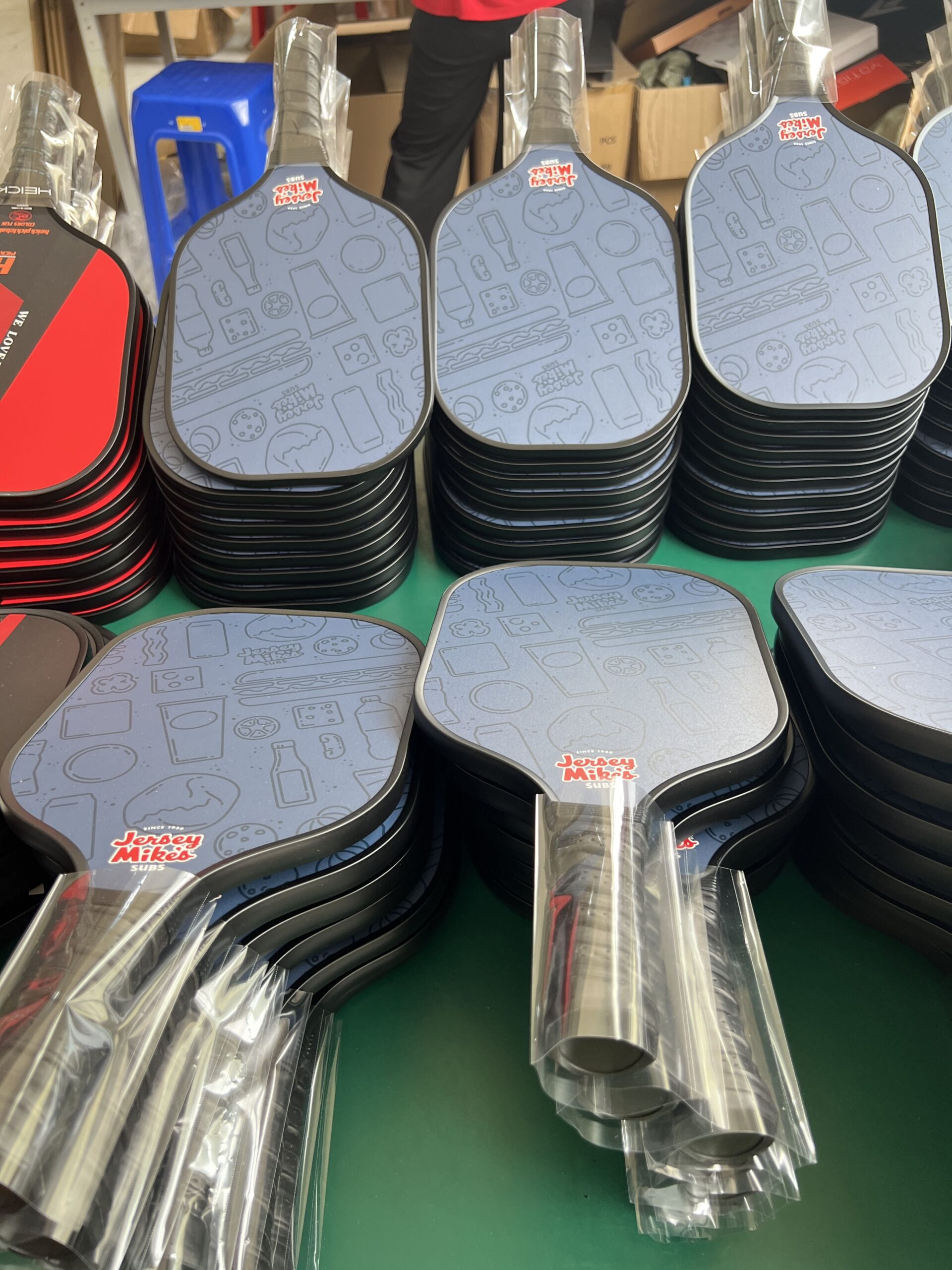
Here, it is easy for low-cost factories to cut corners by using carbon-style paint or carbon ink instead of real carbon fiber fabric, while still calling the paddle a “carbon paddle”.
When you work with a pickleball paddle manufacturer, you should ask specifically whether the paddle uses real carbon fabric or only a carbon-look coating.
Assembly, QC and Packing
Once the paddle head is complete, the factory attaches handles and grips, and then runs a series of quality checks.
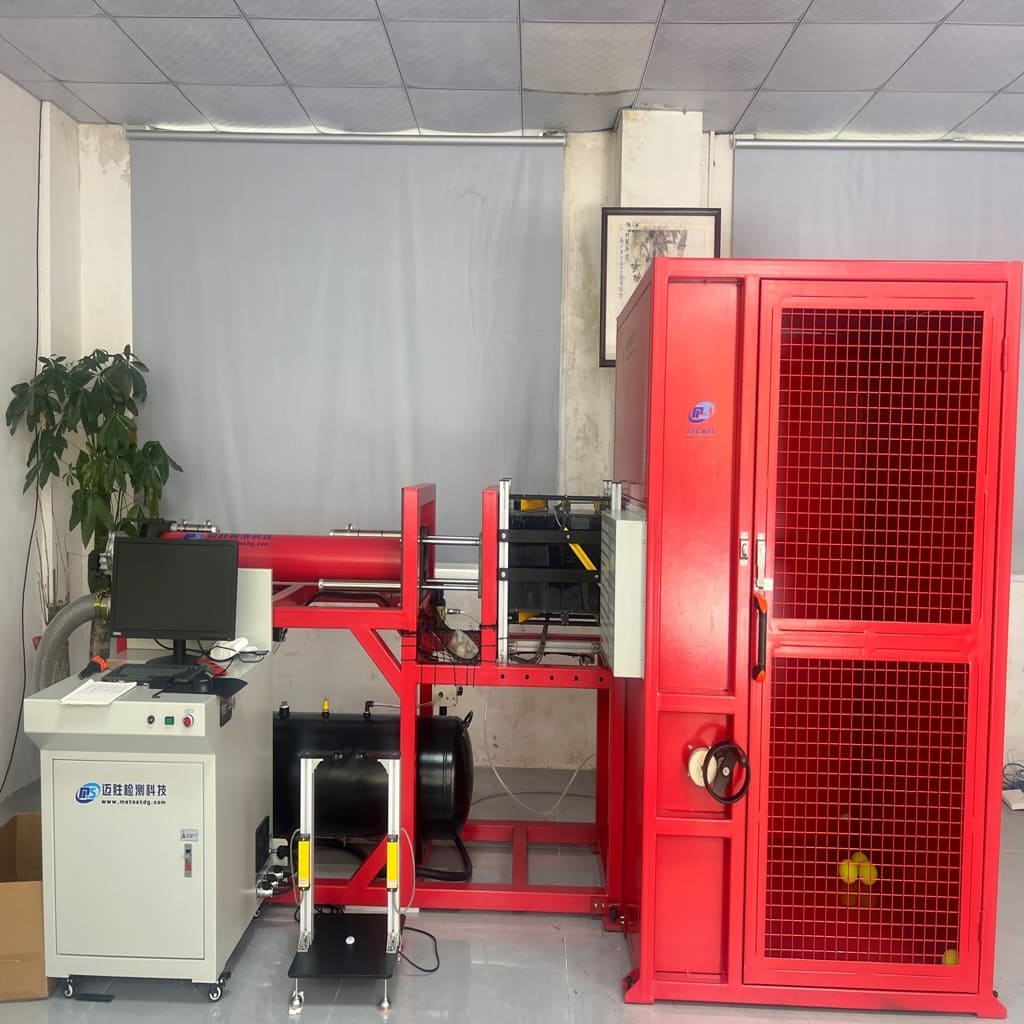
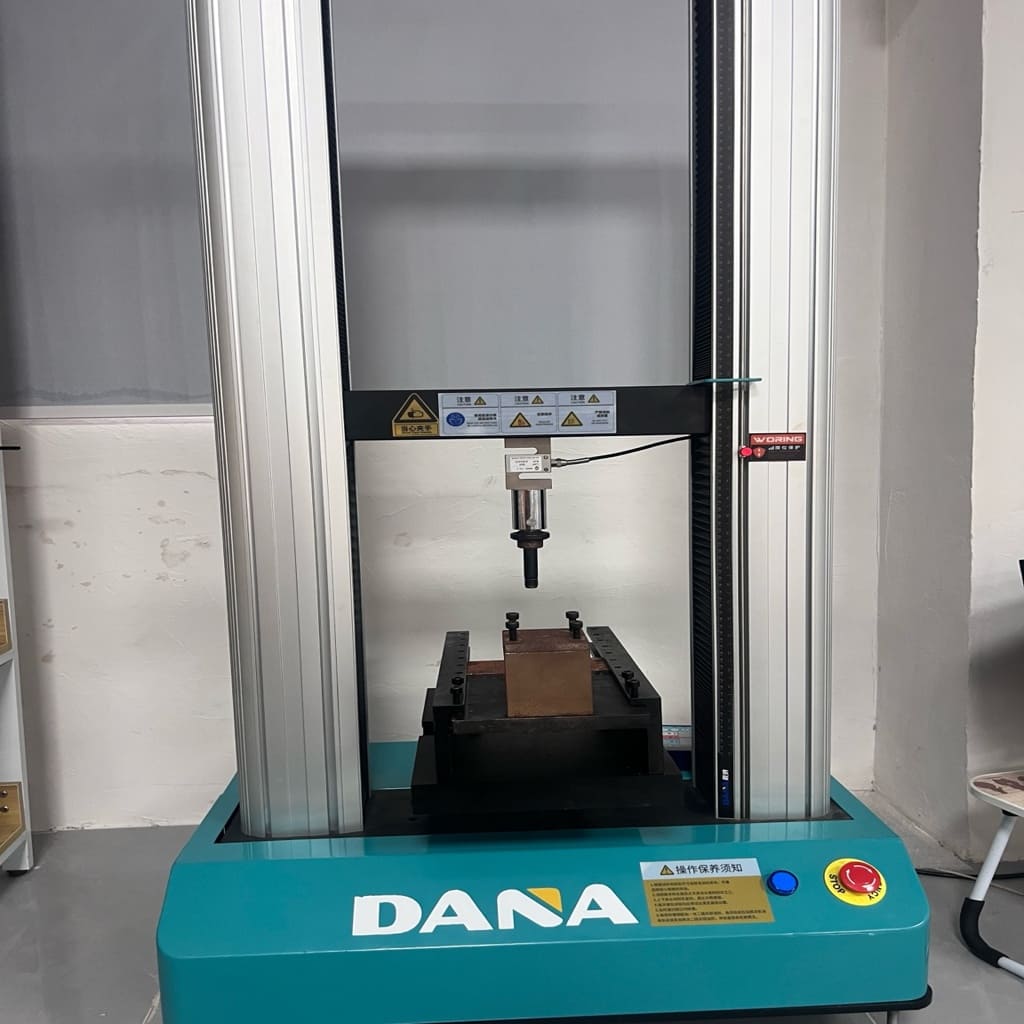
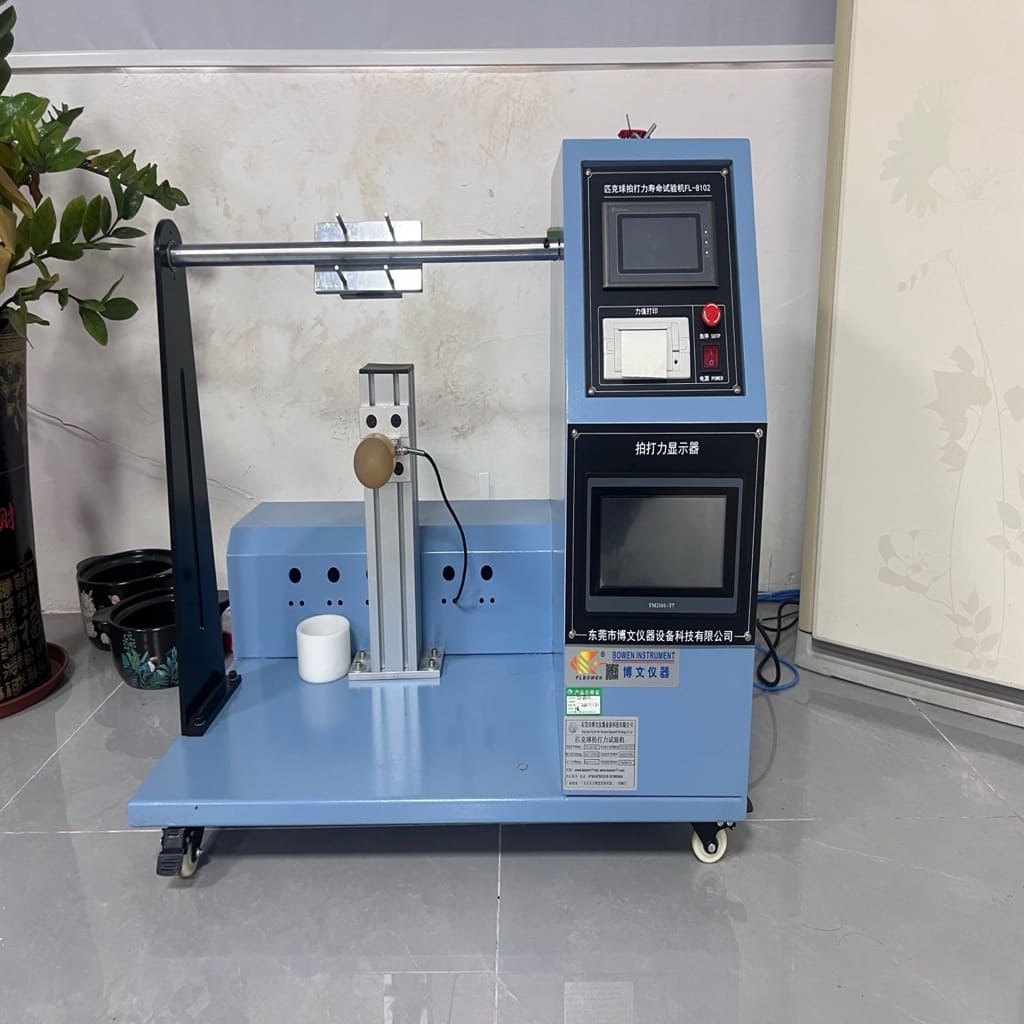
A mature pickleball paddle factory in China will normally:
- Conduct rebound or elasticity tests on random
-Check weight and weight range for each model
- Check swing-weight and balance on test equipment
- Visually inspect for defects, bubbles, delamination signs and printing issues
After that, paddles are packed into OEM boxes or retail boxes, palletized and prepared for export to markets like the USA, Canada, Europe, Australia, Asia, or India.
Thermoformed vs Cold-Press: What Your OEM Factory Should Explain
Many overseas buyers now know the words “thermoformed paddle” and “cold-press paddle”, but treat them as marketing labels instead of engineering decisions.
In reality, this choice affects:
-
Your target player level
-
Your retail price range and margin
-
Your return rate and review profile
A trustworthy OEM pickleball paddle manufacturer in China should be able to clearly explain at least:
1. For cold-press PP honeycomb paddles:
-
What core quality they use and what weight window they target
-
Which player level and price band this structure is best for
2. For thermoformed paddles with foam:
- Whether they use PP honeycomb with foam edge or full EVA + EPP foam core
-
What kind of performance difference you can expect compared to cold-press paddles
-
What foam density or expansion range they aim for (even in general terms)
3. Cost and positioning differences:
-
Why a real thermoformed paddle is more expensive than a basic cold-press paddle
-
How you can use cold-press paddles as entry or wholesale models and thermoformed paddles as hero or flagship models
If a supplier cannot explain any of this, but still calls themselves a “thermoformed pickleball paddle manufacturer”, you should ask more questions before placing a big OEM order.
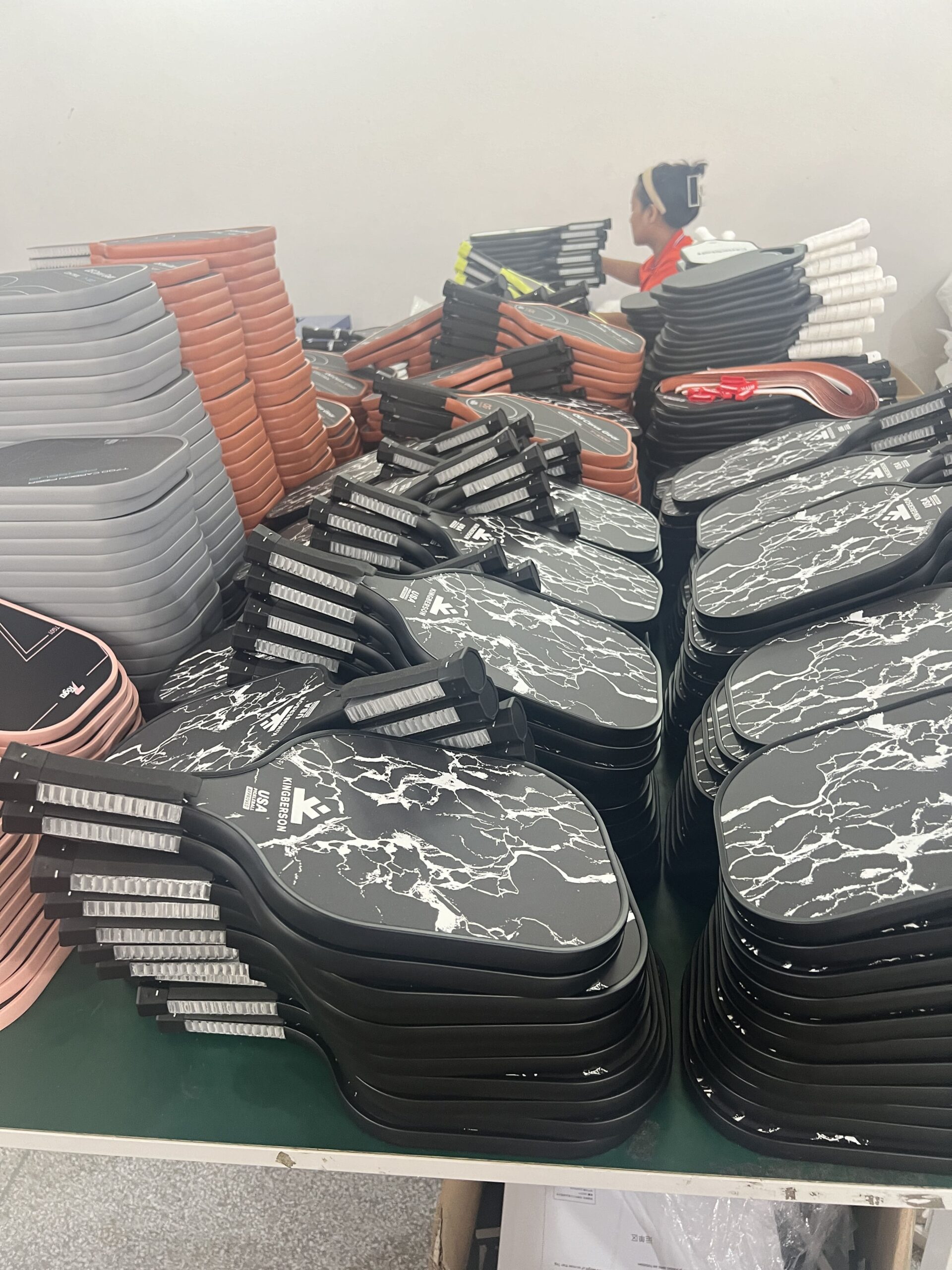
What a Real Pickleball Paddle Factory Looks Like (Checklist for Buyers)
When you visit, video-call or receive photos from a Chinese pickleball paddle factory, you can use this checklist to see whether they are really manufacturing paddles or just assembling parts.
You should be able to see:
-
Dedicated areas for cold-press and thermoformed production
-
PP honeycomb cutting, foam cutting or foam preparation zones
-
Pressing machines for cold-press paddles, and thermoforming machines for one-piece paddles
-
Workstations for trimming, sanding and edge finishing
-
Testing equipment such as swing-weight testers and elasticity or rebound machines
-
A QC area where paddles are weighed, inspected and separated by status (pass, rework, reject)
You should also see real people working on actual paddles, not just an empty showroom full of samples.
If a “factory” only shows a small room with finished paddles and cannot show any cutting, pressing or testing areas, there is a strong chance they are not the real manufacturer.
How iAcesport Runs Its Pickleball Paddle Production Line
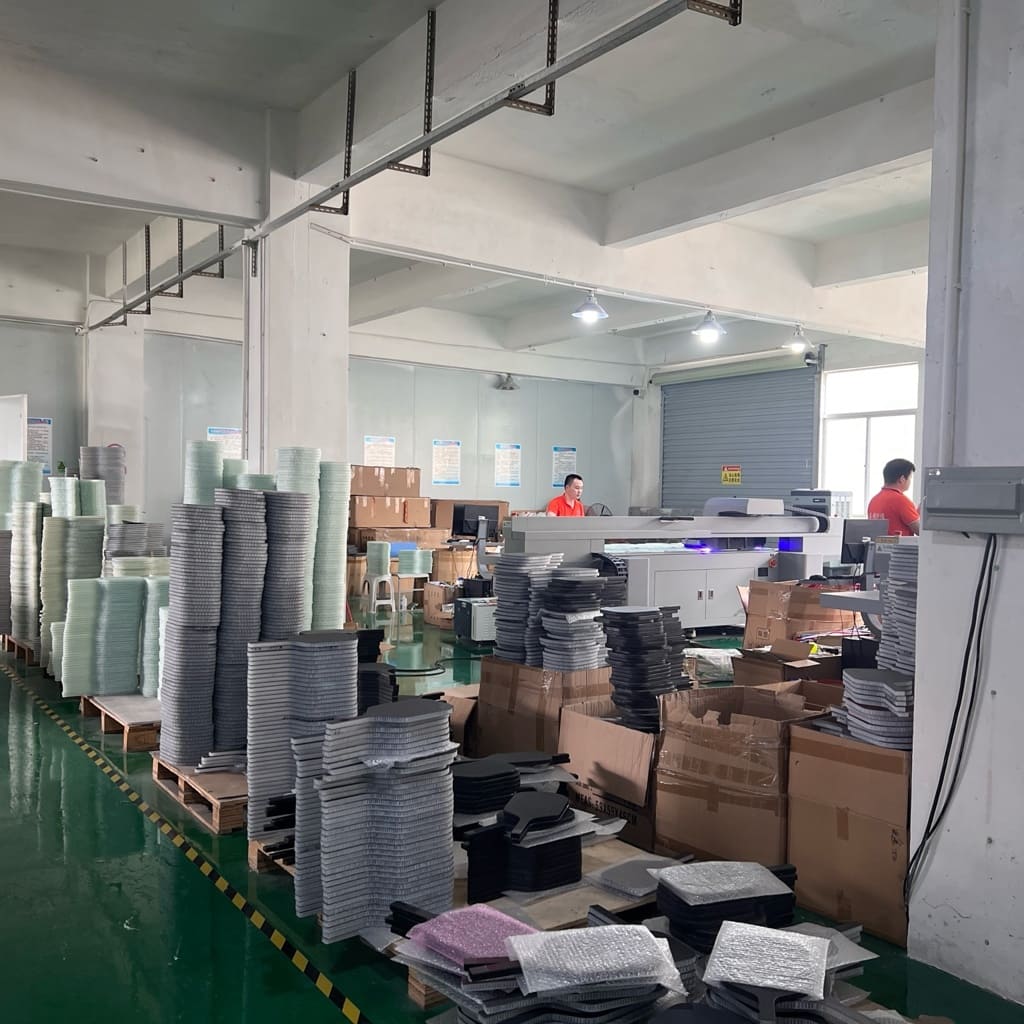
iAcesport is a specialist pickleball paddle manufacturer in China, focusing on thermoformed paddles, foam-core technology and high-quality PP honeycomb paddles.
Instead of producing many different sports products, iAcesport concentrates on pickleball paddles and related accessories.
Key points of the iAcesport production setup include:
-
Multiple dedicated pickleball paddle lines, with monthly capacity in the tens of thousands of paddles
-
Core options including: PP honeycomb cold-press, thermoformed PP honeycomb, high-density EVA + EPP hybrid foam and EPP foam
-
Focus on high-density foam in lower expansion ranges, avoiding very soft 15x foam used by some low-cost factories
-
In-house testing capability for elasticity, swing-weight and durability sampling
As an OEM or ODM partner, iAcesport can help you:
-
Design an entry–hero–flagship product ladder using different core structures
-
Choose between cold-press, thermoformed PP and foam-core paddles for different price bands
-
Avoid traps like fake thermoformed paddles or carbon-look paint instead of real carbon fiber
For iAcesport, it is more important to build long-term cooperation than to win a one-time low-price order by cutting corners.
People Also Ask
Here are some common questions that buyers ask when they look for a pickleball paddle factory in China.
Question 1: Are most pickleball paddles really made in China?
Today, a large percentage of the world’s pickleball paddles are manufactured in China, especially thermoformed paddles and foam-core paddles. China has more specialised pickleball paddle factories, more experience with OEM or ODM projects, and a better cost–performance balance than most regions.
Question 2: How do I know if a Chinese factory is really producing thermoformed paddles?
A real thermoformed pickleball paddle manufacturer in China should be able to show you their thermoforming machines, explain the basic process, and talk about core and foam choices. If they cannot show any thermoforming equipment, cannot describe the process, or only offer “thermoformed prices” that are almost the same as basic cold-press prices, you should be cautious.
Question 3: How much more expensive is a real thermoformed paddle compared to a cold-press paddle?
The exact difference depends on your design, materials and volume, but a true thermoformed paddle with quality foam and real carbon fiber will normally cost noticeably more than a basic PP honeycomb cold-press paddle. If a supplier offers “thermoformed paddles” at almost the same price as low-end fiberglass cold-press paddles, either the structure is not real thermoformed, or the materials are far below standard.
Question 4: Can one factory handle both my entry cold-press paddles and my Pro thermoformed line?
Yes, if you work with a specialist pickleball paddle manufacturer in China such as iAcesport, they can usually handle both cold-press PP honeycomb paddles for entry-level, club and school use, and thermoformed or foam-core paddles for your hero and flagship models. This makes it easier to manage your OEM production, QC and shipping from one place.
Question 5: How do Chinese factories usually handle quality issues or defects after shipment?
It depends on the factory. A serious OEM paddle factory will normally ask for photos, videos and sample returns, analyse whether the issue is from production, transport or misuse, and then offer solutions such as remakes, credits or discounts on the next order. Before you place your first big order, you should clearly ask how they handle claims, and get this in writing.
Question 6: Can a Chinese pickleball factory protect my new paddle design and not sell it to other brands?
Factories cannot promise legal exclusivity without a contract, but a professional OEM partner will normally agree not to show or resell your custom molds, graphics or special constructions to other brands. You should sign an NDA or OEM agreement that clearly defines what belongs to you (for example molds, graphics, unique structures) and what the factory can reuse.
Question 7: What hidden costs should I pay attention to when working with OEM paddle manufacturers in China?
Common hidden or easily forgotten costs include: mold fees, custom edge-guard fees, special surface treatments, custom packaging design and printing, third-party testing if required, palletisation for Amazon FBA, and international freight and local duties on your side. A transparent factory will list these clearly instead of burying them in a single number.
Question 8: Is it better to work with one main factory or split orders across many factories?
For long-term brand building, it is usually better to have one main pickleball paddle factory in China that really understands your product ladder and quality expectations, and possibly one backup factory for risk management. Splitting small orders across many suppliers can create inconsistent quality, different feels for the same model, and more after-sales headaches, even if the price looks slightly lower at the beginning.
If you prefer to build your next generation of paddles together with a team that lives and breathes pickleball manufacturing every day, iAcesport would be glad to be on your shortlist. Share your ideas, sketches or even just a rough target price, and we will turn them into clear options for cores, constructions and production plans that fit your brand, instead of forcing you into a one-size-fits-all catalog paddle.