跳到内容
跳到内容 
A quick truth before we start
A pickleball paddle can have amazing spin and a great core, but your customers don’t return it because spin is “a bit low.” They return it because the edge looks chipped, the guard looks scratched, or the product feels “not new” the moment they open the box.
The 20-second answer
If your priority is fewer damage disputes and fewer “arrived chipped” returns, pickleball paddle with edge guard is usually the safer retail choice.
If your priority is a cleaner feel, premium look, and “more usable sweet spot” perception, edgeless pickleball paddle can win, BUT only when packaging and cosmetic standards are locked.
What “edge guard” and “edgeless” really mean
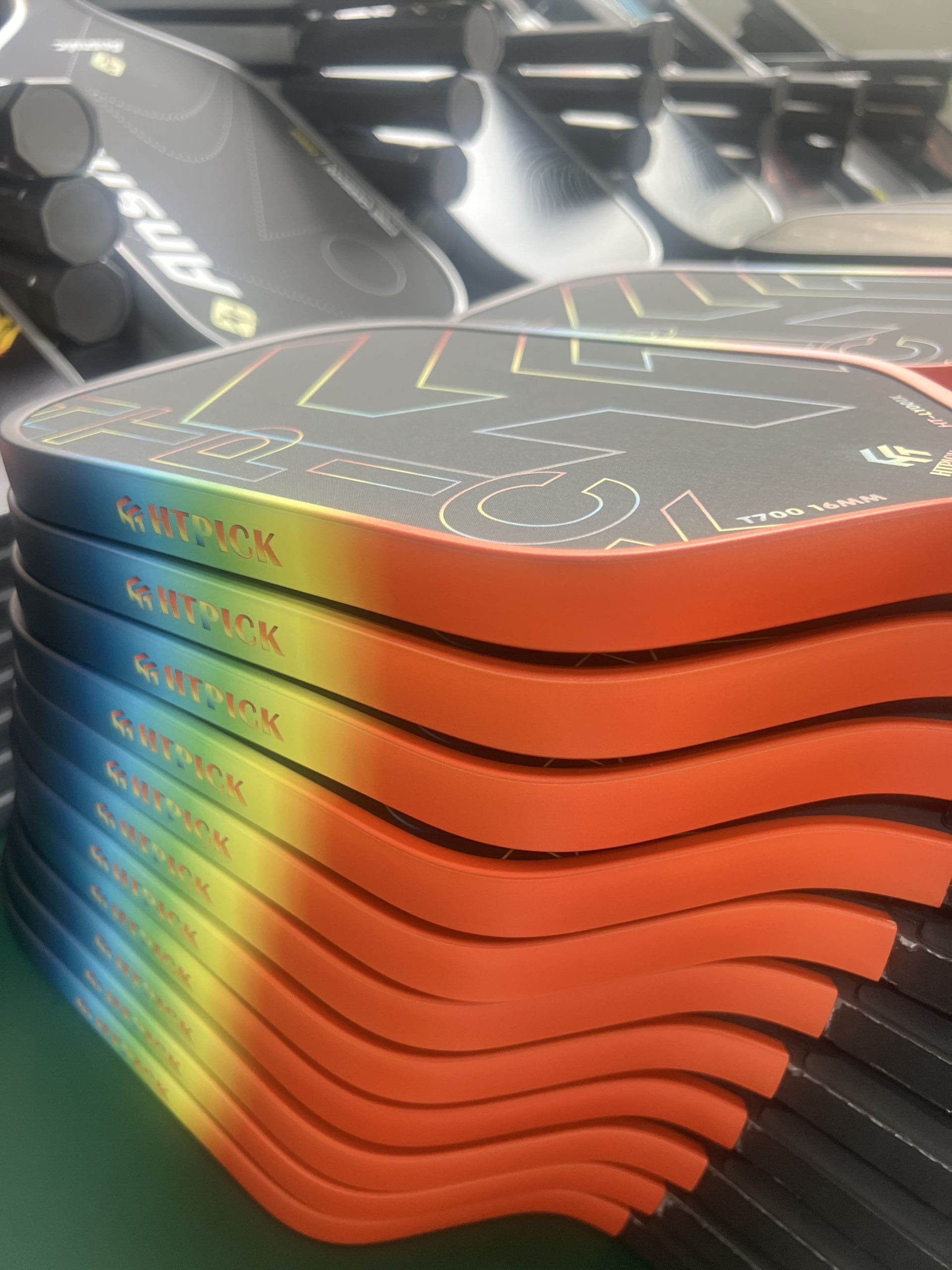
Edge guard pickleball paddle use a separate protective guard (usually polymer) around the perimeter. The guard absorbs impacts and protects the face edge when your customers hit the ground, the fence, or shipping carton corners.
Edgeless pickleball paddle remove that external guard. The edge is protected by the paddle’s own face wrap/edge construction. It often looks cleaner and can feel smoother, but edge cosmetics become more exposed to impact and shipping damage.
Edge guard pickleball paddle : what it does well, and what can go wrong
Why retail buyers like edge guard
Edge guard pickleball paddle is forgiving. When your customers drop paddles, bang edges on benches, or cartons get bumped in transit, the guard takes the first hit. This directly reduces “arrived damaged” complaints.
It also helps on retail shelves: edge scuffs happen, but the face edge is less likely to chip, and the product still looks “new enough” to sell.
The real downsides buyers should know
Edge guards can show visible scuffing quickly. Some customers interpret scuffs as “used,” even when it’s only shelf friction.
If assembly and adhesive control is weak, edge guards can lift or separate. Good factories control this well, but it’s a real risk in low-control production.
The guard can slightly change swing feel compared to an edgeless build with the same core and face, because it adds perimeter material.
Edgeless pickleball paddle: why it feels premium, and why returns happen
Why customers love edgeless
Edgeless often feels cleaner in hand. There’s no raised guard, and the edge feels smoother during resets and fast net exchanges.
Many players also perceive a more usable sweet spot near the perimeter because there’s less hard “guard edge” feedback.
From a branding view, edgeless pickleball paddle looks premium in photos and in hand, great for flagship storytelling.
The return reality
Edgeless edges are more exposed. In retail and shipping reality, the first visible damage is often edge dents, chips, peeling, or cosmetic marks.
And premium customers are less tolerant. If the product is positioned as premium, the same tiny mark can trigger a return.
Edgeless is not “bad.” It’s less forgiving, so it needs better packaging, clearer cosmetic standards, and more disciplined QC.
Sweet spot: what changes and what doesn’t
Edgeless pickleball paddle doesn’t magically change core physics, but it can improve the “usable edge area” feel because there’s no guard interruption.
Edge guard doesn’t automatically mean a smaller sweet spot, but some players notice harder feedback near the perimeter because the guard creates a firmer boundary.
A safer way to describe it in marketing is “more usable hitting area near the edge,” not exaggerated claims.
What your customers prefer by channel
Retail shelf programs
Retail buyers usually prefer predictability: fewer damages, fewer returns, cleaner shelves. For entry and profit SKUs, edge guard pickleball paddle often wins.
Edgeless pickleball paddle can work as a premium/flagship SKU, but retail buyers will ask for stronger packaging and tighter cosmetic acceptance.
Online (Amazon / DTC)
Online customers judge fast. One edge-damage photo can hurt reviews. Edge guard pickleball paddle reduces “arrived damaged” risk.
Edgeless pickleball paddle can still win online if packaging is strong and positioning is premium, but expect stricter scrutiny.
Distributors / schools / clubs
They prefer “less drama”: easy sorting, low mistake rate, fewer cosmetic disputes. Edge guard pickleball paddle is usually easier to scale for bulk orders.
Edgeless pickleball paddle is possible, but you need clear acceptance standards and packing rules, or disputes increase.
Edge guard pickleball paddle VS edgeless (buyer-friendly comparison)
| Item | Edge Guard | Edgeless |
|---|---|---|
| Best SKU role | Entry / Profit models | Flagship / Premium story |
| Retail damage tolerance | Higher | Lower (needs stronger packaging) |
| Most common return trigger | Scuffing looks “used”, rare guard lift | Edge chips/peeling/dents (visible) |
| Feel keywords | Stable, predictable | Clean, fast, “usable sweet spot” feel |
| Packaging difficulty | Easier | Stricter |
| Who prefers it most | Big retail, distributors, schools | Premium brands, specialty shops |
Packaging rules that reduce damage for both types
If you want fewer returns, packaging is not decoration, it’s damage control.
Practical rules that work across channels:
-
Separate paddle edges from anything hard (especially balls).
-
Prevent paddle-to-paddle edge collision in sets.
-
Use an insert tray when your set has 3+ accessories.
-
Strengthen outer cartons for retail and distributor shipments (corner impacts matter).
-
If you sell edgeless pickleball paddle, upgrade internal fixing first, before upgrading fancy gift boxes.
QC acceptance: define cosmetics before you ship
Returns often come from unclear cosmetic rules, this is especially true for edgeless.
A simple approach that reduces disputes:
-
Define what’s acceptable vs rejectable for edge marks/scuffs.
-
Confirm inspection lighting and angles.
-
Set sampling rules that match your channel risk (retail stricter than club bulk).
Real retail case: the photos that made the buyer nervous (and what fixed it)
I still remember the message because it didn’t sound angry, it sounded worried. A retail buyer from a multi-store chain texted me early morning (their time) and said:
“Zoey, I don’t think it’s a huge issue, but I’m nervous. Our DC just opened a few cartons and some paddles don’t look ‘new’ at the edge. Can you take a look?”
Then they sent three quick photos:
- one was a close-up of a tiny chip-like mark near the rim,
- one was a dented corner on the retail box,
- and one was a paddle face that looked perfect… but the edge caught the light and showed a small cosmetic line.
Here’s what made it tricky: the paddles played fine. If this were a club order, nobody would care. But in retail, “cosmetic” is not cosmetic. It’s return fuel.
So instead of jumping into “we’ll remake everything,” I asked one calm question first:
“Where did the damage appear—store shelf, last-mile parcel, or DC handling?”
Their answer was honest and very retail-realistic:
“DC handling + stacking. The boxes were on pallets, and the corners took some pressure.”
That instantly narrowed the root cause: this wasn’t a core or surface issue. It was a packaging + edge exposure issue.
We checked how the sets were packed, and two small details stood out:
-
The balls were inside the box, but not isolated well enough. During transit, they could bounce and tap the paddle edge.
-
These were edgeless paddles. The same tiny impact that would only scuff an edge guard can show as a visible edge mark on an edgeless rim.
Then the buyer said the line I hear from retail teams all the time:
“Our customers don’t ask what happened. They just return it.”
So we fixed it without changing performance:
-
We rebuilt the program mix: edge guard for entry and profit SKUs, and edgeless only for the flagship.
-
For the edgeless flagship, we changed the packaging sequence: cover-first, then into a box with insert tray compartments, and we made sure balls could never touch the edge.
-
We aligned a simple acceptance standard with the buyer’s QC team: what counts as “sellable-new” vs “reject.” This stopped internal panic and made inspection consistent across stores.
After the next replenishment, the buyer told me something that felt like a real win:
“Same paddle. Different packing. Complaints dropped. My store teams stopped messaging me photos.”
That’s why I don’t treat edgeless pickleball paddle as “better” or “worse.” I treat it as less forgiving. If you package it like a premium product, it sells beautifully. If you pack it like a normal set box, retail will punish you with returns.
People Also Ask (FAQ)
Which is safer for a first order (100–500 pcs)?
Pickleball paddle edge guard is usually safer because it tolerates shipping and handling better. Edgeless pickleball paddle can work if you commit to stronger packaging and clear cosmetic acceptance.
Can I sell both in one product line?
Yes. A very common setup is: edge guard pickleball paddle for entry/profit, edgeless pickleball paddle for flagship.
Which has lower retail return risk?
For mass retail programs, edge guard is usually lower risk. Edgeless is better as a premium SKU with stronger packaging and stricter standards.
A practical note
If you tell me your channels (retail, online, distributors) and your price ladder (entry/profit/flagship), I can suggest a structure lineup that matches your reality, so your customers see “new, consistent, worth it,” not “damaged, different, return.”