Skip to content
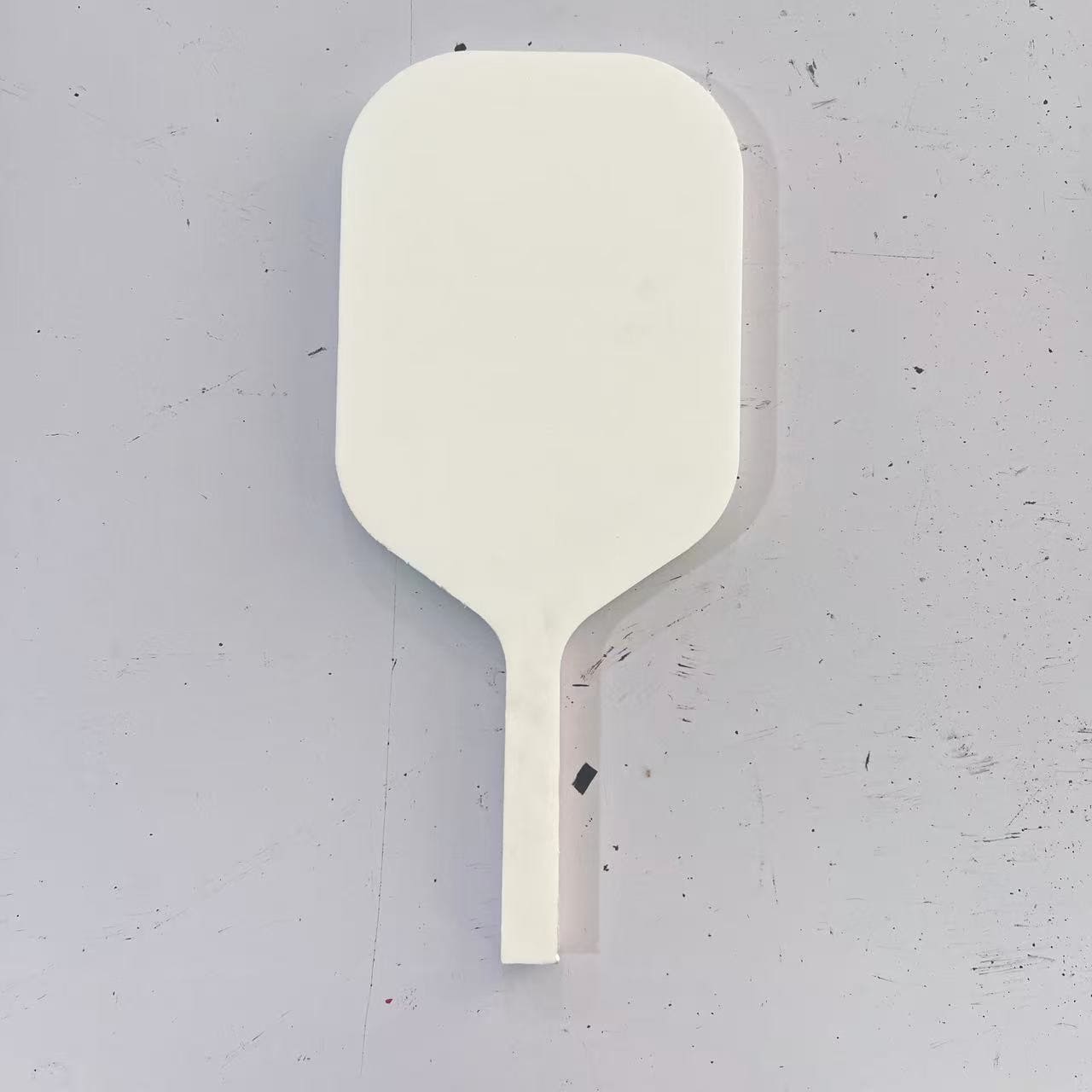
In our factory, I’ve learned a simple truth: two paddles can use the same carbon face, same shape, even the same thickness, but your customers will still say they “feel completely different.” Most of the time, the core is the reason.
This guide is not about fancy naming. It’s about what your customers actually feel in 10 seconds: sound, vibration, pop, dwell time, and what happens after months of real play.
Feel Map: What Your Customers Notice First
Most buyers think “power” is the first thing your customers feel. In reality, customers usually notice these in order:
-
Sound: crisp “pop” vs deep “thump”
-
Vibration: clean/quiet vs buzzing
-
Dwell time: does the ball “sit” a bit, or jump off fast?
-
Sweet spot forgiveness: off-center hits still feel stable or not
-
Only then: power ceiling and speed
If your product line language matches this “feel map,” your customers choose faster and returns drop.
PP Honeycomb Core: The Crisp, Balanced Baseline
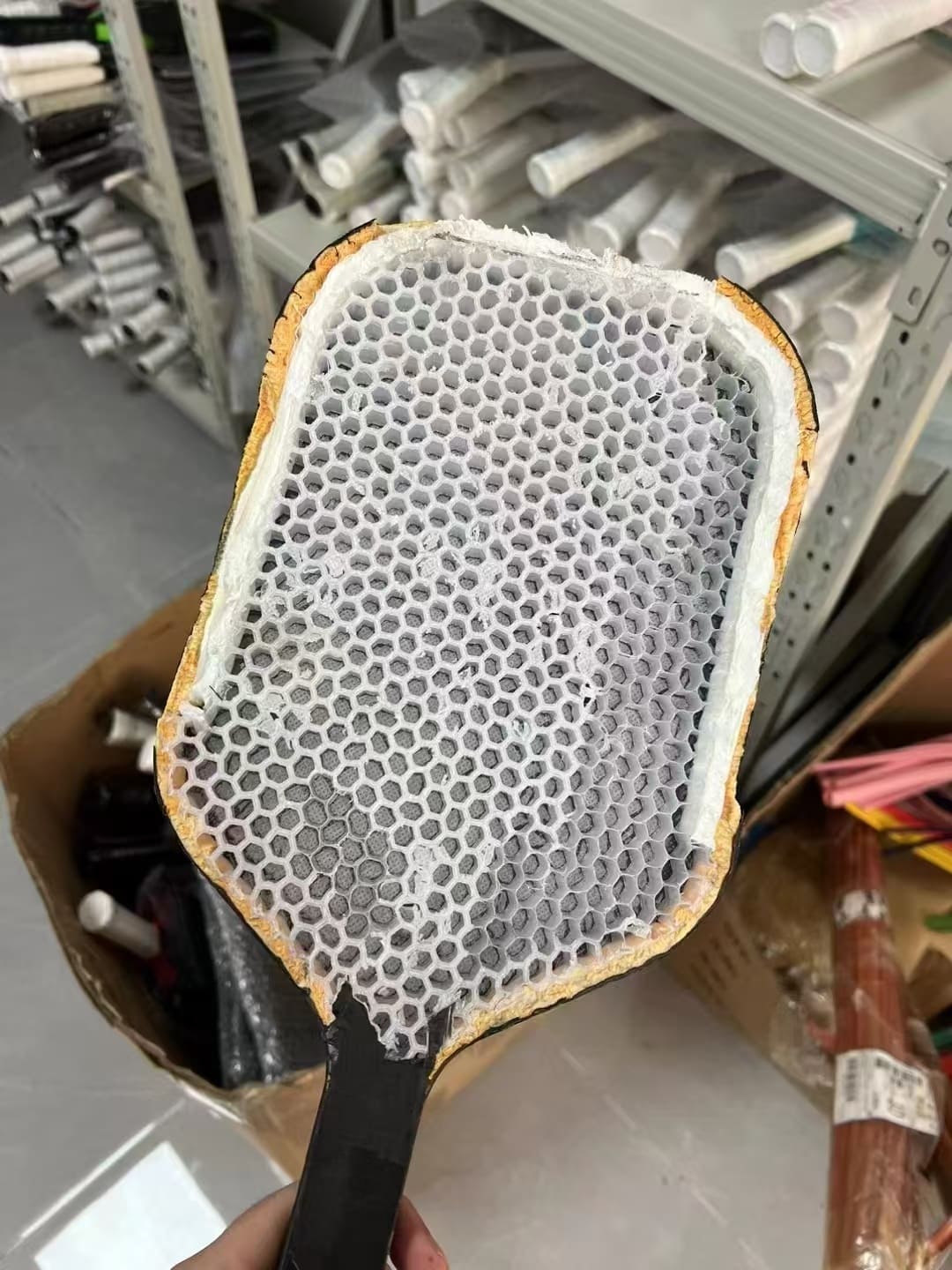
What your customers feel
-
A crisp, clean pop
-
Balanced control, predictable rebound
-
Lower vibration than older hard cores, but still “clear” feedback
Why it feels like that
Honeycomb structure supports the face evenly, so response is stable across the paddle.
Best for
-
Entry to intermediate models where you want the widest acceptance
-
Brands that want lower education cost (easy to explain)
Durability notes
PP honeycomb is stable, but mass production must keep core density and bonding consistent, otherwise your customers may feel “sample is great, batch is different.”
Foam Core: Comfort-First Feel That Depends on Build Quality
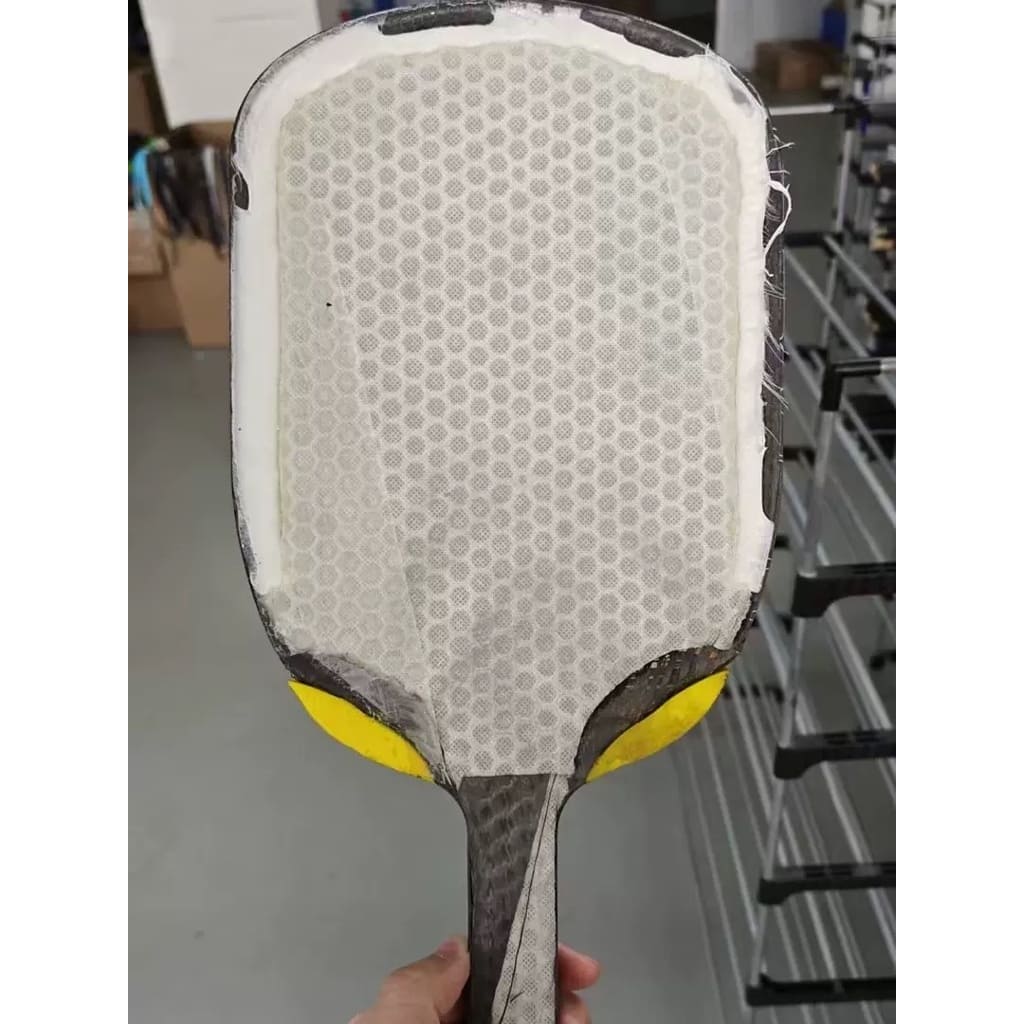
What your customers feel
-
Softer, quieter impact
-
Very low vibration, more arm-friendly
-
Often a deeper “thump” sound
Why it feels like that
Foam absorbs vibration and changes rebound timing, so the paddle feels softer and less sharp.
Best for
-
Comfort-first customers
-
Control-focused lines where you want less harsh feedback
-
Profit: Niche profit line, needs clear positioning (quiet feel, arm-friendly)
Durability notes
Foam cores depend heavily on density, expansion ratio, and bonding. Low-end builds can feel great in short-term samples but degrade faster in batch use.
EPP Core: Stable, Quiet Control With a Deeper Sound

What your customers feel
-
A deeper “thump” sound compared to PP honeycomb
-
Comfortable and stable on resets and blocks
-
Often less “snappy” than crisp PP setups
Why it feels like that
EPP naturally damps vibration and shifts impact frequency, so the sound and feel become deeper.
Best for
-
Brands targeting comfort and stability messaging
-
Lines where you want customers to feel “quiet confidence” instead of sharp pop
-
Flagship: Strong flagship story if your brand identity is comfort and stability (not hype power)
Durability notes
EPP can be very consistent when density and process are locked. The key risk is not “EPP,” but whether the factory controls density and bonding repeatably.
EVA + EPP Hybrid: Premium Tuning for a Signature Feel
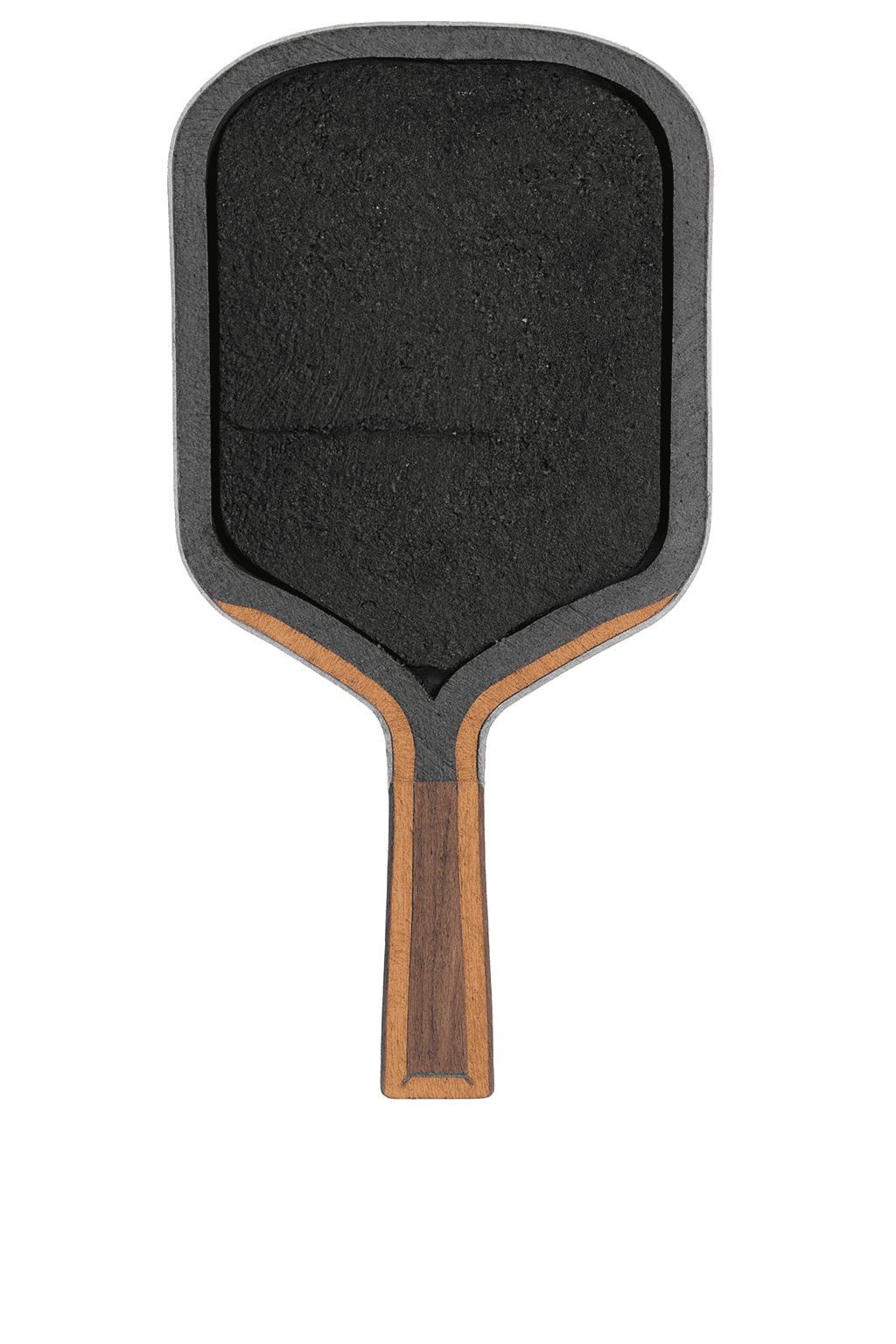
What your customers feel
-
More “alive” and responsive than simple EPP when tuned well
-
A strong balance of dwell time and power support
-
Sound often sits between PP “pop” and EPP “thump,” depending on structure
Why it feels like that
Hybrid designs let you tune both damping (comfort) and rebound (power), so you’re not stuck in one extreme.
Best for
-
Premium lines where customers expect a noticeable step-up
-
Brands that want differentiation without chasing risky hype
-
Flagship: Best for flagship differentiation when version control is strict
Durability notes
Hybrid cores are great when version control is strict. If the structure drifts (density, bonding, layer placement), customers will notice quickly because feel is the selling point.
Comparison Table: Feel, Sound, Vibration, Power and Durability
| Core Type | Sound | Vibration | Feel Style | Power Ceiling | Durability Risk (Most Common) | Best For |
|---|---|---|---|---|---|---|
| PP Honeycomb | Crisp “pop” | Low–medium | Balanced, clear feedback | Medium–high | Batch inconsistency if bonding/spec drift | Entry → intermediate, widest acceptance |
| Foam Core | Deep “thump” | Very low | Soft, comfort-first | Medium (varies) | Faster feel fade if low-density build | Comfort lines, elbow-friendly |
| EPP | Deep “thump” | Low | Stable, quiet, controlled | Medium (tunable) | Depends on density + bonding control | Control/comfort positioning |
| EVA+EPP Hybrid | Between pop/thump | Low | “Alive” + controlled | Medium–high (tunable) | Version drift shows up fast in feel | Premium differentiation |
The 5 Buyer Pain Points That Matter Most (And How to Avoid Them)
Pain point 1: “Sample feels great, batch feels different”
This is the #1 hidden return trigger. you don’t return because of lab numbers, you return because it doesn’t feel like the sample.
The fix is not a new core. The fix is locking the process: core density, bonding method, face process, weight range, balance/swing-weight range, and random sampling rules.
Pain point 2: Returns from “too loud / too harsh / too stiff”
Many your customers can’t describe it technically, but they will say: “This paddle is uncomfortable,” or “It feels harsh on my arm.”
That’s why sound and vibration should be part of your positioning, not just power and spin.
Pain point 3: Durability complaints that are not really “core problems”
A lot of durability issues come from face wear, edge structure, or bonding, not the core material itself.
So you should ask factories: what’s protected by process control, and what’s protected by design structure.
Pain point 4: Inventory risk, wrong core for the wrong SKU role
If you put a flagship-feel core into an entry product, your price becomes hard to sell.
If you put an entry core into a flagship story, customers will say it doesn’t feel premium enough.
The core choice should match the SKU role: Entry converts, Profit scales, Flagship differentiates.
Pain point 5: Claims risk, how you describe legality and performance
If your customers care about tournament legality or “banned” discussions, wording matters.
A safe approach is to avoid exaggerated claims and keep your messaging aligned with your target audience and actual product intent.
Quick Table: SKU Role → Core Direction (Fast Pick)
| SKU Role | What Customers Want to Feel | Recommended Core Direction | Notes for Positioning |
|---|---|---|---|
| Entry (Traffic) | Easy control, forgiving, “not hard to use” | PP Honeycomb, or comfort-leaning EPP | Keep messaging simple, reduce education cost |
| Profit (Main seller) | Consistent feel batch-to-batch, stable rebounds | PP Honeycomb with strict process lock, or EPP for comfort-mainstream | Talk about consistency, not hype |
| Flagship (Premium) | A clear “step-up” feel, signature comfort or tuned response | EVA+EPP Hybrid, premium foam build, or tuned PP structure | Make the feel difference obvious and repeatable |
Durability: What Actually Fails in the Real World
When we say durability, it usually means one of these four things:
-
Bonding failure (feel changes batch-to-batch)
-
Face wear / surface durability issues
-
Edge/structure stress over time (micro-cracks, looseness)
-
Weight drift and balance inconsistency
Even small shifts can trigger returns because customers notice: “It doesn’t match my other paddle.”
If you want fewer returns, the most practical lever is not “choose the most expensive core.” It’s “lock the process so every shipment feels the same.”
How Your Customers Can Tell the Difference
If your customers are comparing paddles in hand, these are simple cues they use:
-
Sound cue: crisp pop often points to PP honeycomb feel; deeper thump often points to foam/EPP style damping
-
Vibration cue: less buzzing usually means more damping (foam/EPP/hybrid)
-
Reset feel: if the ball sits slightly and blocks feel calm, customers often describe that as comfort/stability tuning
These cues help your customers self-select faster, so your product line becomes easier to sell.

A Practical Buying Guide: Which Core for Which Product Line Role
If you’re building a clean ladder, think in roles (not materials):
-
Entry / mass acceptance: PP honeycomb is usually the safest base because customers accept it easily and it’s easy to explain.
-
Main seller / profit engine: PP honeycomb plus strong process control is still the most scalable setup for consistent batches.
-
Premium comfort / differentiation: EPP and EVA+EPP hybrids are great when customers want a noticeable comfort upgrade and a deeper, quieter feel.
-
Flagship feel identity: EVA+EPP hybrid is often where you can tune feel most creatively, if version control is strict.
People Also Ask (FAQ)
Which core lasts the longest?
In real buying, “longest” depends on how consistent the factory keeps bonding and density across mass production. PP honeycomb is very stable, while foam/hybrid performance depends more on density and process control.
Why does my sample feel great but mass production feels different?
Usually it’s version drift: core density, bonding method, face process, weight range, or balance control changed. Customers feel these changes immediately even if the spec sheet looks similar.
Is “more power” always better for sales?
Not always. Many customers buy the paddle that feels controllable and comfortable, not the one that feels strongest for two hits. Clear positioning usually sells better than chasing max power.
A Practical Note From iAcesport
I don’t think the “best core” is universal. The best core is the one that matches your customers, your channel, and your price band, and can be produced consistently, batch after batch.
If you tell me your target market and your product ladder (entry / main seller / flagship), I can suggest a core plan that customers can feel, and that your brand can scale without return headaches.